Table of Contents
Keeping your RV or boat powered reliably isn’t just about the journey; it’s about peace of mind. Imagine waking up to a dead house battery after a serene night of off-grid camping, or worse, finding your vessel unable to start after a day on the water. Dual bank battery systems are the unsung heroes for mobile living, separating your engine starting power from your living essentials like lights, refrigeration, and electronics. But the system is only as strong as its charging solution. Choosing the right dual bank charger ensures both batteries stay healthy, maximizes your time off-grid, and prevents the frustrating, sometimes costly, consequences of a sudden power failure far from shore or campground hookups.
The market is flooded with options, often shrouded in technical jargon that can make even seasoned adventurers feel overwhelmed. Terms like “multi-stage charging,” “amp output,” and “marine-grade” get thrown around, but what do they really mean for your specific setup? It’s not just about plugging in; it’s about understanding how a charger interacts with different battery chemistries, handles the harsh marine environment, and integrates seamlessly with your existing electrical system. This guide cuts through the noise, focusing on the essential features and considerations you must evaluate to find the perfect dual bank charging solution for your unique mobile lifestyle, whether you’re traversing national parks or navigating coastal waters. Let’s empower you to make a confident, informed decision.
Top 10 Dual Bank Battery Chargers
Detailed Product Reviews
1. 2 Bank Marine Battery Charger 5X2, 10A (5A/Bank) - 12V Waterproof Onboard Battery Charger, Battery Maintainer & Desulfator for SLA/AGM, Lithium (LiFePO4), Calcium & Deep-Cycle Battery- Charged 24/7

Overview:
This versatile 10A marine charger handles two 12V batteries simultaneously (5A each), supporting SLA/AGM, LiFePO4, calcium, and deep-cycle types. Its IP68 waterproof design and 24/7 charging capability make it ideal for harsh marine environments, featuring automatic maintenance and desulfation to extend battery life.
What Makes It Stand Out:
The 5X2 charging algorithm, three dedicated battery modes (SLA/AGM, Lithium, Calcium), and unique “Force Mode” for reviving dead batteries (<1V) set it apart. Integrated thermal compensation prevents climate-related charging issues, while auto-repair mode addresses sulfation without user input—critical for infrequently used vessels.
Value for Money:
Priced mid-range, it outperforms basic trickle chargers with robust marine-specific features. Though less compact than premium brands, its 5A/bank output, waterproofing, and multi-chemistry support offer better utility than cheaper single-bank alternatives, justifying the investment for boat owners needing reliability.
Strengths and Weaknesses:
Strengths: True waterproofing (IP68), independent bank control, effective desulfation, and thermal compensation. Handles diverse battery types reliably.
Weaknesses: Bulkier than competitors; lacks explicit LiFePO4 certification details; no LCD display for real-time diagnostics.
Bottom Line:
A highly capable, weatherproof charger for dual-battery marine setups. Ideal for boaters prioritizing durability and broad compatibility over compactness. Strong value for moderate-budget users seeking all-in-one charging and maintenance.
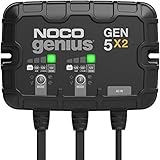
2. NOCO Genius GEN5X2: 2-Bank, 10A Onboard Battery Charger - 5A Per Bank, 12V Waterproof Marine Charger with Overcharge Protection & Temperature Compensation – for Lead-Acid & Lithium Batteries
Overview:
NOCO’s GEN5X2 packs 10A total output (5A/bank) into a compact, marine-grade charger. Engineered for lead-acid and lithium (LiFePO4) batteries, it features IP65 waterproofing, temperature compensation, and advanced diagnostics for boats, RVs, or automotive use—all in a 37% smaller footprint than prior models.
What Makes It Stand Out:
Its exceptional power density (43% more powerful than predecessors) and ruggedized construction stand out. Selectable per-bank modes (including Lithium and Repair), Force Mode for 0V batteries, and precise thermal management ensure optimal charging in extreme conditions without oversizing the unit.
Value for Money:
Premium-priced but justified by NOCO’s reliability and cutting-edge engineering. Outperforms similarly sized chargers in speed and safety, though budget users might find alternatives sufficient. For marine applications, the space savings and brand trust deliver long-term value.
Strengths and Weaknesses:
Strengths: Ultra-compact yet powerful, excellent thermal compensation, intuitive Force Mode, and marine-certified durability. Seamless lithium support.
Weaknesses: Higher cost than non-branded units; IP65 (not IP68) limits full submersion tolerance.
Bottom Line:
A top-tier choice for space-constrained marine installations. Worth the premium for users demanding NOCO’s proven performance, compact design, and hassle-free lithium compatibility in demanding environments.
3. 2-Bank, 4A (2A/Bank) Trickle Charger for Car Battery, 12V 6V Car Battery Charger, Automotive Battery Trickle Charger, Maintainer, for Motorcycle Lawn Mower AGM, Lithium Batteries-1PC

Overview:
This budget-friendly 4A charger (2A/bank) serves dual 6V/12V batteries for cars, motorcycles, or lawn equipment. It combines trickle charging, maintenance, and desulfation for lead-acid (AGM, gel) and LiFePO4 batteries, featuring spark-proof connections and thermal compensation in a compact form.
What Makes It Stand Out:
Rare 6V/12V dual-voltage support and ultra-affordability distinguish it. The “FirstPower Pro” desulfation mode revives neglected batteries, while temperature-adjusted charging prevents damage—uncommon at this price point for multi-battery setups.
Value for Money:
Exceptional for casual users with smaller vehicles. At half the cost of premium marine chargers, it covers essential maintenance for trailers, ATVs, or seasonal equipment. Not ideal for large boats, but unbeatable for basic multi-battery upkeep under $40.
Strengths and Weaknesses:
Strengths: 6V compatibility, affordable, effective desulfation, and safe for indefinite use. Compact size suits tight spaces.
Weaknesses: Low amperage (slow charging); limited lithium documentation; lacks marine-specific waterproofing (IP65 max).
Bottom Line:
The go-to for cost-conscious owners of small fleets (e.g., lawnmowers, motorcycles). Skip for marine use, but perfect for occasional maintenance of multiple low-drain batteries on a budget.
4. NOCO GENIUS2X2: 4A 2-Bank Smart Battery Charger (2A/Bank) - 6V/12V Automatic Maintainer, Trickle Charger & Desulfator with Overcharge Protection & Temperature Compensation – for Lead-Acid & Lithium

Overview:
NOCO’s GENIUS2X2 is a 4A (2A/bank) smart charger for 6V/12V lead-acid and lithium batteries. Combining trickle charging, maintenance, and desulfation, it’s designed for effortless, continuous use on cars, motorcycles, or marine starters—with automatic voltage adjustment and zero overcharge risk.
What Makes It Stand Out:
Seamless 6V/12V auto-detection and NOCO’s signature “worry-free” engineering shine. Force Mode revives 0V batteries, while temperature compensation and indefinite maintenance mode suit storage scenarios. Its simplicity outshines complex competitors for everyday upkeep.
Value for Money:
Priced above budget models but reflects NOCO’s reliability. Ideal for users prioritizing set-and-forget safety over high amperage. Beats cheaper units in longevity and lithium compatibility, though overkill for single-battery needs.
Strengths and Weaknesses:
Strengths: Foolproof 6V/12V switching, trusted desulfation, silent operation, and marine-safe certifications. Perfect for long-term storage.
Weaknesses: Only 2A/bank (slow for large batteries); no independent mode selection per bank; compact but not ultra-rugged.
Bottom Line:
A stellar “maintenance specialist” for preserving battery health during storage. Choose this over high-amp chargers if your priority is gentle, reliable upkeep for multiple small-medium batteries.
5. 2 Bank Marine Battery Charger, 20A (10A/Bank) 12V IP68 Waterproof LCD Onboard Battery Charger with Overcharge Protection, Battery Maintainer for Lead-Acid, AGM, Gel, LiFePO4, Lithium, Boat, Car, RV

Overview:
This powerhouse delivers 20A total (10A/bank) for rapid dual-battery charging in marine/RV use. With IP68 waterproofing, an LCD screen, and 9-stage smart charging, it supports all 12V chemistries—including LiFePO4—while featuring force-start for dead batteries and advanced diagnostics.
What Makes It Stand Out:
Unmatched 10A/bank output and IP68 submersion rating dominate. The 9-stage charging process maximizes lifespan, while the LCD provides real-time feedback—a rarity in waterproof chargers. Calcium mode and desulfation cater to niche marine battery types.
Value for Money:
Priced at the high end, but justified for large vessels needing speed and resilience. Doubles charging speed of 5A competitors, reducing downtime. Overkill for small boats, yet cost-effective for commercial marine use where time = money.
Strengths and Weaknesses:
Strengths: Blazing 10A/bank speed, full submersion safety, LCD diagnostics, and comprehensive chemistry support. Robust repair mode.
Weaknesses: Bulky for small installations; premium cost may deter casual users; LCD could be a failure point long-term.
Bottom Line:
The ultimate charger for serious marine applications demanding speed and brute durability. Invest here if you operate large boats/RVs where rapid, reliable charging is non-negotiable.
6. Battery Tender Plus 2 Bank Multibank Charger - 2.5 AMP (1.25 AMPs Per Bank) - Smart 12V Multi Battery Charger and Maintainer for Standard, AGM, and Lithium LiFePO4-022-0165-DL-WH

Overview:
The Battery Tender Plus 2 Bank is a compact, dual-output smart charger designed for maintaining 12V batteries across two independent stations. Targeting motorcycle, marine, and automotive users, it safely handles AGM, flooded lead-acid, and LiFePO4 batteries with a gentle 1.25A per bank output. Its focus is long-term battery health rather than rapid recharging.
What Makes It Stand Out:
Temperature compensation ensures optimal charging voltage in varying environments, while the 3-step program (Initialization, Bulk, Float) prevents overcharging. Spark-proof and reverse polarity protection enhance safety, and the dual-color LED clearly indicates charging status. The 2-year warranty adds peace of mind for maintenance-focused users.
Value for Money:
Priced mid-range, it excels as a dedicated maintainer rather than a quick charger. Though slower than higher-amp alternatives, its precision for long-term storage justifies the cost for seasonal vehicle owners. It’s more affordable than premium lithium-specific dual chargers but lacks the speed for deeply depleted batteries.
Strengths and Weaknesses:
Strengths: Exceptional for battery preservation; robust safety features; ideal for multi-vehicle owners; reliable with LiFePO4.
Weaknesses: Low amperage (1.25A/bank) means slow recharging; no display for detailed metrics; limited utility for urgent power needs.
Bottom Line:
A top choice for maintaining multiple 12V batteries during storage, especially for lithium and AGM types. Avoid if rapid charging is essential, but highly recommended for preserving battery life over time.
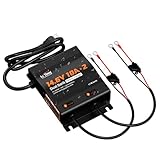
7. LiTime 2-Bank 10A (10A/Bank) Dual Smart Battery Charger, 14.6V LiFePO4 Battery Charger AC-DC Charger with Fuse, LED Indicator for RV, Boat, Motorcycle, Lawn Mower, Trolling motor and Lead Acid Battery
Overview:
LiTime’s dual-bank charger delivers high-speed 10A per bank output (20A total) for 12V LiFePO4 and lead-acid batteries. Designed for RVs, boats, and heavy-duty applications, it features IP65 waterproofing and a 14.6V max voltage tailored to lithium iron phosphate chemistry, with broad compatibility including flooded and AGM batteries.
What Makes It Stand Out:
The standout feature is 10A per bank charging—significantly faster than most dual units—coupled with M8 terminals for secure connections. Comprehensive protections (over-temperature, short-circuit, reverse polarity) and IP65 rating ensure safety in wet environments. The included 15A fuse boosts charging efficiency for large lithium banks.
Value for Money:
Competitively priced for its 20A total output, it outperforms cheaper 5A/bank models in speed without sacrificing safety certifications (CE, FCC, RoHS). While premium for casual users, it’s cost-effective for RV/marine owners needing rapid, simultaneous charging of two large batteries.
Strengths and Weaknesses:
Strengths: Blazing-fast 10A/bank speed; excellent lithium optimization; robust waterproofing; responsive 24-hour support.
Weaknesses: Risk of misconfiguration when charging mixed battery types; LED indicators lack granular detail; lead-acid compatibility is secondary to lithium focus.
Bottom Line:
An outstanding high-speed solution for lithium battery systems in demanding applications. Prioritize this if rapid dual-battery charging is critical, but verify settings carefully for non-lithium use.
8. Schumacher Electric Two-Bank 2A Car Battery Charger and Maintainer, 2-in-1 Solution, Simultaneous Charging, for 6V/12V Power Sport, Automotive, and Marine Batteries, SC1410

Overview:
Schumacher’s SC1410 is a versatile 2A dual-bank charger for 6V/12V batteries, targeting motorcycles, ATVs, and small boats. Its microprocessor-controlled system automatically switches between charging and maintenance modes, supporting flooded, AGM, and gel batteries with reverse hook-up protection.
What Makes It Stand Out:
True 6V/12V auto-detection is rare in dual-bank units, making it ideal for vintage vehicles or mixed fleets. The wall-mountable design and included hook offer flexible placement, while microprocessor control optimizes charge curves to extend battery life without user input.
Value for Money:
Budget-friendly for its dual-bank functionality, it undercuts competitors by $20–$40. Though slower (1A/bank equivalent), it’s perfect for occasional use on smaller batteries. Not cost-effective for large marine/RV batteries needing higher amperage.
Strengths and Weaknesses:
Strengths: Genuine 6V support; wall-mount convenience; foolproof automatic operation; reliable for small batteries.
Weaknesses: Very slow charging (2A total); no lithium compatibility; basic LED indicators only; not suitable for deeply discharged batteries.
Bottom Line:
A dependable, no-frills maintainer for 6V/12V lead-acid batteries in garages or workshops. Choose this for simplicity and 6V needs, but skip if you require lithium support or speed.
9. 2-Bank 20A(10A/Bank) Car Battery Charger, 12V 24V Automatic Automotive Charger, Battery Maintainer, Trickle Charger for Car, Motorcycle, Marine, Boat, Lead-Acid, Lithium, LiFePo4 Battery

Overview:
This feature-rich dual-bank charger handles 12V/24V systems with 10A per bank output (5A/bank for 24V). It supports lead-acid, lithium, and LiFePO4 batteries across cars, boats, and heavy machinery, featuring an LCD screen, nine-stage charging, and battery repair functions.
What Makes It Stand Out:
The color LCD displays real-time metrics (voltage, current, temperature), while the nine-stage program and pulse repair mode revive sulfated batteries. Unique 24V support and manual current adjustment (5A/10A per bank) offer exceptional versatility for diverse fleets.
Value for Money:
Mid-priced for its capabilities, it rivals chargers costing 30% more. The LCD and repair functions add significant value over basic models, though overkill for simple maintenance. Justified for users managing mixed battery types or aging systems.
Strengths and Weaknesses:
Strengths: Comprehensive LCD interface; adaptive 24V/12V support; advanced desulfation; flexible current settings.
Weaknesses: Complex menu navigation; inconsistent lithium voltage calibration per user reports; bulkier than competitors.
Bottom Line:
A powerhouse for technicians or fleet owners needing diagnostics and repair. Opt for this if you prioritize data visibility and battery revival, but consider simpler models for basic upkeep.
10. ECO-Worthy 2 Bank Marine Battery Charger 10A (5A/Bank), IP68 Waterproof 12V Charger & Maintainer for Boat RV Car, Lead-Acid LiFePO4 & Calcium Battery Desulfator

Overview:
ECO-Worthy’s marine-grade charger offers dual 5A/bank output with full IP68 waterproofing, targeting boats and RVs. It uniquely supports calcium batteries alongside lead-acid and LiFePO4, featuring dead-battery revival (“Force Mode”) and automatic desulfation for lead-acid types.
What Makes It Stand Out:
IP68 sealing (submersible protection) is unmatched for harsh marine use. The dedicated calcium mode and “12V Repair” indicator for sulfation correction address niche needs. Force Mode manually jumpstarts batteries below 1V—critical for neglected marine systems.
Value for Money:
Slightly pricier than standard dual chargers, but IP68 and calcium support justify the premium for boaters. Outperforms non-marine units in wet conditions, though over-specified for garage use. Warranty and repair focus enhance long-term value.
Strengths and Weaknesses:
Strengths: Unbeatable waterproofing; specialized calcium mode; effective desulfation; Force Mode for dead batteries.
Weaknesses: Lower amperage (5A/bank) slows charging; Force Mode requires manual activation; no 24V compatibility.
Bottom Line:
The definitive choice for marine environments needing ruggedness and battery revival. Essential for boat owners, but land-based users may prefer faster, non-marine alternatives.
Understanding Dual Bank Battery Systems and Why Charging Matters
The Critical Role of Dedicated Charging
Simply connecting two batteries together isn’t enough. Without intelligent charging, one battery can drain the other, or neither may reach a full state of charge, leading to sulfation and drastically reduced lifespan. A dedicated dual bank charger manages the energy flow precisely, ensuring both the starting battery and the deep cycle house battery receive the correct voltage and current profile they need independently. This isn’t a luxury; it’s fundamental to system longevity and reliability, preventing the common scenario where a depleted house battery leaves you stranded with a dead engine.
Different Batteries, Different Needs
Starting batteries and deep cycle batteries have fundamentally different construction and purposes. Starting batteries deliver a massive burst of power for a few seconds to crank an engine but suffer if deeply discharged. Deep cycle batteries are designed to be regularly drained down to 50% capacity or more to power appliances over hours. Charging them identically is inefficient and damaging. A quality dual bank charger recognizes these differences, applying tailored charging algorithms to each bank to optimize performance and lifespan for both battery types.
Beyond Simple Splitting: The Intelligence Factor
While battery isolators and combiners physically connect batteries when charging is present, they lack the intelligence of a true multi-stage charger. They often result in undercharged house batteries, especially if the engine isn’t run long enough. Dual bank chargers actively manage the entire charging process from bulk to absorption to float, ensuring each battery reaches 100% capacity safely and efficiently, regardless of the charging source duration. This intelligence is crucial for maintaining battery health during extended off-grid periods.
Critical Performance Features to Evaluate
Total Amp Output and Bank Distribution
The charger’s total amperage rating (e.g., 20A, 40A, 60A) dictates how quickly it can replenish your batteries. Crucially, understand how that total amperage is distributed between the two banks. Some split it evenly (e.g., 20A/20A on a 40A unit), while others offer asymmetric distribution (e.g., 30A/10A), which is often ideal for an RV/boat where the house bank typically needs more capacity than the starting battery. Ensure the output per bank matches the capacity of your specific batteries.
Multi-Stage Charging Proficiency
Look for chargers offering at least three distinct stages: Bulk (maximum current until ~80% charge), Absorption (holds voltage constant while current tapers to complete the charge), and Float (maintains full charge without overcharging). Advanced models include a desulfation or reconditioning stage to combat battery aging. This multi-stage process is non-negotiable for maximizing battery life and ensuring a true full charge, especially for modern AGM and gel batteries which are sensitive to incorrect voltage profiles.
Battery Chemistry Compatibility
Your charger must be compatible with the specific chemistry of both batteries in your system. Lead-acid (flooded), AGM (Absorbent Glass Mat), and Gel are the most common, each requiring slightly different voltage setpoints during charging stages. Lithium (LiFePO4) is increasingly popular for house banks but demands a charger specifically designed for its unique profile and often requires communication via CAN bus. Verify the charger has dedicated, selectable profiles for every battery type you use.
Input Voltage Range and Surge Handling
Marine and RV environments experience significant voltage fluctuations – from low cranking voltages to alternator surges. A robust charger should handle a wide input range (e.g., 9V to 16V DC) without damage and include protection against voltage spikes. This resilience ensures the charger survives the harsh electrical environment of a vehicle or vessel and continues operating reliably during engine start-up or when connected to unstable shore power.
Installation and Environmental Considerations
Physical Size and Mounting Constraints
Space is always at a premium in RVs and boats. Measure your intended mounting location carefully, considering not just the charger’s footprint but also required clearance for ventilation (most need airflow around the unit). Factor in the space needed for wiring connections and potential heat dissipation. Compact, low-profile designs are highly advantageous for tight engine compartments or under-seat installations.
Ventilation and Heat Management
Chargers generate heat during operation, especially at high amperage. Adequate airflow is critical to prevent overheating, which can trigger thermal shutdown or damage components. Avoid mounting directly against insulation, fuel lines, or in completely enclosed, unventilated spaces. Many units have thermal sensors that reduce output if overheating occurs, impacting charging speed, so proper placement is essential for peak performance.
Environmental Protection Rating (IP Rating)
This is paramount, especially for marine applications. Look for chargers with a high Ingress Protection (IP) rating. IP65 (dust-tight and protected against low-pressure water jets) is a solid minimum for RV engine compartments. For mounting on a boat, where exposure to salt spray and splashing is likely, IP67 (dust-tight and protected against temporary immersion) or higher is strongly recommended. This rating ensures the charger can withstand moisture, dust, and corrosive elements without failure.
Wiring Requirements and Safety
Dual bank chargers draw significant current, especially during the bulk stage. Using undersized wiring creates fire hazards, voltage drops, and inefficient charging. Consult the charger’s manual for the exact recommended wire gauge (AWG) for both the input (from source) and output (to batteries) circuits based on the distance run. Always incorporate appropriately sized fuses or circuit breakers as close as possible to the battery terminals for each output bank and the input source. Proper wiring isn’t optional; it’s a critical safety requirement.
Integration with Your Existing System
Compatibility with Charging Sources
Your charger needs to work seamlessly with all your potential power inputs: alternator (via engine running), shore power (AC input), solar charge controllers (DC input), and potentially wind or generator. Ensure the charger has the correct input type (AC/DC) for your primary sources and can intelligently prioritize or combine them if needed. Some advanced chargers feature automatic source detection and seamless transition between sources.
Monitoring and User Interface
Understanding your charging status is vital. Basic chargers might only have simple LED indicators (e.g., power, charging, error). More advanced models offer multi-segment LED displays showing voltage, amperage per bank, charging stage, and fault codes. The best options include Bluetooth or Wi-Fi connectivity paired with a smartphone app, providing detailed real-time data, historical logs, and remote configuration. Consider how much visibility you need to manage your system effectively.
Programmability and Customization
While pre-set profiles for common battery types are essential, the ability to fine-tune settings offers significant advantages. Look for chargers allowing adjustment of absorption time, float voltage, and temperature compensation. This is particularly important if you use non-standard battery brands or operate in extreme temperature environments, allowing you to optimize the charging profile for maximum battery health in your specific conditions.
Marine vs. RV Specific Nuances
The Corrosion Challenge in Marine Environments
Saltwater is incredibly corrosive. Marine-specific chargers go beyond just an IP rating. They often feature conformal coating on circuit boards, marine-grade stainless steel or plastic hardware, and internal components specifically chosen for corrosion resistance. This extra layer of protection is non-negotiable for longevity when exposed to salt air and moisture, preventing internal failures that cheaper, non-marine units succumb to quickly.
Vibration Tolerance for Mobile Applications
Both RVs and boats subject electronics to constant vibration. Chargers need robust internal construction – securely mounted components, strain relief on wires, and potentially potting compounds – to withstand these forces over years of travel. Loose connections or cracked solder joints caused by vibration are common failure points in inadequately built units. Verify the manufacturer specifies vibration resistance standards.
Regulatory Compliance Differences
Marine chargers often face stricter regulatory hurdles. Look for certifications like ABYC (American Boat & Yacht Council) compliance in the US, which covers critical safety aspects like ignition protection (preventing sparks that could ignite fuel vapors), electrical safety, and environmental resistance. While RVs have standards (like RVIA), marine certifications typically represent a higher bar for ruggedness and safety in challenging environments.
Long-Term Reliability and Maintenance
Build Quality and Component Selection
Don’t judge solely on price or amp rating. Examine construction details: thick PCBs, high-quality capacitors (look for branded ones like Nichicon or Rubycon), adequate heatsinking, and secure terminal connections. These elements directly impact how long the charger will survive thermal cycling and electrical stress. A well-built unit with slightly lower specs often outperforms and outlasts a poorly constructed high-amp model.
Warranty as a Reliability Indicator
A substantial warranty period (3-5 years or more) is a strong signal of manufacturer confidence in their product’s durability. Read the warranty terms carefully – does it cover both parts and labor? Are there specific exclusions for marine use? A long, comprehensive warranty provides peace of mind and reflects the expected operational lifespan under normal conditions.
Essential Maintenance Practices
Even the best charger benefits from basic care. Periodically inspect terminals for corrosion (clean with a baking soda solution if needed) and ensure they are tight. Check ventilation paths for dust or debris blockage. Visually inspect wiring for chafing or damage. Following these simple steps helps prevent avoidable failures and ensures your charger operates at peak efficiency for years.
Frequently Asked Questions
Frequently Asked Questions
Can I use a standard single bank charger for a dual battery system? No, a single bank charger cannot independently manage two separate batteries. It will either charge only one bank or attempt to charge both as a single unit, leading to undercharging of the house bank and potential damage to both batteries over time. Dedicated dual bank management is essential.
What’s the difference between a dual bank charger and a battery isolator? A battery isolator (or combiner) is a passive device that allows the alternator to charge both batteries when the engine runs but prevents the house battery from draining the starting battery. It doesn’t actively manage the charging process. A dual bank charger is an active device that applies intelligent, multi-stage charging profiles to each battery independently, ensuring both reach a full, safe charge regardless of the charging source duration.
Do I need a different charger if I have lithium (LiFePO4) house batteries? Yes, absolutely. Lithium iron phosphate (LiFePO4) batteries require a fundamentally different charging profile (voltage setpoints, no absorption stage in the same way, often communication protocols like CAN bus) compared to lead-acid types. Using a standard lead-acid charger on lithium batteries can be dangerous and will severely damage them. You need a charger explicitly designed and certified for LiFePO4.
How do I determine the right amperage size for my dual bank charger? Calculate the total amp-hour (Ah) capacity of your house battery bank. A good rule of thumb is to choose a charger output (for the house bank) that’s 10-25% of the total Ah capacity. For example, a 200Ah house bank would ideally use a charger providing 20A-50A to that bank. Also ensure the engine bank output matches its battery size (typically smaller, e.g., 10A-20A).
Is temperature compensation important for my charger? Yes, especially if you operate in environments with significant temperature swings (very hot summers or cold winters). Battery voltage requirements change with temperature. Chargers with automatic temperature compensation (using a remote sensor) adjust the charging voltage up in cold weather and down in hot weather, optimizing charging efficiency and preventing under/overcharging, which significantly extends battery life.
Can I install a dual bank charger myself, or do I need a professional? Many RV and boat owners successfully install dual bank chargers themselves if they have solid electrical knowledge, understand the wiring diagrams, use the correct gauge wire, and follow safety protocols (fusing, disconnects). However, due to the high currents involved and critical safety implications, if you are unsure, consulting or hiring a certified marine or RV electrician is highly recommended to avoid fire hazards or system damage.
Why does my charger shut off or reduce power after running for a while? This is almost always due to overheating. Check that the charger has adequate ventilation and isn’t mounted in an enclosed space or near heat sources. Ensure the ambient temperature isn’t excessively high. Verify you are using the correct wire gauge; undersized wiring causes voltage drop and forces the charger to work harder, generating more heat. Clean any dust buildup blocking vents.
What does it mean if my charger shows an “Error” or “Fault” light? Refer to the specific error code chart in your charger’s manual. Common causes include reversed battery polarity (check connections!), excessive voltage (surge from alternator), low input voltage, over-temperature shutdown, short circuit, or a failed battery. Always disconnect power before troubleshooting electrical issues.
Can a dual bank charger be used with solar power? Yes, many modern dual bank chargers accept DC input, allowing them to be connected to the output of a solar charge controller (configured for “DC-DC” charging). This enables the solar power to intelligently charge both the starting and house batteries. Ensure the charger explicitly supports DC input and is compatible with your solar controller’s output voltage.
How often should I replace my dual bank battery charger? There’s no fixed timeline, but a well-maintained, quality charger in a suitable environment can last 5-10 years or more. Signs it might need replacement include inconsistent charging, failure to reach full charge, frequent error codes, visible damage (bulging capacitors, burnt smell), or if it stops working entirely. Regularly monitoring its performance helps gauge its health.
See Also
- 10 Best Dual Bank Battery Chargers for RV and Boat Owners in 2026
- 10 Game-Changing Dual Bank Battery Chargers for RV Owners in 2026
- How to Choose the 10 Best Dual Bank Battery Chargers for Off-Road Vehicles in 2026
- We Tested 50 Smart Battery Chargers - Here are the 10 Best for Home Use in 2026
- The 10 Ultimate Best Dual Bank Battery Chargers for RVs and Boats in 2026