Table of Contents
Precision matters when you’re working with torque specifications that can mean the difference between a secure connection and catastrophic failure. Dial torque wrenches have long been the gold standard for professionals who demand visual confirmation of their applied force, and recent advancements in 2026 have pushed their calibration accuracy to unprecedented levels. Whether you’re a quality control engineer, automotive technician, or aerospace mechanic, understanding what separates a calibration-grade dial wrench from standard offerings will transform how you approach critical fastening applications.
The landscape of torque measurement tools continues to evolve rapidly, with new materials, manufacturing processes, and certification standards emerging each year. Today’s calibration-accurate dial torque wrenches offer features that were once only available in laboratory-grade equipment, bringing NIST-traceable precision directly to the shop floor. This guide walks you through everything you need to know about selecting, using, and maintaining these precision instruments without getting lost in brand-specific marketing claims or biased product recommendations.
Top 10 Dial Torque Wrenches
Detailed Product Reviews
1. Precision Instruments PRED2F150HM Torque Wrench (3/8" Drive Dial-Type with Memory Pointer 150 lb. in.)
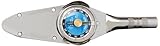
Overview: The Precision Instruments PRED2F150HM represents professional-grade torque measurement technology in a compact 3/8-inch drive package. Engineered for applications demanding exceptional accuracy, this dial-type wrench handles up to 150 pound-inches with sophisticated features that distinguish it from conventional click-type wrenches. The torsion bar design and large, shock-resistant dials provide reliable performance in both automotive and industrial settings where precise fastener tension is critical.
What Makes It Stand Out: This tool’s patented torsion bar mechanism eliminates hand-hold sensitivity, ensuring measurements remain accurate regardless of grip position—a common flaw in lesser dial wrenches. The 2% accuracy rating in both clockwise and counterclockwise directions surpasses the industry-standard 3% found on most competitors. The integrated memory pointer automatically captures peak torque values, eliminating guesswork and allowing technicians to focus on technique rather than watching the dial continuously.
Value for Money: Positioned in the premium tier, the PRED2F150HM commands a higher price but delivers professional-grade reliability that justifies the investment for serious technicians. Compared to equivalent Snap-on or CDI models costing significantly more, it offers comparable precision and durability. For DIYers or occasional users, the cost may be prohibitive, but for daily professional use, the accuracy and build quality prevent costly errors.
Strengths and Weaknesses: Strengths include unmatched 2% bidirectional accuracy, patented shock-resistant dials, no hand-position dependency, and robust construction. The memory needle function enhances workflow efficiency. Weaknesses are the limited 150 lb.in capacity, which may not suit heavy-duty applications, and the 3/8-inch drive restricting compatibility with larger fasteners. The premium price point also limits its appeal to budget-conscious buyers.
Bottom Line: Ideal for professional mechanics, engineers, and technicians who prioritize precision over price. The patented features and superior accuracy make it worth every penny for critical applications where torque specifications cannot be compromised.
2. Generic 1/2 in Torque Wrench, 10-50 N.m TLB Dial, 3% Accuracy

Overview: This generic dial-type torque wrench offers functional torque measurement for general-purpose applications requiring 10-50 N.m of force. The 1/2-inch drive configuration handles most automotive and light industrial fasteners, while the analog dial display provides clear visual feedback. Constructed with a hardened alloy steel drive head and matte aluminum handle, it balances durability with user comfort for extended use sessions.
What Makes It Stand Out: The peak memory function stands out at this price point, automatically retaining maximum torque readings for reference—a feature often omitted on budget wrenches. Its bidirectional capability allows use in both tightening and loosening sequences, while the 0.5 N.m division offers reasonable precision for non-critical applications. The non-slip handle design improves control during delicate operations.
Value for Money: As a budget-oriented tool, this wrench delivers acceptable performance for hobbyists and occasional professional use. The accuracy rating of ±3% meets industry minimums but falls short of premium alternatives. For DIY mechanics or workshop apprentices, it provides essential functionality without the steep investment of name-brand tools. However, professionals requiring daily reliability may find the generic branding and unknown quality control concerning.
Strengths and Weaknesses: Strengths include affordability, functional peak memory, reversible operation, and decent ergonomics. The 1/2-inch drive versatility suits common applications. Weaknesses involve the generic manufacturer (warranty support uncertain), manual zeroing requirements, and warnings against sudden force application suggesting potential internal fragility. The 3% accuracy, while standard, lacks the precision needed for critical engine work.
Bottom Line: A practical entry-level option for home garages and light professional duty. Acceptable for general maintenance tasks but inadequate for precision-critical applications where torque accuracy directly impacts safety or performance.
3. Generic 1/2 inch Torque Wrench,0-100 N.m TLB Dial Torque Wrench, Precision Torque Wrench, Accuracy ±3%, Division 1N.m

Overview: This generic 1/2-inch dial torque wrench extends the usable range to 0-100 N.m, making it suitable for a broader spectrum of fastening tasks from delicate assemblies to moderately heavy bolts. The analog dial mechanism provides immediate visual feedback, while the hardened steel drive head and matte aluminum handle ensure reasonable durability. The 1 N.m division offers practical resolution for general mechanical work where extreme precision is secondary to functionality.
What Makes It Stand Out: The expanded torque range distinguishes this model from its 10-50 N.m sibling, covering more applications with a single tool. The bidirectional measurement capability and manual zero adjustment bezel provide basic professional features at a fraction of premium pricing. The hardened steel construction suggests durability despite the generic branding, while the straightforward operation requires minimal training.
Value for Money: This wrench represents solid value for users needing versatility on a budget. The 0-100 N.m range eliminates the need for multiple wrenches in light-to-medium duty applications. While the ±3% accuracy and generic origin reflect its economy positioning, the cost savings over name-brand alternatives like Norbar or Gedore are substantial. For occasional professional use or comprehensive DIY kits, it delivers adequate performance per dollar.
Strengths and Weaknesses: Strengths include wide torque range, affordable pricing, reversible operation, and simple manual zeroing. The 1/2-inch drive fits standard sockets. Weaknesses are the coarse 1 N.m division limiting fine adjustments, potential accuracy degradation at range extremes, and lack of brand reputation for warranty support. The generic construction quality may vary between units, and the warning against sudden force indicates delicate internals.
Bottom Line: A versatile budget solution for general mechanical work. Best suited for home mechanics and light commercial use where moderate accuracy suffices. Professionals should verify calibration regularly and consider it a secondary tool rather than a primary precision instrument.
4. Generic 1/4 inch Torque Wrench, 2-10 N.m TLB Dial, 3% Accuracy, 0.1 N.m Division

Overview: This compact 1/4-inch dial torque wrench specializes in low-torque applications from 2-10 N.m, ideal for precision assemblies like bicycle components, small engine repairs, and electronic equipment. The fine 0.1 N.m division allows meticulous torque control on delicate fasteners where over-tightening risks damage. The hardened alloy steel head and non-slip matte aluminum handle provide stability during careful, measured applications.
What Makes It Stand Out: The exceptional division resolution of 0.1 N.m sets this tool apart for detail-oriented tasks. Many competitors in this torque range offer only 0.2 or 0.5 N.m increments. The peak memory function, rare on sub-10 N.m wrenches, captures maximum values for quality control documentation. Its compact size and 1/4-inch drive access tight spaces where larger wrenches cannot fit.
Value for Money: Offering specialized precision at generic pricing, this wrench delivers outstanding value for technicians working on bicycles, motorcycles, or instrumentation. The cost is significantly lower than premium low-torque alternatives from Park Tool or Stahlwille, while providing comparable functionality for non-critical applications. The inclusion of peak memory at this price point enhances its utility-per-dollar ratio considerably.
Strengths and Weaknesses: Strengths include fine 0.1 N.m resolution, compact 1/4-inch drive, peak memory function, and affordability. The hardened steel construction ensures durability for light-duty cycles. Weaknesses involve the generic brand reliability concerns, limited 2-10 N.m range unsuitable for general automotive work, and ±3% accuracy which becomes significant at such low torque values. The manual zeroing requirement adds a step to the workflow.
Bottom Line: Essential for precision assembly work on small equipment. Excellent value for bike mechanics, hobbyists, and technicians requiring delicate torque control. While not a replacement for premium brands in professional settings, it performs admirably for its price class.
5. NEWTRY Dial Torque Wrench, 0.5-5N.m Dial Indicator Torque Wrench with Sockets Set (4-14mm), Precision Torque Meter, 1/4 inch Pound Dial Torque Wrench Torque Force Tester
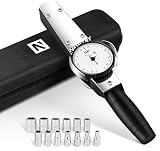
Overview: The NEWTRY dial torque wrench targets ultra-low torque applications from 0.5-5 N.m, complete with a comprehensive socket set spanning 4-14mm. This turnkey solution suits precision assembly tasks in electronics, instrumentation, and light machinery. The package includes multiple sockets and a portable carrying case, making it field-service ready. The alloy steel construction and frosted anti-slip handle provide controlled application of minute torque values.
What Makes It Stand Out: The included socket set eliminates additional purchases, offering immediate usability across common fastener sizes. The double-sided dial allows reading from either orientation, enhancing convenience in cramped spaces. The 0.05 N.m minimum measurement unit provides exceptional resolution for micro-torque applications. Peak memory retention on the driven needle ensures accurate documentation of applied forces.
Value for Money: As an all-in-one kit, this wrench delivers compelling value. The socket set alone would cost substantially if purchased separately. While NEWTRY lacks the prestige of premium brands, the comprehensive package and specialized 0.5-5 N.m range justify the moderate price point. For technicians requiring portability and socket variety in low-torque applications, it represents cost-effective procurement.
Strengths and Weaknesses: Strengths include the complete socket set, ultra-low torque capability, portable tool kit, double-sided scale, and 0.05 N.m resolution. The alloy steel construction provides adequate durability. Weaknesses are the ±3% accuracy rating, which translates to noticeable variance at sub-5 N.m values, and limited brand recognition for warranty support. The 1/4-inch drive restricts applications, and the 2.5-pound weight seems heavy for such a delicate tool.
Bottom Line: An excellent turnkey solution for precision torque applications. Ideal for field service technicians, electronics assemblers, and maintenance crews needing socket variety and portability. Acceptable accuracy for non-critical applications makes it a practical alternative to premium micro-torque wrenches.
6. NEWTRY Dial Torque Wrench with Sockets Set (4-14mm), 1-10N.m Indicating Torquemeter, Precision Torque Meter, 1/4 inch pound Dial Torque Wrench Torque Force Tester

Overview: The NEWTRY Dial Torque Wrench delivers precision torque measurement in a compact package designed for low-torque applications. With a 1-10N.m range and 1/4-inch drive, this tool targets delicate assembly work where overtightening risks component damage. The included 4-14mm socket set provides immediate versatility for various fasteners commonly found in electronics and small engines.
What Makes It Stand Out: This wrench distinguishes itself through dual-direction measurement capability and torque peak memory function. The driven needle retains your maximum torque reading while the main needle resets, eliminating guesswork during repetitive tasks. Both clockwise and counterclockwise scales are visible, making it equally effective for tightening and loosening operations. The frosted anti-slip handle ensures stable control during critical applications where precision is paramount.
Value for Money: Priced competitively for a dial-indicating torque wrench, the included socket set represents significant added value. Comparable precision tools often require separate socket purchases, making this kit cost-effective for hobbyists and professionals entering precision work. The ±3% accuracy matches industry standards for manual torque tools at this price point, offering reliable performance without premium brand costs while maintaining quality.
Strengths and Weaknesses: Strengths:
- Complete socket set (4-14mm) included
- Peak memory needle prevents reading loss
- Bidirectional measurement capability
- Compact 12-inch length reaches tight spaces
- Non-slip handle enhances control
Weaknesses:
- Limited 1-10N.m range restricts versatility
- 1/4" drive not suitable for high-torque applications
- No ISO certification mentioned
- 2.5 lbs weight may fatigue extended use
Bottom Line: Ideal for electronics, small engine work, and precision assembly where low-torque accuracy matters. The NEWTRY wrench offers reliable performance for specialized tasks, though professionals may need additional tools for broader applications.
7. T2OL Dial Indicator Torque Wrench, 2-Direction Cursor Spanner Wrench 0-100 N.m, 1/2 Inch Drive Indicating Torque Meter for Auto Assembly Torque Testing

Overview: The T2OL Dial Torque Wrench handles demanding professional applications with its robust 0-100 N.m range and 1/2-inch drive. Built for automotive, aviation, and heavy industry, this tool provides reliable torque verification where precision impacts safety and performance. The intuitive dial indicator simplifies operation for users at all skill levels, from apprentices to master technicians.
What Makes It Stand Out: This wrench excels through its rugged multi-material construction combining alloy steel, aluminum, and iron components. The easy zero-adjustment feature eliminates calibration drift frustrations, while bidirectional operation doubles its utility. With ±3% accuracy across the full scale, it maintains precision whether tightening head bolts or testing fastener integrity during disassembly operations.
Value for Money: As a professional-grade tool, it competes favorably against premium brands costing significantly more. The wide 0-100 N.m range eliminates need for multiple wrenches, while durable construction promises extended service life. For shops requiring reliable torque verification without digital complexity, this offers excellent return on investment and reduces equipment costs.
Strengths and Weaknesses: Strengths:
- Wide 0-100 N.m range covers most automotive tasks
- 1/2" drive handles heavy-duty applications
- Simple zero-adjustment maintains accuracy
- Bidirectional measurement capability
- Durable multi-material construction
Weaknesses:
- No sockets included requires additional investment
- Dial face may be difficult to read in poor lighting
- Heavier than comparable tools
- No peak memory function mentioned
- Limited warranty information available
Bottom Line: A solid choice for professional mechanics and industrial technicians needing reliable, no-frills torque measurement. The T2OL wrench balances durability, accuracy, and versatility for demanding work environments.
8. LIANDU-US Dial Indicator Torque Wrench Indicating Torquemeter 1/2" Drive 0-100 Nm High Precision Torque Meter Professional Measure Tool, ± 3% Accuracy

Overview: The LIANDU-US Dial Torque Wrench delivers professional-grade torque measurement across a versatile 0-100 N.m range. Engineered for machining, automotive, aviation, and heavy industry applications, this 1/2-inch drive tool combines durability with precision. Its lightweight 1.5-pound design reduces fatigue during extended use while maintaining robust performance standards expected in professional environments.
What Makes It Stand Out: Premium materials set this wrench apart, featuring electroplated alloy steel and one-piece die-cast aluminum construction for superior wear resistance. The high-contrast dial with black and yellow pointers ensures excellent visibility, reducing misreading errors. Peak memory functionality records maximum torque values, streamlining repetitive testing procedures and quality control documentation requirements for professional workflows.
Value for Money: While sockets must be purchased separately, the tool itself offers professional features at a mid-range price point. The corrosion-resistant finish and high-strength construction suggest longevity that justifies its cost. For technicians already owning 1/2-inch sockets, this represents a smart investment in precision measurement capabilities that will last for years.
Strengths and Weaknesses: Strengths:
- Excellent material quality and corrosion resistance
- Peak memory aids repetitive tasks
- Lightweight design reduces operator fatigue
- High-contrast dial improves readability
- Wide 0-100 N.m measurement range
Weaknesses:
- No included sockets increases initial cost
- 1.5 lbs weight may indicate less robust construction
- Limited brand recognition
- No certification details provided
- No mention of warranty coverage
Bottom Line: A capable professional tool for users prioritizing visibility and corrosion resistance. The LIANDU-US wrench serves well in harsh environments, though the separate socket purchase requires budget consideration.
9. 1/4 Torque Wrench Digital(1.1-22.2Ft.Lb) ±1% Accuracy Digital Torque Wrench 1/4 Drive with Buzzer and LED Flash Track Mode Inch Pound Torque Wrench Set with Bits & Sockets for Bike Moto Gunsmithing
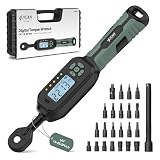
Overview: This digital torque wrench revolutionizes precision fastening with exceptional ±1% accuracy and comprehensive alerting system. Covering 1.1-22.2 Ft.Lb (1.5-30 N.m), the 1/4-inch drive tool serves bicycle, motorcycle, and gunsmithing applications where over-torquing causes costly damage. The extensive included kit provides immediate utility for diverse fastening tasks.
What Makes It Stand Out: Unmatched accuracy and intelligent feedback differentiate this wrench. LED lights and buzzer alerts provide progressive warnings at 85-90% and 100% of target torque, virtually eliminating fastener damage. Peak and Track modes offer flexibility for different workflows, while the 72-tooth ratchet enables operation in extremely tight spaces. The complete 21-piece accessory set includes specialized bits rarely found in torque wrench kits.
Value for Money: Premium digital features justify a higher price point compared to dial-type wrenches. The ±1% accuracy exceeds professional standards, while the comprehensive bit and socket collection eliminates additional purchases. For precision-critical applications like firearm assembly or carbon fiber bike components, this tool prevents expensive mistakes and component failures.
Strengths and Weaknesses: Strengths:
- Exceptional ±1% accuracy
- Audio-visual overload protection
- Peak and Track operating modes
- Comprehensive 21-piece accessory kit
- 72-tooth ratchet for tight access
Weaknesses:
- Digital components vulnerable to shop conditions
- Requires battery management
- Higher price point than analog alternatives
- 1/4" drive limits heavy-duty use
- Complex features may overwhelm casual users
Bottom Line: Essential for precision-focused users in cycling, motorsports, and firearms maintenance. The digital intelligence and superior accuracy make it worth the premium investment for those who cannot afford torque-related failures.
10. NEWTRY Dial Torque Wrench, 0.3-3N.m Dial Indicating Torquemeter with Sockets Set (4-14mm), Precision Torque Meter, 1/4 inch pound Dial Torque Wrench Torque Force Tester

Overview: The NEWTRY 0.3-3N.m Dial Torque Wrench addresses ultra-precision applications requiring delicate torque control. This specialized tool measures torque values too low for standard wrenches, making it indispensable for electronics, instrumentation, and micro-mechanical assembly. The 1/4-inch drive and included 4-14mm sockets provide immediate capability for small fastener work.
What Makes It Stand Out: This wrench’s exceptionally low 0.3 N.m minimum measurement with 0.03 N.m increments enables precision unattainable with conventional tools. The peak memory function captures maximum torque for microscopic fasteners, while bidirectional scales accommodate various assembly orientations. The frosted anti-slip handle ensures stable control during sensitive operations where hand tremors affect accuracy.
Value for Money: Specialized low-torque tools command premium prices, making this competitively priced for its niche. The included socket set enhances value, though the limited range restricts versatility. For technicians regularly servicing precision equipment, it prevents costly component damage that easily exceeds the tool’s cost and reduces rework.
Strengths and Weaknesses: Strengths:
- Ultra-low 0.3-3N.m range for delicate work
- Fine 0.03 N.m measurement resolution
- Peak memory function included
- Complete socket set provided
- Bidirectional measurement capability
Weaknesses:
- Extremely limited torque range
- Not versatile for general mechanical work
- 2.5 lbs weight seems heavy for precision tool
- No calibration certificate included
- Limited application outside specialized fields
Bottom Line: Perfect for electronics technicians and precision instrument specialists requiring ultra-low torque control. The NEWTRY wrench fills a narrow but critical niche, though most users will need additional tools for general mechanical tasks.
Understanding Dial Torque Wrench Calibration Standards
When you’re investing in a tool for calibration purposes, the standards it meets become your first line of defense against inaccurate measurements. Calibration isn’t just about initial accuracy—it’s about maintaining that precision over thousands of cycles and varying conditions.
ANSI/ASME B107.300 Compliance
The American National Standards Institute provides the backbone for torque tool specifications in North America. Tools meeting this standard have undergone rigorous testing for repeatability, accuracy, and durability. Look for wrenches that explicitly state compliance with the latest revision, as standards evolve to address new manufacturing capabilities and user requirements.
ISO 6789 Certification Levels
International Organization for Standardization guidelines create a universal language for torque accuracy. ISO 6789:2017 (and its anticipated 2026 updates) establishes two distinct accuracy classes that directly impact calibration suitability. Type I Class A tools represent the highest tier for dial-indicating models, typically offering ±3% accuracy or better in the clockwise direction.
NIST Traceability Requirements
For true calibration work, your torque wrench must come with a certificate of calibration traceable to the National Institute of Standards and Technology. This documentation proves your tool’s readings can be linked back to fundamental physical constants through an unbroken chain of comparisons, each with documented uncertainties.
Key Accuracy Metrics That Matter in 2026
Accuracy specifications tell only part of the story. Modern calibration-grade tools differentiate themselves through nuanced metrics that reveal their true performance characteristics under real-world conditions.
Percentage of Reading vs. Full Scale
Understanding the difference between these two accuracy calculations is crucial. Percentage of reading error decreases as you approach lower torque values, while full-scale percentage remains constant across the range. Premium calibration tools typically use percentage of reading for the primary scale, giving you better precision where you need it most.
Repeatability and Reproducibility
A tool can be accurate on average but inconsistent in its measurements. Repeatability (same operator, same conditions) and reproducibility (different operators, different conditions) data provide insight into measurement consistency. Look for tools specifying both R&R values under 1% for critical calibration applications.
Hysteresis and Directional Accuracy
The difference between loading and unloading readings—known as hysteresis—can significantly impact calibration work. High-quality dial wrenches minimize this gap through superior internal mechanism design, ensuring your measurements remain consistent whether you’re approaching the target torque from above or below.
Essential Features for Calibration-Grade Tools
Not all dial torque wrenches belong in a calibration lab. Specific features separate professional-grade instruments from those better suited for general maintenance tasks.
Micrometer-Style Adjustment Mechanisms
Precision adjustment controls allow you to set target torque values with confidence. The best mechanisms feature tactile clicks, positive stops, and minimal backlash. This ensures your setpoint doesn’t drift during use and allows for consistent resetting between measurements.
Dual-Scale Readings with Vernier Scales
Fine resolution matters when you’re working with tight tolerances. Vernier scales on the dial face enable reading precision down to fractions of a unit, while dual-scale (inch-pound and Newton-meter) displays eliminate conversion errors that could compromise your calibration data.
Over-Torque Indication Systems
Visual or tactile indicators that alert you when you’ve exceeded the set torque help prevent mechanism damage. For calibration work, this feature protects the tool’s internal components from overload conditions that could shift its accuracy profile.
How to Evaluate Build Quality and Construction
The physical construction of your torque wrench directly impacts its long-term calibration stability. Material choices and assembly quality determine how well the tool maintains accuracy through temperature changes, drops, and continuous use.
Beam and Housing Materials
Hardened steel beams provide the foundation for consistent flex characteristics, while aluminum or composite housings reduce weight without sacrificing rigidity. The best designs isolate the measuring mechanism from external stresses, preventing housing deformation from affecting your readings.
Bearing and Pivot Design
Jeweled bearings or precision ball-bearing pivots minimize friction in the indicating mechanism. This reduction in mechanical drag translates directly to improved sensitivity and repeatability, especially at lower torque values where small frictional variations can skew results.
Sealing and Contamination Protection
Ingress protection ratings (IP codes) tell you how well the internal mechanism resists dust, oil, and moisture. For shop environments, look for IP54 or better ratings that ensure your calibration accuracy won’t degrade due to contamination of the delicate internal components.
Torque Range Considerations for Precision Work
Selecting the appropriate torque range isn’t just about covering your application requirements—it’s about positioning your measurements in the tool’s optimal performance zone.
Mid-Range Optimization Strategy
Every torque wrench performs best in its middle third of the total range. For calibration accuracy, you want your typical applications to fall within this sweet spot. Using a 0-250 ft-lb wrench for 15 ft-lb fasteners places you in the least accurate portion of the scale, where measurement uncertainty increases dramatically.
Overlapping Range Sets
Professionals often invest in multiple wrenches with overlapping ranges rather than one wide-range tool. This approach keeps measurements in optimal zones across different application types. Consider how three wrenches covering 0-30, 20-150, and 100-600 inch-pounds might serve you better than a single 0-600 inch-pound model.
Low-Torque Measurement Challenges
Sub-5 Newton-meter measurements require specialized mechanisms with enhanced sensitivity. Standard dial designs often lack the resolution needed for these delicate applications. If your calibration work includes small fasteners, prioritize tools specifically engineered for low-torque precision with appropriately sized drive heads.
The Importance of Certification and Traceability
Documentation transforms a precision tool into a calibration instrument. Without proper certification, even the most accurate wrench lacks credibility in quality-controlled environments.
Factory Calibration Certificates
Reputable manufacturers provide individual calibration certificates for each tool, not generic batch certificates. These documents should include actual measurement data at multiple points across the range, not just a pass/fail statement. The certificate must reference standards used, environmental conditions during testing, and the date of calibration.
Interim Verification Options
Some advanced tools include built-in verification features that allow quick accuracy checks without full recalibration. Look for models with reference marks or calibration check modes that let you verify performance against a known standard between formal calibration cycles.
Documentation Retention Requirements
Quality systems often mandate keeping calibration records for the tool’s entire service life. Consider how you’ll store and manage these documents. Some manufacturers now offer digital certificate databases accessible via QR codes on the tool, simplifying record-keeping for large equipment inventories.
Digital vs. Analog Dial Displays: Pros and Cons
The debate between traditional analog dials and emerging digital displays involves more than just personal preference—each technology brings distinct advantages and limitations for calibration work.
Analog Dial Advantages for Calibration
Analog displays provide continuous, real-time feedback without digital sampling delays. This instantaneous response helps you detect rate-of-application issues and develop proper technique. The visual pointer movement also creates an intuitive understanding of how torque builds, valuable for training and technique refinement.
Digital Display Precision Benefits
Digital readouts eliminate parallax errors and offer resolution down to 0.01 units. They can also store peak values, calculate statistics, and interface with data collection systems. However, verify the digital sampling rate—a slow refresh can miss rapid torque spikes that analog pointers would catch.
Hybrid Display Solutions
The latest 2026 designs combine analog pointers with digital overlays, giving you the best of both worlds. These systems use the analog mechanism for primary indication while the digital display provides precise numerical readouts and data logging capabilities.
Environmental Factors Affecting Calibration Accuracy
Your torque wrench doesn’t operate in a vacuum. Temperature, humidity, and atmospheric pressure all influence measurement accuracy, and calibration-grade tools account for these variables differently.
Temperature Compensation Systems
Quality mechanisms use materials with matched thermal expansion coefficients to minimize temperature drift. Some premium tools include built-in temperature sensors that apply correction factors to readings. For calibration work, understand your tool’s operating temperature range and how accuracy specifications shift outside 68°F (20°C) standard conditions.
Altitude and Pressure Effects
While less dramatic than temperature, atmospheric pressure changes can affect certain mechanism types. Sealed dial systems are less susceptible than vented designs. If you calibrate at significantly different altitudes, verify your tool’s pressure sensitivity specifications.
Humidity and Corrosion Resistance
Moisture doesn’t just cause rust—it can affect lubricant viscosity and friction characteristics. Desiccant systems or nitrogen-filled dials prevent internal condensation. These features prove especially valuable in climates with high humidity or applications involving temperature cycling.
Proper Handling Techniques to Maintain Precision
Even the best torque wrench delivers poor results in careless hands. Proper technique preserves calibration accuracy and extends the time between required recalibrations.
Grip Position and Force Application
Always grasp the handle at its designated position—usually marked with a line or groove. Applying force elsewhere on the tool changes the effective lever arm length, introducing systematic errors. Use smooth, steady pressure rather than jerky movements that can cause dynamic overshoot.
Angle of Application
The force vector should be perpendicular to the fastener axis. Angled applications create vector components that don’t contribute to rotational torque while potentially stressing the tool’s mechanism. Use swivel heads or extensions to maintain proper alignment rather than compromising your measurement angle.
Storage and Transportation Practices
Never store a torque wrench with tension on the mechanism. Return the setting to the lowest value after use to relieve spring stress. For dial types, consider storage cases with foam cutouts that protect the indicating mechanism from shock during transport between workstations.
Calibration Frequency and Best Practices
Establishing a rational calibration schedule balances cost, risk, and quality requirements. One-size-fits-all approaches rarely serve calibration-critical applications effectively.
Usage-Based Scheduling
High-frequency use in demanding conditions warrants shorter intervals. A wrench used daily on production line critical fasteners might need quarterly calibration, while the same tool used weekly in a climate-controlled lab could maintain accuracy for a year or more. Track cycle counts when possible—many quality systems specify recalibration every 5,000 to 10,000 cycles.
Event-Triggered Recalibration
Certain events should automatically trigger recalibration regardless of schedule. These include drops from height, exposure to overload conditions beyond 125% of maximum rating, or any indication that the tool has been disassembled. Even minor impacts can shift internal components enough to affect accuracy.
In-House vs. Laboratory Calibration
Decide whether to invest in in-house calibration equipment or send tools to accredited labs. In-house capabilities provide faster turnaround and better control, but require significant investment in reference standards and trained personnel. For most operations, a hybrid approach works best—interim checks in-house with periodic accredited laboratory calibration.
Common Mistakes That Compromise Accuracy
Understanding what not to do proves just as valuable as mastering proper technique. These common errors silently degrade calibration accuracy over time.
Using Extensions Without Correction
Extensions change the effective length of your torque wrench, requiring mathematical correction. While some technicians apply the simple length ratio formula, this ignores the extension’s own torsional stiffness. For calibration-grade work, use certified torque multipliers or apply proper correction factors validated through testing.
Ignoring Warm-Up Effects
Mechanical systems exhibit different characteristics when cold versus warm. Run several practice cycles through your typical torque range before starting critical measurements. This warm-up period allows lubricants to distribute evenly and internal temperatures to stabilize.
Mixing Drive Sizes Improperly
Adapters between different drive sizes (½" to ¼", for example) introduce additional compliance and potential play in the system. They also change the tool’s effective geometry. When calibration accuracy is paramount, use dedicated wrenches for each drive size rather than adapting a single tool.
Investing in Calibration Equipment and Services
Supporting your torque wrench with proper calibration infrastructure ensures your measurements maintain credibility throughout their service life.
Primary Reference Standards
If you’re establishing in-house capabilities, invest in deadweight torque testers or reference transducers with uncertainties at least four times better than the tools you’re calibrating. These primary standards should themselves be calibrated by NVLAP-accredited laboratories on regular intervals.
Calibration Management Software
Modern quality systems benefit from software that tracks calibration schedules, stores certificates, and alerts you when tools approach due dates. These systems can also analyze historical data to identify tools that drift more quickly, helping you optimize individual recalibration frequencies.
Training and Competency Development
The best equipment fails without competent operators. Invest in training that covers not just proper use, but also error sources, uncertainty calculations, and documentation requirements. ASQ and other organizations offer certification programs specifically for torque calibration technicians.
Industry Applications Requiring Maximum Precision
Different industries impose unique requirements on torque measurement accuracy. Understanding your sector’s specific needs helps prioritize which features matter most.
Aerospace and Aviation Standards
AS9100 and FAA requirements often demand torque accuracy within ±2% for critical flight hardware. These applications also require extensive documentation and frequently specify tool serialization and lifecycle tracking. Look for tools with permanent marking systems that withstand repeated handling and cleaning.
Medical Device Manufacturing
ISO 13485 quality systems for medical devices require validated processes, including torque measurement. Tools must often be certified for cleanroom compatibility and may need to withstand aggressive sterilization procedures. Material certifications and biocompatibility documentation become as important as torque accuracy.
Automotive Engine Assembly
Modern engines with aluminum components and precise torque-to-yield fasteners require exceptional accuracy. Many manufacturers now specify torque-angle procedures that demand both accurate torque measurement and precise angle rotation tracking. Some dial wrenches integrate angle measurement capabilities for these applications.
Future Trends in Torque Wrench Technology
The evolution of dial torque wrenches continues as manufacturers integrate smart features while preserving the reliability of mechanical indication systems.
Wireless Data Integration
Emerging tools incorporate Bluetooth or Wi-Fi connectivity that streams torque data directly to quality management systems. This eliminates manual recording errors and enables real-time statistical process control. However, verify that wireless features don’t compromise the mechanical integrity or accuracy of the primary indicating system.
Self-Diagnostic Capabilities
Advanced mechanisms now include wear sensors that monitor internal component condition. These systems can predict when accuracy might begin to drift before it happens, allowing proactive recalibration scheduling rather than reactive correction after discovering out-of-tolerance conditions.
Sustainable Manufacturing Practices
Environmental consciousness is driving changes in materials and processes. Some manufacturers now offer wrenches made from recycled alloys with recyclable packaging. While these green initiatives don’t directly affect accuracy, they reflect a commitment to quality that often correlates with better overall tool performance.
Making Your Final Decision: A Buyer’s Checklist
Selecting the right dial torque wrench for calibration work requires balancing multiple factors against your specific needs and budget constraints.
Accuracy Requirements Documentation
Start by documenting the torque ranges, accuracy tolerances, and certification requirements for your specific applications. This creates objective criteria rather than emotional decision-making based on brand reputation or feature lists.
Total Cost of Ownership Analysis
Consider not just purchase price, but also calibration costs, expected service life, warranty coverage, and potential downtime expenses. A more expensive tool with longer calibration intervals and better durability often costs less over five years than a cheaper alternative requiring frequent recalibration.
Vendor Support and Service Network
Evaluate the manufacturer’s calibration service capabilities, turnaround times, and technical support quality. A tool is only as good as the support behind it, especially when you need rapid recalibration or repair to maintain production schedules.
Frequently Asked Questions
How often should I recalibrate my dial torque wrench for critical applications?
For calibration-critical work, most quality systems require recalibration every 3,000 to 5,000 cycles or annually, whichever comes first. However, high-frequency use in harsh conditions may necessitate quarterly intervals. Always recalibrate after any drop, overload event, or repair, regardless of schedule.
What’s the difference between a dial torque wrench and a click-type for calibration purposes?
Dial types provide continuous, real-time torque indication and typically offer better resolution for calibration work. Click wrenches only signal when you’ve reached a preset value, making them less suitable for measuring actual applied torque across a range. Dial designs also generally maintain accuracy better over time due to their direct-reading mechanism.
Can I calibrate my torque wrench myself without sending it to a lab?
You can perform verification checks using a certified torque tester, but this doesn’t constitute a full calibration. True calibration requires adjusting the tool to correct any deviations and must be performed by trained technicians using traceable standards. For quality-controlled environments, use accredited laboratories that provide NIST-traceable certificates.
Why does my dial torque wrench read differently in cold weather?
Temperature affects the modulus of elasticity of the beam material and the viscosity of lubricants in the mechanism. Quality tools include temperature compensation, but extreme cold can still shift readings by 1-2%. Always allow the tool to stabilize to ambient temperature and run several warm-up cycles before critical measurements.
What size drive should I choose for calibration work?
Select the drive size based on your typical torque range, not just fastener size. ¼" drives excel for 0-50 inch-pounds, ⅜" for 50-250 inch-pounds, and ½" for 20-150 foot-pounds. Using too large a drive reduces sensitivity, while too small a drive risks overload. Many professionals invest in multiple sizes for different ranges.
How do I know if my torque wrench has been damaged and needs recalibration?
Signs include visible pointer wobble, inconsistent readings when repeating measurements, difficulty returning to zero, or any physical damage to the housing or dial. If the wrench has been dropped more than a few inches or subjected to torque beyond 125% of maximum, assume it needs recalibration even if it appears to function normally.
Are digital dial torque wrenches more accurate than traditional analog models?
Not inherently. The mechanism determining accuracy is the same; only the display differs. Digital models eliminate parallax errors and offer better resolution, but the underlying mechanical system determines true accuracy. Some users find analog pointers better for developing proper technique due to continuous visual feedback.
What’s the best way to store torque wrenches long-term without affecting calibration?
Return the setting to the lowest value, clean the tool thoroughly, and store it in its original case in a climate-controlled environment. Avoid areas with temperature extremes, high humidity, or vibration. For storage beyond six months, consider having the tool recalibrated before returning to service, as springs can creep over time even when unloaded.
Can I use adapters or extensions with a calibration-grade torque wrench?
Only when absolutely necessary, and always with proper correction factors. Extensions change the tool’s effective length and introduce compliance that affects accuracy. For calibration work, use direct-fit sockets whenever possible. When adapters are unavoidable, verify the combined system’s accuracy through testing rather than relying solely on theoretical calculations.
How do I interpret the accuracy specification of ±3% clockwise, ±4% counterclockwise?
This means your reading can deviate from the true value by up to 3% when tightening (clockwise) and 4% when loosening. The difference reflects mechanism design challenges in the reverse direction. For calibration purposes, always apply the appropriate directional accuracy to your uncertainty calculations, and prefer clockwise measurements when specifications allow.
See Also
- 2026’s Top 10 Dial Torque Wrenches for Industrial Applications
- 2026’s Top 10 Dial Torque Wrenches for Professional Auto Shops
- We Tested 50 Dial Torque Wrenches - Here are the 10 Best for Calibration Work
- 2026’s Top 10 Dial Torque Wrenches for Heavy-Duty Applications
- 10 Affordable Digital Torque Wrenches That Don’t Sacrifice Accuracy in 2026