Table of Contents
Gone are the days when diagnosing a check engine light meant a costly trip to the dealership or mechanic. Today’s handheld OBD2 code readers put professional-grade diagnostic power literally in the palm of your hand, transforming how we approach vehicle maintenance and emergency repairs. Whether you’re a weekend warrior tackling driveway projects or a mobile technician servicing fleet vehicles on location, these compact devices have become indispensable tools for understanding what your car is trying to tell you.
As we look toward 2026, the landscape of portable diagnostic equipment is evolving faster than ever, with new connectivity options, enhanced processing power, and sophisticated software capabilities that blur the line between consumer and professional-grade tools. Understanding which features truly matter—and which are just marketing fluff—can save you hundreds of dollars while ensuring you’re prepared for whatever diagnostic challenges roll into your garage or parking lot.
Top 10 Handheld OBD2 Code Readers
Detailed Product Reviews
1. ANCEL AD310 Classic Enhanced Universal OBD II Scanner Car Engine Fault Code Reader CAN Diagnostic Scan Tool, Read and Clear Error Codes for 1996 or Newer OBD2 Protocol Vehicle (Black)

Overview: The ANCEL AD310 is a best-selling OBDII scanner that has earned its reputation through reliability and simplicity. Recommended by popular automotive YouTuber Scotty Kilmer, this compact diagnostic tool is designed for home mechanics and professionals alike. It provides essential functions like reading and clearing check engine light codes, viewing freeze frame data, and checking I/M monitor readiness for emissions testing.
What Makes It Stand Out: Its exceptional build quality sets it apart from budget competitors. The 2.5-foot cable features thick, flexible insulation that withstands garage abuse, while the unit’s sturdy construction survives drops that would destroy cheaper alternatives. The device delivers power directly from the OBDII port, eliminating battery concerns. Its broad protocol support covers KWP2000, J1850 VPW/PWM, ISO9141, and CAN, ensuring compatibility with virtually all 1996+ US vehicles and 2000+ EU/Asian models.
Value for Money: Priced in the entry-level segment, the AD310 punches above its weight class. It offers professional-grade accuracy and speed without the professional-grade price tag. While basic compared to high-end scanners, it provides all essential functions most users need, making it a smarter investment than ultra-cheap models that often fail to connect or provide inaccurate readings.
Strengths and Weaknesses: Pros: Excellent build quality; Fast, accurate readings; Wide vehicle compatibility; No batteries required; Compact and portable; Trusted brand reputation Cons: Monochrome screen; No advanced diagnostics (ABS/SRS); Limited to engine codes only; Cable could be longer for some applications
Bottom Line: The ANCEL AD310 is the ideal choice for DIYers seeking a reliable, no-frills OBDII scanner. It delivers consistent performance and durability that justifies its slightly higher price over bargain-bin alternatives, making it a worthy addition to any home garage.
2. VDIAGTOOL VD10 OBD2 Scanner Code Reader Car Diagnostic Tool Engine Fault Code Reader for Turn Off CEL with Freeze Frame/I/M Readiness for All OBDII Protocol Cars, OBD2 Scanner Diagnostic Tool
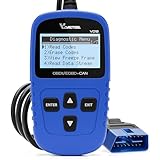
Overview: The VDIAGTOOL VD10 positions itself as the ultimate DIY companion for car owners intimidated by vehicle diagnostics. This entry-level scanner focuses on accessibility, promising to demystify check engine lights for users with minimal mechanical knowledge. It handles core functions including code reading/clearing, live data streaming, freeze frame capture, and I/M readiness monitoring for emissions compliance.
What Makes It Stand Out: Its built-in database of over 3,000 trouble codes with definitions eliminates time-consuming online searches—a major advantage for beginners. The device particularly shines in its smog check preparation capabilities, with dedicated I/M readiness functions that clearly indicate whether your vehicle will pass inspection. The comparison to FIXD highlights its smartphone-like simplicity while maintaining standalone reliability.
Value for Money: As one of the most affordable scanners with a comprehensive code library, the VD10 delivers exceptional value. It sacrifices advanced features for simplicity and cost-effectiveness, making it perfect for occasional users who just want to check why their CEL is on. The time saved from integrated DTC definitions alone justifies the price over basic code readers requiring manual lookups.
Strengths and Weaknesses: Pros: Extremely user-friendly; Built-in code definitions; Excellent for emissions testing prep; Compact design; Fast operation; Great for beginners Cons: Limited to 3,000 codes (vs. competitors’ 30,000+); No advanced diagnostics; Plastic construction feels less durable; Smaller screen; No data logging
Bottom Line: The VD10 is perfect for nervous first-timers needing a simple, effective check engine light solution. While not built for professional use, its straightforward operation and integrated knowledge base make it an unbeatable value for basic home diagnostics.
3. ANCEL AD410 Enhanced OBD2 Scanner, Vehicle Code Reader for Check Engine Light, Automotive OBD II Scanner Fault Diagnosis, OBDII Scan Tool for All OBDII Cars 1996+, Black/Yellow
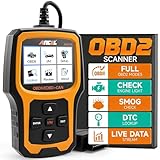
Overview: The ANCEL AD410 represents a significant step up from basic code readers, offering enhanced diagnostics while maintaining user-friendly operation. This scanner targets intermediate DIYers who need more than just code clearing capabilities. Supporting all OBDII protocols and multiple languages, it serves a global audience with vehicles from 1996 onward.
What Makes It Stand Out: Its standout feature is the comprehensive O2 sensor and EVAP system testing, typically found in more expensive tools. The 2.4-inch QVGA color display with intuitive UI makes navigating through 42,000 DTC definitions surprisingly pleasant. Unlike competitors, it performs leak tests on evaporative systems and monitors fuel tank integrity—critical for diagnosing emissions issues and improving fuel economy.
Value for Money: The AD410 bridges the gap between basic scanners and professional tools at a mid-range price. While costing more than entry-level models, its advanced diagnostic capabilities and color screen justify the premium. The extensive code library and enhanced testing features save users hundreds in diagnostic fees, paying for itself after a single successful troubleshooting session.
Strengths and Weaknesses: Pros: Color TFT display; 42,000 DTC definitions; O2 sensor and EVAP testing; Multilingual support; Intuitive interface; USB update capability Cons: Still limited to engine systems only; Update process can be confusing; Not suitable for professional mechanics; Cable quality could be improved
Bottom Line: The AD410 is the sweet spot for serious DIY enthusiasts wanting advanced features without professional scanner prices. Its enhanced diagnostics and user-friendly design make it a worthwhile upgrade from basic models for those regularly working on modern vehicles.
4. WEJOWE OBD2 Scanner Diagnostic Tool, Check Engine Code Reader OBD2 Scanner with Reset, Mode 6, Mode 8 & I/M Readiness, Auto Check Engine Light Car Diagnostic Scan Tool for All OBDII Car Since 1996
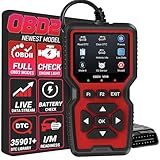
Overview: The WEJOWE OBD2 Scanner distinguishes itself through an enormous code library and unique data printing capabilities. This tool targets detail-oriented DIYers and small shop mechanics who need comprehensive diagnostics and documentation. Compatible with 98% of post-1996 vehicles, it covers an impressive range of makes and models across ten languages.
What Makes It Stand Out: Its massive 35,901 DTC lookup library dwarfs most competitors, providing detailed definitions that eliminate guesswork. The revolutionary printing function allows users to connect to a computer and print diagnostic reports—an invaluable feature for avoiding repair shop disputes and maintaining vehicle service records. Lifetime free updates ensure the tool stays current with evolving vehicle technologies.
Value for Money: Despite its advanced features, the WEJOWE remains competitively priced. The printing capability alone offers unique value not found in similarly priced scanners. For small workshops or meticulous owners, the ability to generate physical documentation justifies any price premium over basic readers. The lifetime update policy protects your investment long-term.
Strengths and Weaknesses: Pros: Massive 35,901 code library; Data printing functionality; Lifetime free updates; 98% vehicle compatibility; 10 language support; Compact with storage bag; Component testing features Cons: Requires computer for printing; Interface less intuitive than competitors; Screen quality basic; Update process not streamlined; Build quality adequate but not exceptional
Bottom Line: The WEJOWE excels for users needing detailed documentation and comprehensive code coverage. Its unique printing feature and massive code library make it ideal for small shops or owners managing multiple vehicles, though casual users may find simpler tools more convenient.
5. FOXWELL NT301 OBD2 Scanner Live Data Professional Mechanic OBDII Diagnostic Code Reader Tool for Check Engine Light

Overview: The FOXWELL NT301 positions itself as a professional-grade scanner for serious mechanics while remaining accessible to advanced DIYers. This tool focuses on live data analysis and emissions diagnostics, featuring distinctive LED indicators and audio alerts for quick readiness status checks. It handles all standard OBDII functions across a wide range of 1996+ vehicles.
What Makes It Stand Out: Its live data graphing and logging capabilities set it apart from entry-level scanners, allowing users to identify intermittent issues through trend analysis. The Red-Yellow-Green LED system with built-in speaker provides instant visual and audible feedback during emissions tests—a professional touch that speeds up diagnostics in busy shops. The device’s accuracy in reading worldwide vehicles makes it trustworthy for diverse fleets.
Value for Money: The NT301 commands a slightly higher price than basic scanners but delivers professional features that justify the cost. For mechanics or serious enthusiasts, the graphing capability alone warrants the upgrade. While not a full professional bi-directional tool, it offers 80% of the functionality at 30% of the price, representing excellent intermediate value.
Strengths and Weaknesses: Pros: Live data graphing/logging; LED readiness indicators; Professional build quality; Fast operation; Excellent vehicle compatibility; Audio alerts; VIN retrieval Cons: No ABS/SRS/Transmission support; No advanced special functions; Screen resolution could be higher; Steeper learning curve; Price higher than basic models
Bottom Line: The NT301 suits DIYers ready to graduate from basic code reading to serious diagnostics. Its graphing capabilities and professional indicators make it a shop-worthy tool for engine-specific troubleshooting, though those needing system-wide diagnostics should look at higher-end models.
6. BlueDriver Bluetooth Pro OBDII Scan Tool for iPhone & Android - No Subscription Fee - OBD2 Car Scanner and Code Reader - Diagnose Check Engine, ABS, SRS, Airbag & 7000+ Issues on Vehicles 1996+
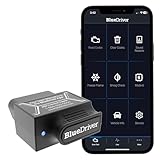
Overview: The BlueDriver Bluetooth Pro transforms your smartphone into a professional-grade diagnostic scanner. This wireless OBDII tool connects via Bluetooth to iPhone and Android devices, offering comprehensive vehicle diagnostics for cars from 1996 onward. Unlike traditional handheld scanners, BlueDriver leverages your phone’s processing power and display to deliver enhanced capabilities without the bulk.
What Makes It Stand Out: True wireless freedom sets BlueDriver apart—no tangled cables or dedicated screen required. Its standout feature is the ability to read and clear not just check engine codes, but also ABS, SRS, and airbag codes typically restricted to professional shop tools. The unlimited repair reports provide specific fixes rather than just code definitions, while integrated repair videos offer step-by-step guidance. Live data monitoring turns your phone into a real-time vehicle health dashboard during drives.
Value for Money: At its price point, BlueDriver eliminates the need for expensive standalone scanners and ongoing subscription fees that competitors often charge for advanced features. While cheaper basic code readers exist, they lack BlueDriver’s comprehensive system coverage and intelligent repair guidance. For DIY enthusiasts seeking shop-level diagnostics, it delivers exceptional value compared to professional equipment costing hundreds more.
Strengths and Weaknesses: Strengths include seamless Bluetooth connectivity, extensive vehicle coverage, professional-grade ABS/SRS diagnostics, and an intuitive app interface. The repair database and video library significantly reduce guesswork. Weaknesses: requires a compatible smartphone, may drain phone battery during extended use, and some users report occasional connectivity drops with certain Android models.
Bottom Line: Ideal for serious DIY mechanics who want wireless convenience and professional capabilities without subscription costs. If you own a smartphone and need more than basic code reading, BlueDriver is a smart investment that grows with your diagnostic needs.
7. XIAUODO OBD2 Scanner Car Code Reader Support Voltage Test Plug and Play Fixd Car CAN Diagnostic Scan Tool Read and Clear Engine Error Codes for All OBDII Protocol Vehicles Since 1996(Black)
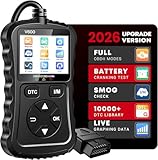
Overview: The XIAUODO OBD2 Scanner is a feature-rich handheld diagnostic tool designed for both home DIYers and professional technicians. Supporting over 30,000 fault codes and vehicles from 1996 onward, this compact device delivers comprehensive engine diagnostics through a bright color screen and intuitive six-button interface. Its plug-and-play design eliminates complicated setup processes.
What Makes It Stand Out: Unlike conventional scanners, XIAUODO includes a real-time voltage test function that monitors your vehicle’s electrical system health—a valuable preventative feature. The built-in power indicator light provides connection status at a glance, while an advanced enhanced chip accelerates data processing, significantly reducing diagnostic wait times. Dedicated I/M and DTC shortcut keys streamline common tasks for improved efficiency.
Value for Money: This scanner positions itself as a mid-range option, offering professional-grade features like voltage monitoring typically found in more expensive tools. The 90-day warranty and 24-hour customer support add peace of mind. While basic code readers cost less, they lack the voltage testing and enhanced processing speed, making XIAUODO worthwhile for users needing more than fundamental diagnostics.
Strengths and Weaknesses: Strengths include robust impact-resistant construction, stable performance across multiple protocols, real-time voltage monitoring, and multi-language support for international users. The bright screen excels in low-light conditions. Notable weaknesses: cannot test heavy-duty trucks or motorcycles, Japanese models only supported after 2005, and clearing codes for unrepaired issues requires a 4S shop computer—significant limitations for some users.
Bottom Line: Best suited for DIY enthusiasts and entry-level technicians working primarily with passenger vehicles. The voltage test function adds unique value, but verify your specific vehicle compatibility before purchasing to avoid disappointment.
8. Autel OBD2 Scanner MS309 Universal Car Engine Fault Code Reader, Check Engine Light and Emission Monitor Status, OBDII CAN Diagnostic Scan Tool
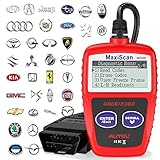
Overview: The Autel MS309 is a no-frills, universal OBDII scanner focused on essential diagnostics for 1996 and newer US vehicles. This handheld tool specializes in reading and clearing check engine lights and monitoring emission status. Its plug-and-play operation requires no registration or battery, drawing power directly from your vehicle’s OBDII port for immediate use.
What Makes It Stand Out: The MS309 displays DTC definitions directly on its screen, eliminating internet searches for over 1,000 generic and manufacturer-specific codes. It retrieves freeze frame data to pinpoint conditions when faults occurred and accesses vehicle identification information like VIN and calibration IDs—valuable features when purchasing used cars. The straightforward three-step operation makes it exceptionally beginner-friendly.
Value for Money: As one of the most affordable scanners from a reputable brand, the MS309 delivers core functionality at a budget price point. While lacking advanced features like ABS/SRS diagnostics or live data streaming, it provides reliable check engine light diagnostics that would cost significantly more at a repair shop. For basic troubleshooting, it offers excellent return on investment.
Strengths and Weaknesses: Strengths include Autel’s reliability, intuitive operation, on-screen code definitions, and useful freeze frame/VIN retrieval. The tool requires no updates or subscriptions. Major weaknesses: cannot access 2017+ FCA vehicles (Chrysler, Dodge, Jeep) due to security gateways, lacks ABS/airbag support, and offers no advanced service functions. The user manual download process could be more straightforward.
Bottom Line: Perfect for budget-conscious car owners needing basic check engine light diagnostics. If you require only fundamental code reading for pre-2017 vehicles, the MS309 is a reliable, cost-effective choice.
9. MOTOPOWER MP69033 Car OBD2 Scanner Code Reader Engine Fault Scanner CAN Diagnostic Scan Tool for All OBD II Protocol Cars Since 1996, Yellow

Overview: The MOTOPOWER MP69033 is a versatile handheld OBD2 scanner featuring a 2.8-inch LCD display and comprehensive diagnostic capabilities for vehicles from 1996 onward. This tool reads and clears engine codes while offering advanced functions like freeze frame analysis, I/M readiness monitoring, and real-time data streaming. Its compact design and 2.5-foot cable provide flexibility in various garage environments.
What Makes It Stand Out: The scanner’s built-in DTC lookup library provides immediate code definitions without external resources. Real-time curve plotting visualizes live data streams, making it easier to identify intermittent issues. The six-button interface includes dedicated shortcuts for VIN retrieval and DTC queries, streamlining common operations. The white backlight LCD with contrast adjustment ensures readability in any lighting condition.
Value for Money: Positioned in the affordable mid-range segment, the MP69033 offers more functionality than basic code readers without premium pricing. The inclusion of live data streaming and graphical analysis at this price point represents solid value. While professional-grade scanners offer broader system coverage, this tool provides sufficient capability for most DIY diagnostic needs.
Strengths and Weaknesses: Strengths include the clear display, intuitive button layout, multi-language support, and comprehensive engine diagnostics. The device powers directly from the vehicle, eliminating battery concerns. Significant weaknesses: explicitly does not support ABS, airbag, or oil service lights, limiting its scope to engine-related issues. Protocol support covers nine standards, which may exclude some proprietary systems.
Bottom Line: An excellent choice for DIY mechanics focused primarily on engine diagnostics. The clear display and live data features enhance troubleshooting, but those needing ABS or airbag diagnostics should look elsewhere.
10. BluSon YM319 OBD2 Scanner Diagnostic Tool with Battery Tester, Check Engine Fault Code Reader with Live Data, Cloud Printing, DTC Lookup, Freeze Frame, Scan Tool for All OBDII Protocol Cars Since 1996

Overview: The BluSon YM319 positions itself as an advanced diagnostic tool combining traditional OBDII scanning with innovative battery testing and cloud connectivity. Supporting over 63,000 fault codes and all OBDII protocols, this scanner caters to 1996+ US vehicles and 2000+ EU/Asian models. Its 2.4-inch HD color screen and customizable interface provide a modern user experience.
What Makes It Stand Out: The integrated one-click battery diagnostic continuously monitors voltage and health, preventing unexpected failures—a unique feature in this price range. Cloud printing capability generates professional diagnostic reports without physical printer connections, ideal for sharing with remote technicians. Customizable F1/F2 shortcut keys enable one-touch access to frequently used functions, significantly improving workflow efficiency.
Value for Money: While priced higher than basic scanners, the YM319 justifies its cost through exclusive features like battery testing and cloud printing typically found in professional tools costing significantly more. The extensive 63,000-code database and 13-language support enhance its versatility. For users needing advanced diagnostics beyond simple code reading, it offers compelling value.
Strengths and Weaknesses: Strengths include comprehensive battery diagnostics, live data recording with curve plotting, EVAP and O2 sensor testing, wide protocol compatibility, and multi-language support. The HD color screen with status indicator lights provides excellent visual feedback. Weaknesses: the brand lacks Autel’s or BlueDriver’s market recognition, and advanced features may overwhelm absolute beginners. Cloud printing requires internet connectivity.
Bottom Line: Ideal for serious DIYers and independent mechanics wanting professional-grade features without premium pricing. The battery test and cloud printing differentiate it significantly, making it worth the investment for users who will utilize these advanced capabilities.
Understanding Handheld OBD2 Code Readers
What Makes a Scanner “Handheld” Versus Traditional Models
Handheld OBD2 scanners distinguish themselves through true portability and self-contained operation. Unlike Bluetooth dongles that require a smartphone or bulky workshop scanners tethered to carts, these devices integrate the display, processor, and connector into one unit you can operate single-handedly while squeezed under a dashboard. The best models weigh under a pound and fit easily into a glove box or tool bag without sacrificing screen readability or button functionality.
The Evolution From Basic Code Reading to Full Diagnostics
Early OBD2 readers simply displayed cryptic alphanumeric codes, leaving you to decipher meanings through thick manuals or internet searches. Modern handheld units have evolved into sophisticated diagnostic computers that interpret codes in plain language, provide probable causes, and even suggest repair procedures. This transformation reflects the increasing complexity of vehicle systems and the demand for actionable information rather than raw data.
Why 2026 Is a Pivotal Year for OBD2 Technology
Integration With Next-Generation Vehicle Systems
The 2026 model year represents a significant milestone as manufacturers fully implement more secure, faster CAN FD (Flexible Data-rate) protocols across mainstream vehicles. This advancement requires updated hardware in your scanner to communicate effectively with newer ECUs. Handheld devices released for 2026 feature enhanced chipsets that maintain backward compatibility while unlocking access to previously inaccessible vehicle modules.
The Rise of Predictive Maintenance Features
Artificial intelligence integration is becoming standard rather than premium, with scanners analyzing patterns across multiple data streams to predict component failures before they trigger codes. This shift from reactive to proactive diagnostics fundamentally changes how you’ll use these tools, transforming them from problem-solvers into maintenance planners that help avoid roadside breakdowns entirely.
Key Features That Define Top-Tier Scanners
Processing Speed and Boot Time Performance
When you’re diagnosing a vehicle in a busy shop or on a roadside, waiting 30 seconds for a scanner to boot feels like an eternity. Premium handheld units now feature processors that power up in under five seconds and refresh live data streams at 50+ frames per second. This responsiveness isn’t just about convenience—it allows you to catch intermittent glitches that slower units might miss entirely.
Code Library Depth and Manufacturer-Specific Coverage
Generic OBD2 codes represent only about 30% of what modern vehicles can report. The difference between a basic and professional handheld scanner lies in its manufacturer-specific code libraries (P1, P2, B, C, and U codes) that access proprietary systems like transmission controls, body electronics, and hybrid battery management. For 2026, prioritize devices advertising “enhanced OEM-level diagnostics” rather than just “OBD2 compliant.”
Display and User Interface Considerations
Screen Size Versus Portability Balance
A 2.8-inch screen might suffice for reading codes, but interpreting graph data or viewing multiple parameters simultaneously demands at least 4 inches diagonal. The sweet spot for handheld units balances readability with portability around 3.5 to 4.3 inches, featuring 480x800 resolution minimum. Look for IPS panels that maintain visibility at extreme viewing angles—crucial when you’re contorted under a steering column.
Button Layout and Glove-Friendly Operation
Touchscreens dominate consumer electronics, but physical buttons often prove superior for garage environments where you’re wearing gloves and dealing with greasy fingers. Top-tier handheld scanners incorporate a hybrid approach: touchscreen for menu navigation supplemented by rubberized, backlit buttons for common functions like scrolling and selecting. This design ensures reliable operation in freezing temperatures or bright sunlight where touchscreens become unresponsive.
Connectivity and Data Management
Built-in Wi-Fi Versus Bluetooth Capabilities
While Bluetooth connectivity remains useful for printing reports or connecting to phones, built-in Wi-Fi has become the premium feature for 2026. Wi-Fi enables direct firmware updates without connecting to a computer, cloud-based code lookup with community-sourced repair solutions, and seamless data uploads to customer management systems. The key advantage is independence—you’re not draining your phone’s battery or relying on cellular data in remote locations.
Data Logging and Report Generation Functions
Professional diagnostics requires documenting your findings. Advanced handheld scanners now offer internal memory for storing thousands of vehicle sessions with complete freeze-frame data, live stream recordings, and before/after repair comparisons. Look for devices that generate PDF reports you can email directly from the unit or save to a USB drive, invaluable for mobile mechanics who need to share diagnostic results with clients or parts suppliers.
Power Options and Battery Life
Internal Battery Versus Vehicle Power Dependency
Scanners powered solely through the OBD2 port can drain a vehicle’s battery during extended diagnostics or reprogramming sessions. Premium handheld units incorporate rechargeable lithium-ion batteries providing 6-8 hours of continuous operation, with intelligent power management that switches between internal and vehicle power automatically. This feature proves essential when performing parasitic draw tests or working on vehicles with weak batteries.
Power Management for Extended Diagnostic Sessions
Long coding sessions or module adaptations can take 30+ minutes, during which the scanner must remain active while the vehicle cycles through various states. Sophisticated power circuits prevent the unit from resetting when the vehicle ignition cycles, maintaining your place in complex procedures. Some 2026 models even include a “technician mode” that disables sleep functions and dims the display to conserve power during marathon diagnostic sessions.
Durability and Build Quality for Mobile Repairs
Drop Resistance and Environmental Sealing
Your handheld scanner will inevitably fall off a fender or get knocked off a bumper. Professional-grade units meet MIL-STD-810G drop test standards from at least four feet onto concrete, while IP54 or higher ratings protect against dust intrusion and water splashes. Rubberized overmolding on corners and a recessed screen prevent damage from typical workshop mishaps that would destroy consumer-grade electronics.
Connector Cable Quality and Strain Relief
The Achilles’ heel of any OBD2 scanner is its cable. Top-tier handheld devices feature 6-foot cables with Kevlar reinforcement and robust strain relief at both the scanner and connector ends. The OBD2 connector itself should have a quality feel with secure latch engagement—loose connections cause communication errors that waste diagnostic time and can corrupt module programming.
Software Updates and Vehicle Coverage
Update Frequency and Subscription Models
Vehicle coverage expands monthly as manufacturers release new models, making regular software updates critical. Avoid scanners requiring annual subscriptions exceeding $100—many quality handheld units now offer free lifetime updates funded through initial purchase price. Check update frequency: manufacturers releasing quarterly updates demonstrate active development, while annual updates suggest a stagnant product line.
2026 Model Year Vehicle Compatibility
Ensure any scanner you consider explicitly states compatibility with 2026 model year vehicles, particularly for brand-new protocols like DoIP (Diagnostics over IP) appearing in luxury vehicles. This forward compatibility protects your investment, as scanners lacking this support become obsolete within two years. The best manufacturers provide a vehicle coverage lookup tool on their website where you can verify specific makes and models before purchasing.
Advanced Diagnostic Functions
Bi-directional Control and Active Testing
Reading codes is reactive; bi-directional control is proactive. This premium feature allows your handheld scanner to command vehicle components—activating fuel pumps, cycling ABS solenoids, or controlling electronic throttle bodies for testing. While not essential for basic code reading, bi-directional capability transforms your tool from a code reader into a diagnostic powerhouse that can verify repairs by actively testing component operation rather than just clearing codes and hoping.
Special Functions and Service Resets
Modern vehicles require diagnostic tools to perform routine maintenance, not just repairs. Oil service resets, brake pad replacement calibrations, steering angle sensor relearns, and battery registration have become standard procedures that simple code readers cannot perform. For 2026, prioritize scanners offering at least 15 commonly used service functions, with clear menu guidance that walks you through each step-specific procedure.
Price Tiers and Value Proposition
Entry-Level Versus Professional Feature Sets
Handheld OBD2 scanners cluster in three price bands: under $150 for basic code reading and live data, $150-$400 for enhanced diagnostics and service functions, and $400+ for bi-directional control and comprehensive OEM-level access. The key is matching features to your actual needs—a DIYer maintaining two family vehicles gains little from $800 professional features, while a mobile mechanic loses money daily without them.
Hidden Costs to Factor Into Your Budget
The sticker price rarely tells the full story. Factor in update subscriptions, replacement cable costs ($30-$80), protective case expenses, and potential adapter purchases for older pre-OBD2 vehicles or proprietary connectors. Some manufacturers charge extra for diesel vehicle support or Asian import coverage. Calculate total cost of ownership over three years to make accurate comparisons between models.
Common Mistakes to Avoid When Buying
Overemphasizing Code Quantity Over Quality
Manufacturers love boasting about “over 10,000 codes” in their databases, but this number is meaningless without context. A quality scanner with 8,000 well-documented codes providing probable causes and repair guidance delivers far more value than a device claiming 15,000 codes with generic definitions. Focus on depth of information per code rather than total code count in marketing materials.
Ignoring Update Infrastructure and Company Stability
That feature-packed scanner from a no-name brand at half the price seems tempting until you discover the company dissolved six months later, leaving you without updates for new vehicle models. Research manufacturer history—companies with 5+ years in the diagnostic tool market and active user forums demonstrate the stability required for long-term tool support. Check if they provide telephone technical support, indicating commitment to customer success beyond the initial sale.
Getting the Most from Your OBD2 Scanner
Building Diagnostic Workflows and Checklists
Maximize efficiency by developing systematic approaches to common problems. For misfire codes, create a workflow: view freeze-frame data, check fuel trims, test ignition components, inspect live misfire counters. Program your scanner’s shortcut keys to jump directly to these functions, reducing diagnostic time from 30 minutes to 10. Document your workflows in a small notebook or digital file for consistent, reliable troubleshooting.
Integrating With Your Existing Tool Ecosystem
Your OBD2 scanner shouldn’t operate in isolation. Link it with your multimeter via data export functions, use scan results to inform compression test decisions, and correlate scanner data with physical inspections. Advanced users create vehicle health spreadsheets tracking codes and parameters over time, revealing degradation patterns invisible in single snapshots. This systems-thinking approach elevates you from parts-changer to true diagnostician.
Future-Proofing Your Investment
Modular Hardware and Expandable Software
The most intelligent 2026 scanner purchase considers upgrade paths. Some handheld units feature modular designs allowing you to add Bluetooth modules, larger battery packs, or enhanced antennas later. Software-wise, look for platforms supporting third-party plugin apps or user-defined custom tests. This expandability ensures your tool grows with your skills and changing vehicle technology rather than requiring complete replacement every three years.
Emerging Protocols and Standards Compatibility
Beyond CAN FD and DoIP, research if scanners support emerging standards like Automotive Ethernet and over-the-air diagnostic access. While these protocols remain rare in 2026, they’ll dominate by 2028. Purchasing a scanner with hardware-ready architecture (even if software support comes later) extends useful life by years. Manufacturers committed to future standards typically publish roadmaps or participate in SAE International committees—green flags for forward-thinking engineering.
Frequently Asked Questions
What is the difference between OBD2 and OBD1, and does it affect my scanner choice?
OBD2 became mandatory for all vehicles sold in the US from 1996 onward, while OBD1 was an earlier, manufacturer-specific system. Most handheld scanners today are OBD2-only. If you work on pre-1996 vehicles, you’ll need a scanner with OBD1 adapter support or a separate vintage tool entirely. For 1996 and newer vehicles, OBD2 compatibility is all you need.
Can a handheld OBD2 scanner damage my vehicle’s computer?
Quality scanners from reputable manufacturers cannot damage your ECU through normal diagnostic operations. They only read data or send commands the vehicle’s systems are designed to accept. However, interrupting a firmware update or module programming session can corrupt software, which is why professional scanners include safeguards preventing accidental disconnection during critical operations.
How often should I update my scanner’s software?
Check for updates monthly, but only install them quarterly unless you need immediate support for a new vehicle model. This approach balances access to latest coverage with stability—occasional updates introduce bugs. Always update before tackling a new model year vehicle or when encountering communication errors with a specific make.
Do I need internet connectivity for my scanner to work?
No, core diagnostic functions work entirely offline. Internet connectivity enhances the tool through cloud-based code libraries, community repair database access, and report sharing. However, a scanner requiring constant internet connection is a red flag, suggesting insufficient onboard storage or processing power for professional use.
What is bi-directional control, and is it worth the extra cost?
Bi-directional control lets you command vehicle components for testing—like activating a cooling fan or cycling an ABS valve. For DIYers, it’s rarely essential. For mobile mechanics or serious enthusiasts, it pays for itself quickly by enabling component verification before replacement, avoiding unnecessary parts costs and comebacks.
Can one scanner work on both gasoline and diesel engines?
Many scanners claim universal compatibility, but diesel engines often require specific software support for unique systems like glow plugs, DPF regeneration, and high-pressure fuel pumps. Verify diesel coverage explicitly in the specifications, particularly for heavy-duty trucks using J1939 protocols instead of standard OBD2.
How do I know if a scanner supports my specific vehicle?
Reputable manufacturers provide online vehicle coverage databases where you enter your VIN or select year/make/model to verify supported functions. For 2026 vehicles, look for “MY2026 supported” badges and check if the manufacturer offers free pre-purchase compatibility verification. Avoid scanners with vague “most vehicles” claims without specific documentation.
What should I do if my scanner won’t connect to a vehicle?
First, verify the vehicle’s OBD2 port has power using a simple test light. Check for blown fuses, especially the cigarette lighter/accessory circuit that often powers the port. Try a key cycle: turn ignition off for 30 seconds, then on without starting. If issues persist, update your scanner’s software and inspect the cable for damage. Some vehicles require manufacturer-specific adapters for full communication.
Are touchscreen scanners better than button-operated ones?
Each has advantages. Touchscreens offer intuitive navigation and more information density but can be frustrating with greasy fingers or gloves. Button-operated units excel in harsh environments but may require more menu steps. The best 2026 handheld scanners combine both: touchscreen for normal use with physical shortcut buttons for common functions and glove-friendly operation.
How long should a quality handheld OBD2 scanner last?
With proper care and regular updates, a professional-grade handheld scanner should remain relevant for 5-7 years. Physical durability often exceeds software relevance—as vehicles adopt new protocols, older hardware may lack the processing power or communication chips needed for latest models. Investing in modular, upgradeable designs can extend useful life to 10 years by allowing hardware component updates rather than complete replacement.
See Also
- How to Solve Check Engine Woes with the 10 Best Handheld OBD2 Code Readers in 2026
- Top 10 Best OBD2 Code Readers for DIY Mechanics in 2026
- 10 Expert-Recommended OBD2 Code Readers with ABS/SRS Support for Full Diagnostics in 2026
- 10 Game-Changing WiFi OBD2 Code Readers for Smart Garage Setups in 2026
- How to Solve Check Engine Light Woes with the 10 Best OBD2 Code Readers in 2026