Table of Contents
Navigating the world of continuously variable transmissions (CVTs) can feel like deciphering a complex puzzle, especially when it comes to the vital fluid that keeps them running smoothly. Unlike traditional automatics with fixed gears, CVTs rely on a sophisticated system of pulleys and a steel belt or chain, demanding a transmission fluid with unique properties. Choosing the wrong fluid isn’t just a minor oversight; it can lead to slipping, shuddering, delayed engagement, or even catastrophic transmission failure, resulting in expensive repairs that far exceed the cost of a proper fluid change. Understanding the specific requirements of your CVT is the first and most crucial step in protecting this expensive component and ensuring your vehicle’s longevity.
Many drivers operate under the misconception that “transmission fluid is transmission fluid,” leading them to grab the cheapest option off the shelf or rely on generic advice. This gamble is particularly dangerous for CVTs, which operate under immense pressure and require fluids engineered for precise friction characteristics and thermal stability. The right CVT fluid acts as the lifeblood of the transmission, providing lubrication, cooling, power transfer, and maintaining the critical friction coefficient between the pulleys and the drive belt. Investing time to learn what makes CVT fluid unique and how to select the appropriate type for your specific vehicle isn’t just maintenance—it’s a strategic move to safeguard your investment and enjoy seamless, reliable driving for years to come.
Top 10 CVT Transmission Fluid
Detailed Product Reviews
1. Valvoline CVT Full Synthetic Continuously Variable Transmission Fluid 1 Quart

Overview: This 1-quart bottle of Valvoline’s full-synthetic CVT fluid targets owners needing a top-up or small service. Engineered for belt and chain-driven CVTs, it prioritizes smooth operation and longevity through advanced additive technology.
What Makes It Stand Out: Its full-synthetic formula delivers exceptional metal-to-metal friction protection and anti-shudder performance, directly combating common CVT issues like jerky shifts. Enhanced anti-wear properties specifically aim to extend transmission life beyond conventional fluids.
Value for Money: Priced moderately for a single quart, it’s ideal for minor top-offs but less economical for full fluid changes (typically requiring 4–8+ quarts). While reliable, bulk buyers should consider Valvoline’s case option (Product 4) for better per-quart value.
Strengths and Weaknesses: Strengths: Excellent low-temperature flow, robust anti-wear protection, widely compatible with major brands. Weaknesses: Small 1-quart size inefficient for complete services; lacks explicit OEM-spec claims for certain manufacturers like Nissan.
Bottom Line: A dependable, high-quality top-up fluid for immediate shudder or wear concerns, but impractical as a sole solution for full transmission servicing due to its limited volume.
2. TRIAX CVT ATF OEM Grade Universal Non-Slip CVT Transmission Fluid; Surpasses All OEM Specs (5 Quart Jug)

Overview: TRIAX positions this 5-quart jug as a universal, high-performance CVT fluid claiming to exceed OEM standards across European, Asian, and US vehicles, from daily commuters to performance models.
What Makes It Stand Out: Aggressively marketed as surpassing OEM specs (including Nissan NS-2/NS-3, Honda, etc.), it emphasizes eliminating shudder/slipping and maintaining flawless shifting via consistent oil film. Its extreme temperature resilience (-40°F to 130°F) ensures year-round reliability.
Value for Money: The 5-quart size suits most full CVT services at a competitive price. Its universal compatibility eliminates guesswork, potentially saving costs versus brand-specific OEM fluids, though long-term real-world validation of “surpassing OEM” claims remains nuanced.
Strengths and Weaknesses: Strengths: Truly universal fitment, exceptional temperature range, strong shudder/noise reduction focus. Weaknesses: “Surpasses OEM” is a bold claim lacking independent verification; may not satisfy strict warranty requirements demanding genuine OEM fluid.
Bottom Line: An excellent, cost-effective choice for non-warranty-covered vehicles needing reliable, all-climate performance, but verify compatibility if under manufacturer warranty.
3. Nissan Genuine OEM CVT-3 Transmission Fluid 999MP-NS300P (5 Quarts)

Overview: This is Nissan’s factory-fill fluid, explicitly designed for Nissan, Infiniti, and compatible vehicles requiring CVT-NS3 specification. It’s the fluid Nissan engineers specified during vehicle development.
What Makes It Stand Out: As genuine OEM, it guarantees perfect adherence to Nissan’s exacting friction modifier and additive specifications. Its formulation ensures stable operation, precise shifting, and optimal pressure maintenance in both extreme heat and cold, as confirmed by Nissan validation.
Value for Money: Priced higher than many aftermarket options, it justifies cost through absolute compatibility and warranty assurance. For Nissan/Infiniti owners, it prevents potential mismatches that could void coverage or cause shifting issues, making it essential for warranty compliance.
Strengths and Weaknesses: Strengths: Unmatched OEM compatibility, ensures warranty validity, superior low/high-temp performance per Nissan specs. Weaknesses: Significantly pricier than universals; only suitable for NS-3 applications (not NS-2); duplicated feature description in specs.
Bottom Line: The non-negotiable choice for Nissan/Infiniti CVT owners under warranty or prioritizing absolute manufacturer compliance, despite the premium price.
4. Valvoline CVT Full Synthetic Continuously Variable Transmission Fluid 1 QT, Case of 6

Overview: This offering packages Valvoline’s proven full-synthetic CVT fluid in a cost-effective 6-quart case (6 x 1-quart bottles), ideal for mechanics or DIYers performing full transmissions services.
What Makes It Stand Out: Leveraging the same advanced additive tech as the single quart (Product 1), it ensures exceptional metal protection, anti-shudder performance, and thermal stability. The multi-pack format provides bulk convenience without compromising fluid quality.
Value for Money: Delivers significant savings per quart compared to buying singles, making it highly economical for complete fluid changes (typically 4–8 quarts). It matches OEM performance for many brands at a fraction of genuine OEM fluid costs.
Strengths and Weaknesses: Strengths: Cost-efficient bulk purchase, consistent high-quality formulation, excellent low/high-temp viscosity control. Weaknesses: Individual quarts still require opening multiple containers; lacks explicit Nissan NS-3 certification for some models.
Bottom Line: The smart buy for frequent users or full-service needs, offering Valvoline’s reliability at the best per-unit price among their CVT line.
5. Idemitsu CVT Type N (NS-2) Transmission Fluid for Nissan - 5QT
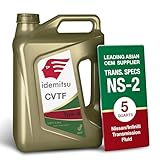
Overview: Idemitsu, a major OEM supplier, crafts this 5-quart fluid specifically to meet Nissan’s NS-2 specification, targeting older Nissan/Infiniti CVTs requiring this exact standard.
What Makes It Stand Out: Engineered with precision frictional properties critical for NS-2 transmissions, it delivers outstanding anti-shudder performance and high-torque resilience. Advanced additives ensure superior rust/corrosion inhibition, deposit control, and shear-stable viscosity.
Value for Money: Priced competitively against Nissan’s OEM NS-2 fluid, it offers genuine OE-tier quality (Idemitsu supplies Nissan) at a slight discount. The 5-quart size aligns perfectly with service needs, maximizing value for NS-2 applications.
Strengths and Weaknesses: Strengths: True NS-2 compliance, exceptional high-temp film strength, OEM-grade deposit/rust protection. Weaknesses: Only for NS-2 systems (not NS-3); limited universal application compared to TRIAX (Product 2).
Bottom Line: The top recommendation for Nissan NS-2 CVT owners seeking authentic, high-performance fluid without paying the full Nissan OEM premium.
6. Lucas Oil 1 Gallon Synthetic CVT Transmission Fluid
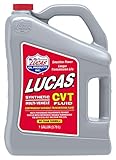
Overview:
Lucas Oil’s 1-gallon synthetic CVT fluid targets drivers seeking enhanced protection for continuously variable transmissions. Formulated for modern high-stress CVTs, it prioritizes longevity and consistent performance under demanding conditions, appealing to owners prioritizing transmission health.
What Makes It Stand Out:
Its exceptional resistance to shear thinning—critical for maintaining fluid viscosity under pressure—sets it apart. Combined with superior oxidation resistance and thermal stability, it prevents sludge/varnish buildup far better than conventional fluids. Excellent low-temperature fluidity ensures smooth cold-weather operation, while robust anti-wear and anti-corrosion additives provide holistic protection.
Value for Money:
Priced competitively for a full gallon of full-synthetic fluid, it offers significant savings over dealership-specified alternatives without compromising quality. The gallon size suits complete flushes, reducing long-term costs compared to smaller, pricier OEM-branded options, especially for DIYers.
Strengths and Weaknesses:
Strengths: Outstanding shear stability; excellent thermal/oxidation resistance; prevents sludge effectively; reliable cold-weather performance; cost-efficient gallon packaging.
Weaknesses: Not explicitly branded for specific OEM specs (e.g., Subaru CVTF-II), requiring cross-referencing compatibility; lacks seal-conditioning additives found in some multi-vehicle fluids.
Bottom Line:
A high-performance, cost-effective choice for CVT owners focused on durability and thermal protection. Ideal for DIY maintenance if verified compatible with your transmission, though strict OEM-spec users should confirm suitability first.
7. Valvoline MaxLife Multi-Vehicle ATF Full Synthetic Automatic Transmission Fluid 1 Gallon

Overview:
Valvoline MaxLife is a versatile full-synthetic ATF designed for 95% of light-duty vehicles, including many CVTs. It emphasizes transmission longevity through advanced sealing and wear protection, catering to aging vehicles or those in varied climates.
What Makes It Stand Out:
Its standout feature is broad multi-vehicle compatibility, covering most domestic and import automatics and select CVTs. High-performance seal conditioners maintain elasticity to prevent leaks—a critical advantage for higher-mileage cars. Full-synthetic formulation ensures robust high/low-temperature stability and superior oxidation resistance versus conventional fluids.
Value for Money:
A gallon-sized solution offering exceptional versatility at a mid-range price point. It eliminates the need for multiple specialized fluids for different vehicles in a fleet, providing long-term savings. While not the cheapest, its leak-prevention and durability benefits justify the cost for preventative maintenance.
Strengths and Weaknesses:
Strengths: Exceptional seal conditioning; wide vehicle coverage; strong thermal stability; anti-wear protection extends transmission life; gallon quantity suits flushes.
Weaknesses: Not universally approved for all CVTs (verify specific models); slightly higher price than basic conventional fluids; may not meet strict OEM specs requiring dedicated CVT fluids.
Bottom Line:
A top-tier, versatile ATF for mechanics and multi-vehicle owners seeking reliable leak prevention and extended transmission life. Highly recommended for preventative care in compatible vehicles, but confirm CVT applicability first.
8. Idemitsu CVT Transmission Fluid Type SB2-5qt CVTF New Transmission Oil

Overview:
Idemitsu’s SB2 CVT fluid is a precision-engineered 5-quart solution specifically formulated for Subaru TR580 transmissions. It delivers targeted performance for smooth shifting and longevity, directly addressing the unique demands of Subaru’s CVT systems.
What Makes It Stand Out:
Engineered exclusively to meet Subaru’s Type CVTF-II specifications, it ensures OEM-equivalent performance. Its optimized frictional properties enable smoother shifting and high-torque handling, while advanced anti-wear technology specifically protects CVT belts and pulleys from intense heat and stress, resisting harmful deposits.
Value for Money:
Priced fairly for a dedicated 5-quart bottle of OEM-spec fluid, it’s cost-effective for a complete Subaru CVT service. Cheaper than dealership fluid while guaranteeing compatibility, it prevents costly errors from using incorrect fluids—essential for preserving Subaru warranty coverage or transmission health.
Strengths and Weaknesses:
Strengths: Perfect Subaru TR580 compatibility; superior friction control for smooth shifts; robust anti-wear/pulley protection; high-temperature stability; convenient 5-quart sizing.
Weaknesses: Extremely narrow application (Subaru-specific); overkill/expensive for non-Subaru CVTs; packaging lacks resealability for partial use.
Bottom Line:
The definitive choice for Subaru owners with TR580 transmissions. Its precise engineering justifies the investment for optimal performance and longevity—non-negotiable for maintaining your CVT’s health and warranty compliance.
9. Valvoline CVT Full Synthetic Continuously Variable Transmission Fluid 1 QT (Pack of 2)

Overview:
Valvoline’s CVT-specific fluid comes as a practical 2-pack (2 quarts total), designed for belt and chain-driven CVTs. It focuses on smooth operation and durability, targeting drivers needing top-offs or smaller services without committing to larger containers.
What Makes It Stand Out:
Enhanced anti-shudder technology ensures seamless power transfer and eliminates jerky shifts—a common CVT pain point. Its full-synthetic formula delivers exceptional metal-to-metal friction protection and anti-wear properties, directly combating premature belt/pulley wear to extend transmission service life.
Value for Money:
The 2-quart pack offers flexibility for top-offs or partial changes at a reasonable per-ounce cost. While pricier per quart than gallon options, it’s ideal for quick fixes or as a supplement to larger fluid purchases, avoiding waste from unused product.
Strengths and Weaknesses:
Strengths: Excellent anti-shudder performance; strong friction control; effective anti-wear protection; convenient small-quantity packaging; broad CVT compatibility (check specs).
Weaknesses: Small size inefficient for full flushes (requires multiple packs); higher cost-per-quart than bulk options; lacks seal-conditioning additives for older transmissions.
Bottom Line:
A reliable, performance-focused CVT fluid perfect for top-offs or minor services. Choose this for smooth shifting and wear protection if you need a small quantity, but opt for larger containers for complete fluid changes.
10. Subaru Crosstrek Legacy Outback Forester Impreza CVTF-II Automatic Transmission Fluid (6 Quarts) - SOA427V1660 - Genuine OEM

Overview:
This is genuine Subaru-branded CVTF-II fluid sold as a 6-quart kit (SOA427V1660), explicitly designed for specific Subaru models from 2010-2023. It’s the manufacturer’s exact specification fluid, critical for maintaining CVT performance and warranty validity.
What Makes It Stand Out:
As true OEM fluid, it guarantees 100% compliance with Subaru’s engineering standards for listed models (e.g., non-hybrid Crosstrek, Legacy, Outback). Its precisely calibrated friction modifiers and additives ensure optimal shift quality, cooling, and longevity specific to Subaru’s CVT architecture—something aftermarket fluids can’t fully replicate.
Value for Money:
While significantly more expensive per quart than alternatives, it’s non-negotiable for warranty-covered vehicles or those prioritizing absolute compatibility. Prevents costly transmission damage from incorrect fluids, justifying the premium for at-risk or newer Subarus despite aftermarket options being cheaper.
Strengths and Weaknesses:
Strengths: Unmatched OEM compatibility; ensures perfect shift behavior; preserves factory warranty; eliminates guesswork; high-purity formulation.
Weaknesses: Very high cost; limited to specific Subaru models (check year/engine meticulously); green dye offers no functional benefit; 6-quart size may lead to waste if unused.
Bottom Line:
Mandatory for Subaru owners under warranty or seeking absolute peace of mind. Pay the premium to guarantee transmission health—never risk aftermarket fluids in critical CVT applications where OEM spec is required.
Understanding CVT Transmission Fluid Fundamentals
Why CVT Fluid Differs From Conventional Automatic Fluid
CVT transmissions operate on a fundamentally different principle than traditional geared automatics. Instead of fixed gear ratios, they use variable-diameter pulleys connected by a belt or chain. This constant adjustment requires a fluid that provides extremely consistent friction properties under a vast range of pressures and temperatures. Conventional automatic transmission fluid (ATF) simply isn’t formulated to handle these specific demands, often leading to belt slippage, shuddering, or premature wear if used incorrectly in a CVT.
The Critical Role of Viscosity in CVT Performance
Viscosity, or the fluid’s resistance to flow, is paramount for CVT operation. The fluid must maintain its thickness (viscosity index) across extreme temperature swings – from cold starts in freezing weather to high operating temperatures during highway driving or towing. Too thin, and it won’t provide adequate lubrication or maintain hydraulic pressure; too thick, and it causes sluggish response, increased friction, and reduced fuel efficiency. CVT fluids are specifically engineered with high-quality base oils and viscosity modifiers to stay within the precise range required by the transmission design.
Friction Modifiers: The Unsung Heroes
Perhaps the most critical differentiator for CVT fluid is the precise formulation of friction modifiers. These chemical additives control the coefficient of friction between the metal pulleys and the steel belt or chain. The fluid must allow just enough grip for the belt to transfer power without slipping, yet not so much that it causes jerky shifts or excessive wear. This delicate balance is unique to CVT technology and varies subtly between manufacturers. Using a fluid with incorrect friction characteristics is a primary cause of CVT malfunctions.
Key Features to Evaluate When Choosing Fluid
Deciphering OEM Specifications and Approvals
The single most important factor is matching the fluid to your vehicle manufacturer’s exact specification. This is usually denoted by a unique code (like NS-3, FE, J2, CVTF, or similar alphanumeric strings) found in your owner’s manual or on the transmission dipstick. These specifications encompass viscosity, friction properties, thermal stability, oxidation resistance, and compatibility with internal seals and materials. Never assume a fluid is suitable based on marketing claims alone; verify the specific OEM code it meets.
Synthetic Base Oils: Non-Negotiable for Modern CVTs
Modern CVT fluids are almost exclusively full synthetic. Synthetic base oils offer superior performance across the entire temperature range compared to conventional or semi-synthetic oils. They resist thermal breakdown (oxidation) much better, maintain viscosity stability longer, provide better low-temperature flow for cold starts, and contribute significantly to the extended service life demanded by today’s transmissions. Avoid non-synthetic options for CVT applications – the risks are too high.
Additive Package Complexity and Stability
Beyond friction modifiers, a robust CVT fluid contains a sophisticated blend of additives: anti-wear agents to protect gears and bearings, detergents to keep components clean, dispersants to suspend contaminants, anti-foam agents to prevent aeration, and corrosion inhibitors. Crucially, these additives must remain stable and effective over the fluid’s entire service life without degrading or interacting negatively with each other or the transmission materials. The stability of this additive package directly impacts long-term transmission health.
Navigating Service Intervals and Fluid Longevity
Manufacturer Recommendations vs. Real-World Conditions
Vehicle manufacturers often quote “lifetime” fluid intervals, but this is typically contingent on ideal driving conditions – primarily moderate highway miles. Real-world driving involving frequent stop-and-go traffic, short trips, towing, mountainous terrain, or extreme temperatures significantly increases thermal stress on the fluid. These conditions accelerate oxidation and additive depletion, making more frequent changes necessary for optimal protection. Treat “lifetime” as a maximum under perfect conditions, not a guarantee.
Signs Your CVT Fluid Needs Attention Sooner
Don’t wait solely for the mileage marker. Be vigilant for warning signs indicating fluid degradation or contamination: unusual whining or humming noises from the transmission, hesitation or slipping during acceleration, jerky or delayed engagement (especially when shifting from Park), a burning smell, or fluid that appears dark brown/black (instead of its original red or amber hue) and has a gritty texture when rubbed between fingers. These are clear signals a fluid change is overdue.
The Impact of Driving Habits on Fluid Life
Aggressive driving habits place immense strain on the CVT and its fluid. Rapid acceleration from a stop, frequent hard braking, and sustained high-RPM operation generate significant heat, which is the primary enemy of transmission fluid. Heat breaks down the oil molecules and depletes additives rapidly. Adopting smoother driving habits not only improves fuel economy but also dramatically extends the effective life of your CVT fluid and the transmission itself.
Compatibility and Application Considerations
Avoiding Universal Fluid Pitfalls
While some fluids market themselves as “universal” or “suitable for most CVTs,” extreme caution is warranted. True universality across all CVT designs is virtually impossible due to the varying friction requirements. Using a fluid not explicitly approved for your specific transmission can lead to performance issues or damage. Always prioritize fluids that list your vehicle manufacturer’s exact specification as met or exceeded on the product label or technical data sheet.
Seal and Material Compatibility is Paramount
CVT transmissions contain specific types of seals, gaskets, and internal materials (like certain metals or composites). The fluid must be fully compatible to prevent seal hardening, swelling, or degradation, which can lead to leaks or internal damage. OEM-specified fluids undergo rigorous testing for this compatibility. Off-spec fluids, even if they meet basic viscosity requirements, can cause seals to fail prematurely, resulting in costly repairs.
Climate-Specific Formulations: Do They Matter?
While most high-quality, specification-compliant CVT fluids are designed to perform across a broad temperature range, extreme climates warrant attention. In consistently frigid environments, ensure the fluid has an excellent low-temperature viscosity rating (pour point) for smooth cold starts. In perpetually hot climates or for vehicles used for towing, prioritize fluids with superior high-temperature stability and oxidation resistance ratings, often indicated by longer manufacturer-recommended service intervals under severe conditions.
The Fluid Change Process and Best Practices
Why Professional Service is Often Recommended
Changing CVT fluid correctly requires specific knowledge and often specialized equipment. Many modern vehicles lack a simple drain plug, necessitating the use of a pressurized fluid exchange machine to ensure a complete flush (replacing nearly 100% of the old fluid). Improper procedures can introduce air into the system, leave significant old fluid behind (diluting the new), or use incorrect fluid quantities, all potentially causing transmission issues. A qualified technician familiar with your specific CVT model is usually the safest choice.
The Critical Importance of a Complete Flush
A simple drain-and-fill often replaces only 30-50% of the old fluid, as much resides in the torque converter and complex hydraulic passages. A proper flush using a machine that circulates new fluid while draining the old ensures near-total replacement. This is crucial because mixing degraded old fluid with fresh fluid significantly reduces the effectiveness and lifespan of the new fluid, potentially negating the benefits of the service. Insist on a complete flush when changing CVT fluid.
Post-Service Checks and Adaptation Procedures
After a fluid change, especially a flush, some CVTs require specific adaptation or relearn procedures performed by a diagnostic scan tool. This allows the transmission control module to recalibrate shift points and pressure settings to the fresh fluid’s properties. Skipping this step can result in temporary harsh shifts or hesitation. Additionally, always check the fluid level precisely according to the manufacturer’s procedure (often requiring specific engine temperatures and running conditions) after the service is complete.
Long-Term CVT Health Through Proper Fluid Management
Proactive Monitoring Beyond Scheduled Changes
Make checking your CVT fluid part of routine maintenance, just like engine oil. Consult your owner’s manual for the correct procedure (some require dealer-level equipment, others have a dipstick). Look for color, smell, and consistency. Fresh fluid should be clean and bright (red, amber, or gold); dark, burnt-smelling, or gritty fluid signals trouble. Early detection of issues through fluid inspection can prevent minor problems from becoming major failures.
The Synergy Between Fluid Quality and Overall Maintenance
CVT health doesn’t exist in a vacuum. Regular engine maintenance (air filters, spark plugs), proper tire inflation, and addressing engine performance issues (like misfires) all contribute to reduced stress on the transmission. A struggling engine forces the CVT to work harder, generating more heat. Comprehensive vehicle care creates an environment where the CVT fluid can perform optimally and last longer.
Documenting Fluid Changes for Future Reference
Keep meticulous records of every CVT fluid service: date, mileage, exact fluid specification used (OEM code and brand name), service type (drain-fill or flush), and the facility that performed it. This documentation is invaluable for future diagnostics, helps establish a maintenance history if you sell the vehicle, and ensures continuity in using the correct fluid specification during subsequent services.
Frequently Asked Questions
How often should I change my CVT transmission fluid?
Manufacturer recommendations vary widely, often citing “lifetime” under ideal conditions. However, for most drivers in typical conditions, a change every 60,000 to 100,000 miles is prudent. Severe driving conditions (stop-and-go traffic, towing, extreme temperatures) may necessitate changes as frequently as every 30,000 to 60,000 miles. Always consult your owner’s manual first and consider your specific driving habits.
Can I use conventional automatic transmission fluid (ATF) in my CVT?
Absolutely not. CVTs have unique friction and viscosity requirements that conventional ATF cannot meet. Using the wrong fluid can cause severe damage, including belt slippage, shuddering, and transmission failure. Always use only fluid explicitly meeting your vehicle manufacturer’s CVT specification.
What does “lifetime” fluid really mean?
“Lifetime” typically means the fluid is designed to last the expected life of the transmission under ideal, manufacturer-defined driving conditions, which usually equate to primarily highway driving. Real-world driving rarely meets these ideal conditions, so proactive fluid changes within the 60,000-100,000 mile range are strongly recommended for long-term reliability.
How do I know if my CVT fluid is bad?
Signs include dark, burnt-smelling fluid (instead of bright red/amber), visible particles or grit when rubbed between fingers, transmission slipping (engine revs without corresponding speed increase), hesitation during acceleration, jerky or delayed shifting, unusual whining noises, or a burning smell inside the cabin.
Is a CVT fluid flush better than a drain and fill?
Yes, a complete flush using a machine that exchanges nearly 100% of the old fluid is significantly better than a simple drain and fill (which typically replaces only 30-50%). Old, degraded fluid left behind contaminates the new fluid, reducing its effectiveness and lifespan. A flush is the recommended method for a proper fluid change.
What happens if I use the wrong CVT fluid specification?
Using fluid that doesn’t meet your manufacturer’s exact specification can cause immediate or gradual problems: transmission shuddering, slipping, harsh shifting, delayed engagement, increased noise, and potentially severe internal damage due to incorrect friction properties or inadequate lubrication. Always verify the OEM code.
Do I need to reset anything after changing CVT fluid?
Some modern CVTs require an electronic adaptation or relearn procedure using a diagnostic scan tool after a fluid change. This allows the transmission control module to recalibrate to the new fluid. Skipping this may cause temporary shift issues. A qualified technician should perform this step if needed.
Can I check my CVT fluid level myself?
It depends on the vehicle. Some have a dipstick, while others require checking via a fill plug with the engine running at a specific temperature – a procedure often best left to professionals due to the risk of overfilling or underfilling. Consult your owner’s manual for the exact procedure for your model.
Why are CVT fluids more expensive than regular ATF?
CVT fluids require more advanced, specialized formulations with precise friction modifiers and high-quality synthetic base oils to handle the unique demands of the transmission. The research, development, and stringent OEM approval processes contribute to the higher cost compared to conventional automatic transmission fluids.
Is it worth using the most expensive CVT fluid available?
Focus on using a fluid that exactly meets your vehicle manufacturer’s specification, regardless of price point. A mid-range fluid meeting the spec is vastly superior to a premium-priced fluid that does not. Price alone isn’t an indicator of suitability; the correct specification is the critical factor.
See Also
- 10 Top-Rated Synthetic Transmission Fluid According to Experts in 2026
- 10 Top-Rated Dexron Transmission Fluid According to Experts in 2026
- 10 Must-Have CVT Transmission Fluid for Fuel Efficiency in 2026
- The 10 Best CVT Transmission Fluid for Fuel-Efficient Vehicles in 2026
- 10 Top-Rated Octane Boosters According to Automotive Experts in 2026