Table of Contents
Monitoring your diesel engine’s exhaust gas temperature isn’t just for professional tuners and competitive pullers anymore. Whether you’re towing heavy loads across mountain passes or simply want to maximize the longevity of your turbocharged workhorse, understanding what’s happening inside your exhaust system can mean the difference between a thriving engine and an expensive repair bill. An exhaust gas temperature gauge serves as your early warning system, translating the invisible heat energy roaring through your manifold into actionable data you can monitor in real-time.
Selecting the right EGT gauge requires more than just picking the highest-rated option on a list. The “best” gauge for your application depends on your specific driving habits, vehicle modifications, and performance goals. This comprehensive guide breaks down the essential features, technologies, and considerations that separate exceptional EGT monitoring systems from basic temperature readers. By understanding what makes these instruments truly effective, you’ll be equipped to identify top-tier quality regardless of brand names or marketing claims.
Top 10 Diesel Exhaust Gas Temperature Gauges
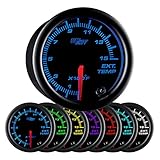




Detailed Product Reviews
Understanding Exhaust Gas Temperature Monitoring
Diesel engines operate under extreme conditions, with exhaust gases reaching temperatures that can melt components in seconds under the wrong circumstances. An exhaust gas temperature gauge measures these heat levels directly from the exhaust stream, typically before the turbocharger, giving you critical insight into combustion efficiency and engine safety.
What Exactly Is EGT and Why It Matters
Exhaust gas temperature represents the thermal energy remaining after combustion completes. In diesel applications, optimal EGT ranges typically fall between 700°F and 1200°F during normal operation, though these numbers vary significantly based on engine design, fueling, and load conditions. Temperatures exceeding 1350°F sustained for even short periods can damage pistons, crack cylinder heads, or destroy turbocharger components. The gauge becomes your window into this otherwise invisible danger zone.
The Science Behind Temperature Probes
EGT gauges rely on thermocouple probes—most commonly Type K thermocouples—which generate a small electrical voltage proportional to temperature differences. This voltage travels through compensation wires to the gauge head, where circuitry converts it into a readable display. The probe’s placement, response time, and construction quality directly impact accuracy, making probe selection as critical as the gauge itself.
Critical Benefits of Professional-Grade EGT Monitoring
Investing in a quality EGT monitoring system delivers returns far beyond simple temperature awareness. These instruments provide actionable intelligence that protects your investment and unlocks hidden performance potential.
Preventing Catastrophic Engine Damage
The primary function of any EGT gauge is engine preservation. During heavy towing, aggressive acceleration, or performance tuning, fuel delivery can outpace available air, creating dangerously lean conditions that spike exhaust temperatures. A quality gauge provides instant feedback, allowing you to back out of the throttle before temperatures reach critical levels. This real-time monitoring is especially crucial for modified engines with increased fuel delivery.
Optimizing Performance Tuning Safely
For enthusiasts pursuing more power, EGT gauges become indispensable tuning tools. Professional tuners use exhaust temperature data to find the sweet spot between maximum power and safe operating limits. By monitoring EGT during dyno pulls or road testing, you can identify when fueling adjustments produce excessive heat, helping you dial in timing and delivery for optimal efficiency without crossing into the danger zone.
Extending Turbocharger Lifespan
Turbochargers spin at speeds exceeding 100,000 RPM while exposed to extreme heat cycling. Consistently high EGTs accelerate bearing wear, crack turbine housings, and degrade oil quality within the turbocharger. Monitoring temperatures helps you develop driving habits that protect these expensive components, such as allowing proper cool-down periods after hard driving.
Key Features That Define Premium EGT Gauges
Not all temperature monitoring systems offer the same level of precision, durability, or user experience. Understanding the hallmarks of professional-grade equipment helps you identify truly capable instruments.
Display Clarity and Readability
Top-tier gauges feature high-contrast displays with clearly marked temperature increments, typically in 50°F or 100°F steps. Look for anti-glare coatings on analog faces and adjustable backlighting on digital units. The best displays remain easily readable in bright sunlight and don’t wash out under night driving conditions. Consider gauge diameter too—2 1/16-inch remains the standard for most pillar and dash pods.
Response Time and Update Frequency
A gauge’s ability to reflect rapid temperature changes separates premium units from laggy alternatives. Quality systems update readings every 100-200 milliseconds, capturing sudden temperature spikes that slower gauges might miss entirely. Probe placement closer to the exhaust port improves response time, but the gauge’s internal sampling rate ultimately determines how quickly you see changes.
Temperature Range and Resolution
Professional gauges typically display ranges from 0°F to 1600°F or higher, with accuracy within ±1% of full scale. Resolution matters too—gauges showing single-degree increments provide more precise data than those jumping in 10-degree steps. For most diesel applications, a gauge reading up to 1600°F offers sufficient headroom for safety monitoring without sacrificing low-end resolution.
Types of EGT Gauge Display Technologies
The market offers several display technologies, each with distinct advantages for different applications and preferences. Your choice impacts not just aesthetics but functionality and information density.
Traditional Analog Mechanical Gauges
Analog gauges use a physical needle driven by a stepper motor or air core movement. Many diesel purists prefer these for their classic appearance and ability to show trends at a glance. Quality analog units feature jeweled movements for smooth needle operation and precise calibration. The main drawback is single-parameter display—you’ll need separate gauges for each measurement point.
Modern Digital LED Displays
Digital gauges offer crisp numeric readouts and typically include additional features like peak recall, programmable warnings, and multi-parameter capability. Vacuum fluorescent displays (VFD) provide excellent brightness and wide viewing angles, while newer OLED screens deliver deeper blacks and better contrast. Digital units excel at precise readings but can be harder to interpret quickly during dynamic driving.
Multi-Function LCD Display Systems
Advanced monitoring systems integrate EGT data into comprehensive digital dashboards. These units can display temperatures from multiple probes simultaneously alongside boost pressure, fuel pressure, and other parameters. Touchscreen interfaces allow custom configuration, though they require more complex installation. For serious enthusiasts running multiple modifications, these systems consolidate information effectively.
Probe and Sensor Technology Deep Dive
The probe does the actual temperature sensing, making it the most critical component for accuracy. Understanding probe construction helps you evaluate quality regardless of brand.
Thermocouple Types and Accuracy
Type K thermocouples (Chromel-Alumel) dominate diesel applications due to their wide temperature range and durability. Premium probes use mineral-insulated construction with stainless steel sheathing, protecting the delicate thermocouple junction from vibration and contamination. Probe accuracy depends on material purity and manufacturing precision—look for probes rated for continuous exposure above 2000°F.
Probe Length and Placement Strategy
Probe length determines how far into the exhaust stream the sensor sits. Too short, and you measure pipe surface temperature rather than gas temperature. Too long, and the probe becomes a restriction or failure point. Most diesel applications use 2-4 inch probes positioned to sense the exhaust flow centerline. Pre-turbo placement remains most common, though post-turbo readings have specific diagnostic value.
Response Time Characteristics
Probe response time—how quickly it reflects actual gas temperature changes—depends on mass and thermal conductivity. Thinner probe walls and smaller diameters respond faster but sacrifice durability. High-performance probes balance these factors, typically achieving 90% response within 5-10 seconds. For towing or racing applications, faster response provides earlier warning of dangerous conditions.
Installation Considerations for Maximum Accuracy
Even the finest gauge produces worthless data if installed incorrectly. Proper installation technique ensures readings reflect actual conditions rather than installation artifacts.
Drilling and Tapping Exhaust Manifolds
Professional installation requires drilling into the exhaust manifold or up-pipe at the recommended location—typically 1-2 inches from the turbine inlet. Use a high-quality drill bit designed for stainless steel, and tap threads carefully to avoid creating stress risers. Always deburr the hole interior to prevent probe damage from sharp edges. Some prefer weld-in bungs for ultimate durability, especially in racing applications.
Wiring and Signal Integrity
Thermocouple wires require special handling. Extension wire must match the thermocouple type (Type K for Type K probes) to prevent introduction of measurement errors. Avoid running thermocouple wires near spark plug wires or high-current cables that can induce electrical noise. Use twisted pair wiring and proper grounding techniques to ensure clean signal transmission to the gauge head.
Probe Orientation and Depth
Install probes pointing upstream into the exhaust flow for fastest response and protection from debris. The probe tip should sit near the center of the pipe diameter for representative gas temperature measurement. Use the included compression fitting to secure the probe at the correct depth—over-insertion can cause probe failure, while under-insertion reads artificially low temperatures.
Advanced Features Worth Prioritizing
Modern EGT gauges offer capabilities beyond simple temperature display. These features transform basic gauges into comprehensive monitoring tools.
Programmable Warning and Alarm Functions
The most valuable feature for engine protection is programmable alarms. Set your maximum safe temperature—say 1300°F—and the gauge activates a bright warning light or audible buzzer when exceeded. Premium units allow multiple alarm points and rate-of-rise warnings that trigger if temperature climbs too quickly, providing earlier intervention opportunities.
Data Logging and Playback Capabilities
For tuning and diagnostics, data logging proves invaluable. Some digital gauges record temperature over time, allowing you to review runs on a computer. This historical data reveals trends invisible to real-time monitoring, such as temperature creep during extended pulls or cooling system effectiveness during deceleration. Look for units with exportable logs compatible with common spreadsheet programs.
Peak and Hold Functions
Peak recall displays the highest temperature reached since last reset, useful for post-run analysis without staring at the gauge during critical moments. Some units also show minimum temperatures or calculate average values. These functions help you understand temperature profiles across different driving conditions without continuous monitoring.
Interpreting EGT Readings Like a Professional
Raw temperature numbers only tell part of the story. Understanding context transforms data into actionable intelligence for both daily driving and performance applications.
Normal Operating Temperature Ranges
Stock diesel trucks typically show 600-800°F at idle, climbing to 1000-1200°F during moderate acceleration. Cruising on flat highways usually maintains 700-900°F. Towing heavy loads uphill can push readings to 1200-1350°F. Sustained temperatures above 1350°F indicate potential problems, while spikes above 1500°F demand immediate throttle reduction regardless of circumstances.
Temperature Spikes vs. Sustained Heat
Learn to distinguish between brief spikes and dangerous sustained temperatures. Momentary spikes to 1400°F during aggressive acceleration may be acceptable if temperatures quickly drop below 1200°F. However, holding 1300°F for 30 seconds while towing indicates a problematic condition requiring attention. Your gauge’s response time and your ability to interpret trends separates safe operation from risky behavior.
Diagnosing Issues Through Temperature Patterns
Abnormal EGT patterns reveal underlying problems. Consistently high temperatures across all driving conditions suggest injection timing issues or boost leaks. Uneven temperatures between cylinders (requiring multiple probes) indicate injector problems or valve issues. Post-turbo readings significantly higher than pre-turbo suggest turbocharger inefficiency or blockage. Learning these patterns turns your gauge into a diagnostic tool.
Common Purchasing Mistakes to Avoid
Many buyers focus on the wrong attributes, ending up with gauges that don’t meet their needs or provide inaccurate data. Avoid these common pitfalls.
Choosing Based on Price Alone
Budget gauges often use inferior probes with slow response times and poor accuracy. While a $50 gauge might display numbers, the lag time and measurement error could leave you vulnerable to damage that a quality gauge would have prevented. Consider the cost of engine repairs versus gauge investment—professional-grade monitoring costs far less than one melted piston.
Ignoring Probe Quality
The gauge head gets all the attention, but the probe does the actual work. Cheap probes fail prematurely, provide erratic readings, or respond too slowly to protect your engine. Evaluate probe construction, materials, and warranty terms separately from the gauge itself. A quality probe should carry at least a one-year warranty and use mineral-insulated construction.
Overlooking Expandability
Your monitoring needs may grow with modifications. A single-channel gauge might suffice today, but adding a second probe for post-turbo monitoring or integrating with other sensors becomes impossible without replacing the entire system. Consider whether the gauge supports expansion modules or additional inputs before purchasing.
Maintenance and Calibration Requirements
EGT gauges require minimal maintenance but benefit from periodic attention to ensure continued accuracy and reliability throughout your vehicle’s service life.
Probe Cleaning and Inspection
Remove and inspect probes annually, checking for carbon buildup, physical damage, or corrosion. Clean probes gently with a wire brush, being careful not to damage the thermocouple tip. Replace probes showing cracks, significant erosion, or erratic readings. Most quality probes last 3-5 years under normal conditions, though racing or heavy-duty use shortens this interval.
Gauge Calibration Verification
While thermocouple gauges rarely drift significantly, verifying accuracy every couple years ensures confidence in readings. Some digital gauges include self-calibration features using ice water and boiling water reference points. For analog gauges, compare readings against a known-accurate digital thermometer during steady-state conditions to identify potential calibration issues.
Wiring and Connection Integrity
Exhaust vibration and heat cycling loosen connections over time. Annually check that thermocouple connections remain tight and corrosion-free at both the probe and gauge ends. Inspect wires for chafing, especially where they pass through bulkheads or near sharp edges. Replace any damaged wiring with proper thermocouple extension wire to maintain accuracy.
Integration with Modern Diesel Systems
Today’s diesel trucks feature complex electronic control systems that can either complement or conflict with aftermarket gauge installations.
Working with Factory ECU Data
Some modern diesels provide EGT data through the OBD-II port, accessible via monitoring devices. However, factory sensors typically sit downstream of the turbocharger, reading lower and responding slower than pre-turbo aftermarket probes. While convenient, OBD-based readings lack the immediacy and critical early warning that dedicated pre-turbo probes provide for performance applications.
Avoiding Electronic Interference
Diesel common-rail injection systems generate significant electrical noise that can interfere with sensitive gauge electronics. Quality gauges include shielding and filtering to reject this noise. During installation, route gauge power and signal wires away from injection pump harnesses and use dedicated power sources rather than tapping into existing circuits that may introduce noise.
Combining with Other Monitoring Parameters
Professional installations often combine EGT with boost pressure, transmission temperature, and fuel pressure monitoring. Multi-parameter gauge systems can display relationships between these values, such as EGT versus boost pressure, revealing turbo efficiency and fueling accuracy. Consider your overall monitoring strategy rather than treating EGT as an isolated parameter.
Future Developments in EGT Monitoring Technology
The EGT gauge market continues evolving with new technologies that promise improved accuracy, easier installation, and smarter integration with vehicle systems.
Wireless Probe Technologies
Emerging systems use wireless transmitters at the probe location, eliminating the need to run delicate thermocouple wires through the engine bay. These systems reduce installation complexity and eliminate potential signal degradation from long wire runs. However, early versions face challenges with battery life and signal reliability in high-interference environments.
Smart Phone Integration and Apps
Bluetooth-enabled gauges now stream data to smartphone apps, offering larger displays, data logging, and cloud-based analysis. These systems allow you to monitor temperatures from outside the vehicle during tuning sessions or share data with remote technicians. The main limitation remains screen visibility during actual driving compared to dedicated gauge displays.
Predictive Temperature Modeling
Advanced engine management systems now use algorithms to predict EGT based on fuel delivery, boost pressure, and other parameters rather than direct measurement. While not replacing physical probes for safety monitoring, predictive models can provide earlier warnings by calculating expected temperatures before they physically occur at the probe location.
Frequently Asked Questions
What temperature should my diesel EGT gauge read during normal driving?
Normal cruising temperatures typically range from 700°F to 900°F depending on load and speed. Light acceleration may show 1000-1100°F, while heavy towing can reach 1200-1300°F. Sustained readings above 1350°F indicate potential problems requiring investigation.
Where is the best location to install an EGT probe?
The ideal location is in the exhaust manifold or up-pipe 1-2 inches before the turbocharger turbine inlet. This position provides the earliest warning of dangerous temperatures. Install the probe pointing upstream into the exhaust flow, positioned near the centerline of the pipe for accurate gas temperature measurement.
How accurate are aftermarket EGT gauges compared to factory sensors?
Quality aftermarket gauges with Type K thermocouples typically achieve ±1% accuracy or better. Factory sensors often sacrifice accuracy for durability and cost, reading downstream of the turbo where temperatures are lower and less critical. Aftermarket pre-turbo probes provide more relevant data for performance monitoring.
Can I install an EGT gauge myself or do I need a professional?
mechanically-inclined DIYer can install an EGT gauge with proper tools and patience. The main challenge is drilling and tapping the exhaust manifold, which requires care to avoid creating stress points. If you’re not comfortable working on exhaust components or lack the proper drill bits and taps, professional installation ensures correct placement and prevents manifold damage.
What size EGT gauge should I buy for my truck?
The standard 2 1/16-inch (52mm) gauge fits most pillar mounts and dash pods. Larger 2 5/8-inch gauges offer better visibility but require more panel space. Consider your mounting location and viewing distance when selecting size. Digital gauges can be smaller while remaining readable due to bright numeric displays.
How long do EGT probes typically last?
Quality mineral-insulated probes last 3-5 years under normal street driving conditions. Heavy towing, racing, or exposure to extreme heat cycling reduces lifespan to 1-3 years. Inspect probes annually and replace them if readings become erratic or response time noticeably increases.
Do I need more than one EGT probe?
A single pre-turbo probe suffices for most applications, providing the critical protection needed. Multiple probes become valuable for diagnosing cylinder-specific issues or monitoring post-turbo temperatures for turbo health assessment. Consider your performance level and diagnostic needs when deciding on single vs. multi-probe systems.
What’s the difference between Type K and other thermocouple types?
Type K thermocouples (Chromel-Alumel) dominate diesel applications due to their wide temperature range (-328°F to 2300°F), good accuracy, and durability. Type J thermocouples have a more limited range and degrade faster at high temperatures. Type E offers better accuracy but costs significantly more. For diesel EGT monitoring, Type K provides the best balance of performance and value.
Can high EGT readings damage my gauge or probe?
Quality EGT systems are designed to handle extreme temperatures beyond what your engine can produce. Probes rated for continuous 2000°F+ operation won’t be damaged by normal diesel exhaust temperatures. However, probe tips can be physically damaged by debris or carbon buildup, and extreme thermal shock from water injection or nitrous can cause failure.
How do I know if my EGT gauge is reading accurately?
Verify accuracy by comparing readings during steady-state cruising against known values for your specific engine setup. Sudden erratic readings, unrealistic temperatures at startup, or failure to respond to throttle changes indicate probe or gauge problems. Some digital gauges include self-test features, and you can have a professional verify accuracy with calibrated test equipment if you suspect drift.
See Also
- 10 Top-Rated Remote Display Exhaust Gas Temperature Gauges According to Experts in 2026
- 10 Top-Rated Exhaust Gas Temperature Gauges According to Professional Tuners in 2026
- Top 10 Best Exhaust Gas Temperature Gauges for Diesel Performance Tuning in 2026
- 10 Exhaust Gas Temperature Gauges Recommendations for Turbo Diesel Trucks in 2026
- 10 Essential Diesel Exhaust Gas Temperature Gauges Every Truck Owner Needs in 2026