Table of Contents
Gone are the days when performance tuning meant relying on seat-of-the-pants feel and hoping your modifications delivered actual gains. Today’s automotive enthusiasts and professional tuners operate in a world where every ignition timing adjustment, fuel trim modification, and boost pressure change can be monitored in real-time through your vehicle’s OBD2 port. This transformation from guesswork to precision has revolutionized how we extract performance, diagnose bottlenecks, and ensure reliability when pushing engines beyond factory specifications.
Whether you’re optimizing a forced induction setup, fine-tuning air-fuel ratios for track days, or simply want to understand how your modifications impact engine behavior, the right diagnostic tool becomes your window into the ECU’s decision-making process. This comprehensive guide explores the essential features, capabilities, and considerations for selecting an OBD2 scanner that delivers meaningful live data for performance tuning—helping you make informed decisions based on technical specifications rather than marketing hype.
Top 10 OBD2 Code Readers with Live Data
Detailed Product Reviews
1. FOXWELL NT301 OBD2 Scanner Live Data Professional Mechanic OBDII Diagnostic Code Reader Tool for Check Engine Light

Overview: The FOXWELL NT301 is a robust wired OBD2 scanner built for professional mechanics and serious DIYers who prioritize engine diagnostics. This handheld tool delivers core diagnostic functions including reading and clearing diagnostic trouble codes (DTCs), checking I/M readiness, retrieving freeze frame data, and viewing live sensor streams. Designed for vehicles manufactured from 1996 onward, it supports all major OBDII protocols and provides reliable, no-frills diagnostics without the complexity of wireless connections.
What Makes It Stand Out: The NT301 excels with its real-time live data graphing and logging capabilities, allowing technicians to monitor suspicious sensor trends and pinpoint intermittent issues. The dedicated smog check helper function features one-button I/M readiness testing with intuitive red-yellow-green LEDs and an integrated speaker for instant status confirmation. Unlike many budget scanners, it provides accurate VIN retrieval and supports 12V diesel engines, making it versatile for light trucks and SUVs. The straightforward menu system eliminates guesswork for common tasks.
Value for Money: Priced in the mid-range category, the NT301 offers professional-grade reliability at a fraction of high-end scan tool costs. It competes favorably with entry-level professional equipment, delivering consistent performance without recurring subscription fees. While basic wireless adapters cost less, the NT301’s dedicated hardware, live graphing, and smog-specific features justify the premium for users who regularly perform diagnostics. It’s an investment that pays for itself after avoiding two or three shop visits.
Strengths and Weaknesses: Strengths include accurate live data graphing, durable construction, smog check readiness indicators, broad protocol support, and no battery requirement. The wired connection ensures stable communication without pairing issues. Weaknesses are significant: no ABS, SRS, or transmission diagnostics; limited special functions; and the tethered cable can be inconvenient under the dash. It also lacks the advanced guidance features found in newer Bluetooth scanners. The 2.4-inch screen feels cramped compared to smartphone displays.
Bottom Line: The FOXWELL NT301 is an excellent choice for professional mechanics and dedicated enthusiasts focused solely on engine and emissions diagnostics. Its reliable performance and smog-specific features make it ideal for shop use, though those needing ABS/SRS capabilities should look elsewhere.
2. OBD2 Scanner Reader Bluetooth Wireless Auto Diagnostic Scan Tool for iOS & Android for Performance Test Bluetooth 5.4 Car Check Engine Car Code Reader, Clear Error Code Live Data Reset Exclusive APP

Overview: This V011 Bluetooth scanner represents the modern approach to vehicle diagnostics, transforming your smartphone into a powerful scan tool. Leveraging Bluetooth 5.4 technology, it provides wireless connectivity to iOS and Android devices for vehicles from 1996 onward. The system delivers comprehensive engine diagnostics including DTC reading, live data streaming, freeze frame analysis, and emissions readiness checks through its proprietary app, eliminating cumbersome cables while offering real-time performance monitoring.
What Makes It Stand Out: The upgraded Bluetooth 5.4 chipset ensures stable, fast connections with minimal latency, a significant improvement over older 4.0 adapters. Its intuitive app excels at data visualization, converting complex sensor readings into clear charts for engine coolant temperature, RPM, and vehicle speed that even beginners can interpret. The included how-to guides and video tutorials empower users to understand codes and perform basic repairs themselves. Performance testing capabilities go beyond basic scanning, offering proactive vehicle health monitoring.
Value for Money: This scanner delivers exceptional value for budget-conscious DIYers. At a price point comparable to basic wired readers, you get wireless convenience and intelligent app guidance that can save hundreds in diagnostic fees. The ability to clear codes after repairs and continuous live data monitoring provides shop-level functionality without subscription costs. While professional-grade tools offer more system coverage, the V011’s affordability and educational resources make it a smart purchase for anyone wanting to understand their vehicle better.
Strengths and Weaknesses: Strengths include convenient wireless operation, excellent data visualization, broad vehicle compatibility (96% coverage), multi-language support, and comprehensive tutorials. The Bluetooth 5.4 connection is reliable once paired. Weaknesses include app dependency—if the app fails, the hardware is useless; some users report initial pairing difficulties; and it only diagnoses engine systems, lacking ABS/SRS support. The “exclusive app” requirement may limit long-term software support compared to open-source alternatives.
Bottom Line: The V011 Bluetooth scanner is an outstanding entry-level wireless diagnostic tool perfect for novices and tech-savvy car owners. Its combination of affordability, user-friendly app, and educational features makes it ideal for DIY maintenance, though professionals may need more comprehensive system coverage.
3. Autel Professional OBD2 Scanner AL319 Code Reader, Enhanced Check and Reset Engine Fault Code, Live Data, Freeze Frame, CAN Car Diagnostic Scan Tools for All OBDII Vehicles After 1996, 2026 Upgraded
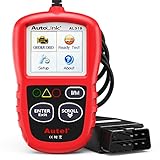
Overview: The Autel AL319 is a purpose-built entry-level scanner from one of the industry’s most trusted manufacturers. This 2026 upgraded model focuses on simplifying engine diagnostics for everyday drivers and DIY beginners. The plug-and-play device requires no batteries or software installation, offering immediate access to code reading, clearing, live data, freeze frame, and I/M readiness checks through its color display. It supports all OBDII protocols for vehicles manufactured after 1996.
What Makes It Stand Out: Autel’s patented one-click I/M readiness key sets the AL319 apart, providing instant emissions status with zero menu navigation. The vibrant TFT color screen and built-in speaker deliver clear visual and audible feedback, while the LED indicators offer at-a-glance vehicle health status. The unit’s compact design features an optimally sized cable that reaches the OBDII port without creating dashboard clutter. Lifetime free software updates ensure the tool stays current with evolving vehicle protocols, a rare benefit in this price class.
Value for Money: Positioned as a budget-friendly option from a premium brand, the AL319 offers exceptional reliability without the premium price tag. It undercuts many no-name competitors while delivering Autel’s renowned quality assurance and customer support. The lifetime update policy eliminates future costs, making it more economical long-term than scanners requiring paid updates. For basic check engine light diagnostics, it provides identical core functionality to pricier models, representing outstanding value for casual users who prioritize brand reputation.
Strengths and Weaknesses: Strengths include trusted brand reliability, true plug-and-play operation, one-click readiness testing, lifetime free updates, 12-month warranty, and multi-language support. The color display enhances readability over monochrome competitors. Weaknesses are its limited scope—engine systems only; lack of wireless connectivity; basic live data capabilities without graphing; and no advanced features like ABS or bi-directional controls. The interface, while simple, feels dated compared to modern app-based solutions.
Bottom Line: The Autel AL319 is the perfect first scanner for car owners intimidated by complex diagnostic tools. Its combination of brand reliability, simplicity, and lifetime updates makes it an unbeatable choice for basic engine diagnostics, though enthusiasts will quickly outgrow its limited capabilities.
4. BlueDriver Bluetooth Pro OBDII Scan Tool for iPhone & Android - No Subscription Fee - OBD2 Car Scanner and Code Reader - Diagnose Check Engine, ABS, SRS, Airbag & 7000+ Issues on Vehicles 1996+
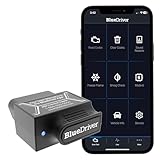
Overview: BlueDriver Bluetooth Pro revolutionizes consumer diagnostics by offering professional-grade wireless scanning previously reserved for expensive shop equipment. This compact adapter pairs with a sophisticated iOS/Android app to diagnose not just engine codes but also ABS, SRS, airbag, and TPMS systems across vehicles from 1996 onward. Unlike basic scanners, it provides enhanced manufacturer-specific codes covering over 7,000 issues, making it a comprehensive diagnostic solution for serious DIYers and mobile mechanics who demand thorough system coverage.
What Makes It Stand Out: The ability to read and clear ABS, airbag, and SRS codes distinguishes BlueDriver from 90% of consumer scanners. Its most impressive feature is the unlimited repair reports database, which provides verified fixes from professional technicians—not generic suggestions. The app integrates seamlessly with live data monitoring, allowing users to track vehicle health while driving. The wireless Bluetooth connection eliminates cable clutter, while the app’s extensive repair video library offers step-by-step guidance for common repairs, bridging the knowledge gap between detection and resolution.
Value for Money: While commanding a premium price over basic scanners, BlueDriver justifies the cost through its expanded system coverage and professional repair database. The absence of subscription fees makes it more economical than competitors requiring monthly payments for advanced features. For users facing ABS or airbag lights, the tool pays for itself immediately by avoiding a single dealership visit. It essentially delivers shop-level diagnostic capabilities at a fraction of professional scan tool costs, representing excellent long-term value for those needing comprehensive coverage.
Strengths and Weaknesses: Major strengths include ABS/SRS/airbag diagnostics, extensive repair database with verified fixes, live data monitoring, repair video integration, stable Bluetooth connection, and no subscription fees. The app is polished and regularly updated. Weaknesses include higher upfront cost, smartphone dependency, occasional app bugs reported by users, and limited bi-directional control capabilities compared to professional tools. Some advanced functions still require dealer-level equipment, and the adapter’s small size makes it easy to misplace.
Bottom Line: BlueDriver Bluetooth Pro is the best consumer-grade wireless scanner for serious DIYers and mobile mechanics needing comprehensive system diagnostics. Its ABS/SRS capabilities and professional repair database justify the premium price, making it a worthwhile investment for anyone regularly working on modern vehicles.
5. BluSon YM319 OBD2 Scanner Diagnostic Tool with Battery Tester, Check Engine Fault Code Reader with Live Data, Cloud Printing, DTC Lookup, Freeze Frame, Scan Tool for All OBDII Protocol Cars Since 1996

Overview: The BluSon YM319 distinguishes itself in the crowded OBD2 market by integrating battery diagnostics with comprehensive engine scanning capabilities. This wired tool combines traditional OBDII functions—code reading, live data, freeze frame, and emissions readiness—with an exclusive one-click battery health tester, making it a dual-purpose diagnostic solution. Supporting all OBDII protocols for post-1996 vehicles, it targets users wanting more than just engine diagnostics, offering features typically found in separate, more expensive battery analyzers.
What Makes It Stand Out: The integrated BAT battery diagnostic feature continuously monitors voltage and health status, providing visual warnings of potential failures before they strand you—functionality rarely seen in standard code readers. Its innovative cloud printing capability allows generating and sharing professional diagnostic reports without physical printer connections, ideal for maintaining service records or consulting remote technicians. The 2.4-inch HD color screen features customizable F1/F2 shortcut keys for instant access to frequently used functions, while the built-in database of over 63,000 DTCs ensures comprehensive code coverage unmatched by most competitors.
Value for Money: Priced competitively with mid-tier scanners, the YM319 delivers exceptional value by combining two tools in one. Separate battery testers cost $50-100 alone, making this an economical choice for users needing both functions. The cloud printing and extensive code database add professional-grade capabilities without subscription fees. While wired scanners typically cost less than wireless alternatives, the YM319’s unique battery integration and advanced features position it as a feature-packed bargain for hands-on owners and independent mechanics.
Strengths and Weaknesses: Strengths include unique battery testing capabilities, massive 63,000-code database, cloud printing functionality, customizable shortcut keys, HD color display, and comprehensive O2 sensor and EVAP testing. The 13-language support enhances international usability. Weaknesses include the wired connection’s inconvenience, potential over-complexity for beginners overwhelmed by advanced features, cloud dependency for printing, and lack of ABS/SRS diagnostics. The battery test, while useful, doesn’t replace professional load testing.
Bottom Line: The BluSon YM319 is an innovative, feature-rich scanner perfect for DIYers and small shops wanting battery diagnostics alongside OBDII capabilities. Its unique combination of functions and cloud connectivity makes it a versatile tool, though those seeking simplicity or wireless convenience should consider alternatives.
6. Innova 5210 OBD2 Scanner & Engine Code Reader, Battery Tester, Live Data, Oil Reset, Car Diagnostic Tool for Most Vehicles, Bluetooth Compatible with America’s Top Car Repair App

Overview: The Innova 5210 is a versatile diagnostic tool combining OBD2 scanning with battery testing capabilities. Designed for DIYers and home mechanics, it covers most 1996+ US, Asian, and European vehicles while offering live data monitoring and oil reset functions.
What Makes It Stand Out: Its integrated battery and alternator tester sets it apart from basic code readers. The free RepairSolutions2 app, trusted by 4 million users, provides ASE-certified repair guidance without subscription fees—a rare value in today’s market. Live data includes RPM, temperature, fuel trims, and oxygen sensor readings.
Value for Money: Positioned in the mid-range segment, the 5210 justifies its price through multi-functionality. Competing devices often require separate battery testers or paid app subscriptions. The inclusion of oil reset and drive cycle readiness features eliminates additional tool purchases for routine maintenance.
Strengths and Weaknesses: Strengths include comprehensive vehicle coverage, verified fix database, Bluetooth connectivity, and no ongoing costs. The battery tester prevents unexpected breakdowns. Weaknesses involve variable ABS coverage requiring pre-purchase verification, and the app experience may vary by vehicle model. The screen is functional but smaller than some competitors.
Bottom Line: The Innova 5210 excels for users wanting more than basic code reading. Its battery testing and subscription-free guidance make it ideal for proactive vehicle maintenance. Verify ABS coverage for your specific vehicle, but for engine diagnostics and battery health monitoring, it’s a solid investment.
7. EYPINS OBD2 Scanner Diagnostic Tool, Code Reader with Live Data, Check Engine Fault, Battery Tester, I/M Readiness for All OBDII Protocol Cars Since 2006

Overview: The EYPINS scanner targets drivers seeking quick, straightforward diagnostics without technical complexity. Supporting nine OBD2 protocols across 99% of vehicles from 2006 onward, it delivers check engine light answers in about 60 seconds.
What Makes It Stand Out: Its emphasis on speed and simplicity distinguishes it—plain English translations replace cryptic codes, instantly explaining issues like P0420 as “replace O2 sensor.” The device monitors 88+ metrics in real-time, including battery voltage forecasting to prevent winter stranding.
Value for Money: This budget-friendly tool punches above its weight. Competing entry-level scanners rarely offer such extensive live data or battery analysis. Multi-language support broadens its appeal, and the 2006+ compatibility covers most vehicles on the road today without premium pricing.
Strengths and Weaknesses: Strengths include rapid diagnosis, intuitive language, broad protocol support, and proactive battery monitoring. The plug-and-play design requires no technical skill. Weaknesses: limited to OBD2 functions without advanced resets, build quality may not match professional-grade tools, and the 2006 cutoff excludes some older but still common vehicles.
Bottom Line: Perfect for non-mechanics wanting immediate answers, the EYPINS scanner democratizes vehicle diagnostics. While professionals may want more depth, everyday drivers gain peace of mind through its fast, clear feedback and battery warnings at an accessible price point.
8. BLCKTEC 440 Bluetooth OBD2 Scanner Diagnostic Tool - Car Code Reader and Scanner for Car - Comes with Live Data - Battery/Charging System Test - Works for All OBD Compliant Cars 1996 & Newer
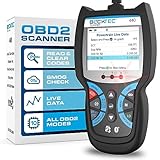
Overview: The BLCKTEC 440 positions itself as a professional-grade Bluetooth scanner for home mechanics. Compatible with all OBD-compliant vehicles from 1996 onward, it combines wireless convenience with comprehensive diagnostics including emissions readiness and system resets.
What Makes It Stand Out: Bluetooth connectivity enables mobile device pairing, while live data graphing provides visual analysis beyond text-only displays. The vibrant 2.8" color screen and printer compatibility facilitate professional report generation. Lifetime updates and expert support ensure long-term utility.
Value for Money: Mid-range pricing delivers premium features typically found in more expensive units. The inclusion of free lifetime updates avoids obsolescence costs, and printer support adds professional documentation capability. Competing Bluetooth scanners often charge subscription fees for updates.
Strengths and Weaknesses: Strengths include wireless operation, graphical data visualization, broad vehicle compatibility, color-coded I/M readiness LEDs, and robust build quality. The direct DLC power eliminates battery concerns. Weaknesses: initial Bluetooth setup may challenge less tech-savvy users, and advanced functions like ABS/SRS coverage aren’t specified. The screen, while color, is relatively small.
Bottom Line: The BLCKTEC 440 suits DIY enthusiasts wanting professional features without the professional price tag. Its Bluetooth convenience and graphing capabilities make it ideal for in-depth troubleshooting, though beginners should prepare for a slight learning curve.
9. OBD2 Scanner, CGSULIT SC103 Car Code Reader Diagnose Check Engine Light Smog Check DTCs Scan Tool Live Data Stream Voltage Test for Vehicles Since 1996

Overview: Endorsed by YouTuber Scotty Kilmer, the CGSULIT SC103 targets both DIYers and professional shops with its 2.8-inch TFT color display and industrial-grade chip. It covers 1996+ US vehicles, 2003+ EU, and 2008+ Asian models across all OBDII protocols.
What Makes It Stand Out: The dual text and graphical live data display enhances analysis, letting users compare freeze frame against real-time readings. Its voltage testing capability and built-in DTC library provide immediate context for codes. The industrial chip promises faster, more accurate performance than budget competitors.
Value for Money: Positioned as a value proposition, it combines color display, graphical data, and voltage testing at a price point where competitors often offer monochrome screens. The Scotty Kilmer association suggests reliability, and the comprehensive DTC library saves research time.
Strengths and Weaknesses: Strengths include the color screen, dual data display modes, broad protocol support, voltage monitoring, and portable design. The industrial chip ensures responsiveness. Weaknesses: no mention of advanced resets, limited to engine/OBD2 functions, and the endorsement may not resonate with all users. Asian vehicle coverage starts at 2008, potentially excluding some models.
Bottom Line: The SC103 excels for users wanting visual data representation without premium cost. Its graphical capabilities and voltage testing make it a strong diagnostic companion, though those needing ABS or transmission diagnostics should look elsewhere.
10. FOXWELL Car Scanner NT604 Elite OBD2 Scanner ABS SRS Transmission, Check Engine Code Reader for Cars and Trucks, Diagnostic Scan Tool with SRS Airbag, Automotive Diagnostic Tool with Live Data
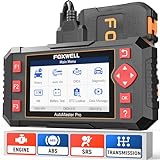
Overview: FOXWELL’s NT604 Elite is a 2026-updated 5-in-1 diagnostic tool covering Engine, ABS, SRS, and Transmission systems. Designed for car owners wanting dealership-level scanning without the cost, it includes a solid protective case and lifetime updates.
What Makes It Stand Out: Multi-system diagnosis at this price point is exceptional—most scanners under $150 only read engine codes. The AUTOVIN feature automatically identifies vehicles, saving manual entry time. The included protective case, rare in this class, prevents damage in garage environments.
Value for Money: Strong value proposition: four-system coverage, live data streaming, built-in DTC library, and playback/print functions without subscription fees. Competitors typically charge extra for ABS/SRS or protective accessories. The 2026 software version ensures current vehicle support.
Strengths and Weaknesses: Strengths include comprehensive system coverage, AUTOVIN convenience, robust case, lifetime updates, and data playback. The tool reads multiple modules accurately. Weaknesses: cannot perform maintenance resets or relearn procedures, requires physical repair before clearing codes, and multi-system coverage may vary by vehicle. The plastic housing could be more durable.
Bottom Line: The NT604 Elite is ideal for owners of older vehicles with multiple system warnings. Its four-system scanning and protective case offer professional capabilities at a DIY price. Verify coverage for your specific make, but for comprehensive pre-repair diagnostics, it’s an excellent investment.
Understanding OBD2 Technology and Performance Tuning
What is OBD2 and How Does It Work?
OBD2 (On-Board Diagnostics II) represents a standardized digital interface that provides access to your vehicle’s electronic control units. Unlike its predecessor, OBD2 delivers a unified protocol across manufacturers, allowing diagnostic tools to communicate with engine management systems through a standardized 16-pin connector. This digital gateway streams data from dozens of sensors measuring everything from mass airflow and oxygen sensor voltages to ignition advance and knock retard, creating a comprehensive picture of engine operation.
The Evolution from Basic Code Reading to Live Data Streaming
Early OBD2 scanners simply extracted trouble codes when check engine lights illuminated. Modern performance-oriented units have evolved into sophisticated data acquisition systems capable of sampling multiple parameters simultaneously at refresh rates exceeding 100 samples per second. This evolution transforms the scanner from a diagnostic reactive tool into a proactive tuning instrument, enabling tuners to observe transient conditions during acceleration, boost onset, and gear changes—moments when static readings fail to capture critical engine behavior.
Why Live Data Matters for Performance Tuning
Performance tuning operates in the margins where factory safety buffers meet mechanical limits. Live data reveals how close your engine runs to knock threshold, how aggressively timing advances under load, and whether fuel delivery maintains stoichiometric balance during wide-open throttle. Without real-time streaming, you’re essentially tuning blind—making changes and evaluating results through indirect methods rather than observing immediate ECU responses to your modifications.
Key Features to Look for in Performance-Oriented OBD2 Scanners
Real-Time Data Refresh Rates and Sampling
For performance applications, refresh rate becomes paramount. Basic scanners update parameters once per second—adequate for casual diagnostics but useless for capturing transient events. Performance-grade units should deliver refresh rates of 50-100ms per PID, allowing you to monitor how quickly boost builds, how timing responds to throttle input, and whether fuel enrichment keeps pace with airflow changes. Look for specifications that mention true streaming capability rather than polled updates.
Parameter Identification (PID) Coverage
Generic OBD2 PIDs provide baseline information like coolant temperature and engine speed, but performance tuning demands manufacturer-specific enhanced parameters. These proprietary PIDs unlock access to ignition timing advance, individual cylinder knock retard, target vs. actual boost pressure, air-fuel ratio commanded vs. measured, and camshaft timing positions. A scanner’s value correlates directly with its ability to decode these manufacturer-specific data streams across different vehicle makes.
Advanced Sensor Monitoring Capabilities
Beyond standard engine parameters, sophisticated tuning requires monitoring wideband oxygen sensors, exhaust gas temperature probes, and aftermarket boost controllers. Premium scanners accept analog inputs for external sensors, integrating this data into the same dashboard as OBD2-derived parameters. This unified view proves essential when validating aftermarket modifications against ECU reactions, ensuring your wideband readings align with factory narrowband sensor feedback.
Customizable Dashboards and Data Displays
Static parameter lists overwhelm users during dynamic tuning sessions. Advanced scanners offer customizable dashboards where you can arrange critical gauges—boost, AFR, timing, knock—for at-a-glance monitoring. Color-coded thresholds, peak hold functions, and graphical traces transform raw numbers into actionable intelligence. The ability to create different dashboard profiles for street tuning, dyno sessions, and drag strip testing multiplies a tool’s utility.
Data Logging and Export Functionality
Memory limitations in the OBD2 bus mean you can’t monitor every parameter simultaneously in real-time. Quality scanners overcome this through robust data logging capabilities, recording selected parameters to internal memory or external devices at maximum sampling rates. Export formats compatible with analysis software like Excel, MegaLogViewer, or dedicated tuning suites enable post-session review, helping identify intermittent issues and correlate data with track telemetry or dyno graphs.
Connectivity Options and Compatibility
Bluetooth vs. Wi-Fi vs. USB Connections
Wireless connectivity offers installation convenience, but protocol differences impact performance. Bluetooth Low Energy (BLE) connections typically limit bandwidth, sometimes restricting refresh rates or the number of simultaneous PIDs. Classic Bluetooth and Wi-Fi connections provide higher throughput, essential for streaming dozens of parameters without lag. USB connections deliver the most stable, highest-bandwidth link for dedicated tuning laptops, eliminating latency concerns during critical adjustments.
Cross-Platform Device Support
Modern tuning workflows span smartphones, tablets, and laptops. Evaluate whether scanner software supports iOS, Android, Windows, and macOS with feature parity. Some applications offer basic functionality on mobile devices while reserving advanced graphing, logging, and analysis for desktop versions. Cloud synchronization capabilities allow you to start a log on your phone, review it on your tablet, and perform detailed analysis on your laptop without manual file transfers.
Vehicle Protocol Compatibility
Beyond standard CAN bus protocols, performance vehicles often utilize manufacturer-specific variants like Ford’s MS-CAN, GM’s SW-CAN, or multiple CAN buses requiring simultaneous access. Multi-protocol scanners automatically detect and switch between protocols, ensuring comprehensive access. For European performance cars, verify compatibility with KW1281, KWP2000, and UDS protocols that unlock enhanced parameters not available through generic CAN communication.
Performance Tuning Specific Capabilities
Bi-Directional Control and Active Testing
True performance scanners move beyond passive monitoring to active component control. Bi-directional functions let you command cooling fans, cycle VANOS or VTEC engagement, activate electronic wastegates, and test variable geometry turbo actuators. This capability proves invaluable for diagnosing whether performance issues stem from mechanical failures or ECU control logic, allowing you to isolate problems without disassembly.
ECU Programming and Remapping Support
While OBD2 scanners primarily read data, some performance-focused units bridge into ECU flashing territory. These tools can read and write calibration files, modify fuel maps, adjust timing tables, and update ECU firmware. Understanding the distinction between pure diagnostic tools and those with programming capabilities helps you invest appropriately—diagnostic-only units cost less but can’t apply tune revisions, while programmer hybrids eliminate the need for separate tuning software.
Dyno and Performance Metrics Calculation
Sophisticated scanners integrate accelerometer data and GPS signals to calculate estimated horsepower, torque, and quarter-mile times. While not replacing actual dyno testing, these metrics provide reasonable approximations for tracking incremental improvements. More importantly, they can calculate metrics like volumetric efficiency, brake-specific fuel consumption, and trap speed corrections, giving tuners additional data points for evaluating changes.
Air-Fuel Ratio and Emissions Monitoring
Performance tuning walks a fine line between power and emissions compliance. Advanced scanners display pre-catalyst and post-catalyst oxygen sensor readings simultaneously, revealing catalyst efficiency and whether your tune maintains emissions readiness. For forced induction applications, monitoring short-term and long-term fuel trims across different load ranges ensures you maintain safe AFRs without tripping check engine lights for system lean conditions.
User Interface and Software Experience
Mobile App vs. Standalone Unit Interfaces
Mobile app-based scanners leverage your device’s processing power and display quality, offering slick interfaces and regular updates. However, they depend on battery life and may suffer from notification interruptions. Standalone units with dedicated hardware provide distraction-free operation and rugged builds but can feel dated as technology evolves. Consider whether you prefer the flexibility of your own device or the reliability of purpose-built hardware.
Graphing and Visualization Tools
Numbers alone don’t tell the tuning story. Advanced graphing capabilities overlay multiple parameters on time-based plots, revealing correlations invisible in tabular data. Zoom functions, cursor measurements, and statistical analysis tools help quantify improvements. Look for scanners offering X-Y graphing capabilities, plotting parameters against each other—like timing advance vs. engine load—to identify tuning opportunities and problematic areas in your calibration.
Alert Systems and Threshold Configurations
Performance tuning pushes boundaries, making early warning systems critical. Configurable alerts monitor knock sensor activity, excessive exhaust temperatures, or lean conditions, flashing warnings when values exceed safe thresholds. The best systems allow different alert profiles for various tuning stages—conservative limits for initial street tuning, tighter thresholds for track validation—preventing engine damage while maximizing safe power extraction.
Professional vs. Enthusiast Grade Considerations
Build Quality and Durability Factors
Professional tuners require hardware that survives shop environments—drops, fluid exposure, and constant connection cycles. Metal housings, strain-relieved cables, and automotive-grade connectors justify higher costs through longevity. Enthusiast-grade units prioritize affordability and may use plastic construction adequate for garage use but prone to failure under daily professional abuse. Evaluate your usage pattern honestly when balancing cost against durability.
Update Frequency and Software Support
Vehicle protocols evolve annually, and new ECU encryption methods constantly emerge. Reputable scanner manufacturers provide regular software updates expanding vehicle coverage and maintaining functionality against manufacturer countermeasures. Investigate update policies—some include lifetime updates, others charge annually. For performance tuning, staying current with the latest enhanced PIDs for new models ensures your investment remains valuable as you work on different vehicles.
Cost-to-Feature Ratio Analysis
Budget scanners under $100 might display basic live data but lack logging, custom PIDs, or fast refresh rates. Mid-range options ($200-500) typically offer the sweet spot for serious enthusiasts—robust logging, good PID coverage, and solid build quality. Professional units exceeding $1000 provide bi-directional control, ECU programming, and unparalleled PID depth. Match your budget to your actual tuning ambitions; overspending on unused features wastes money, while underbuying limits your tuning potential.
Installation and Setup Best Practices
Proper OBD2 Port Location and Access
While most OBD2 ports reside under the dashboard, performance vehicles sometimes relocate them or require adapter cables for clear access during tuning. Ensure your scanner’s connector fits without stress on the port, as intermittent connections cause data dropouts at critical moments. For permanent installations, consider OBD2 extension cables that move the connection point to a more accessible location, reducing wear on the factory port from repeated connections.
Pairing and Connection Troubleshooting
Wireless scanners sometimes experience pairing failures or connection drops. Always pair devices with the ignition on but engine off initially, allowing the scanner to establish baseline communication without engine noise interference. If experiencing frequent disconnections, check for USB power management settings that might disable ports, and verify your device’s Bluetooth/Wi-Fi isn’t overwhelmed by other connections. Wired connections should use high-quality cables under 6 feet to prevent signal degradation.
Calibration and Initial Configuration Steps
Before performance tuning, calibrate your scanner by logging a complete warm-up cycle and several driving scenarios. This baseline reveals normal parameter ranges and identifies any pre-existing issues. Configure units of measure—psi vs. bar, Fahrenheit vs. Celsius—to match your tuning references. Set up custom PIDs and verify they read correctly before relying on them for critical decisions. This preparation ensures you’re interpreting accurate data when making performance adjustments.
Interpreting Live Data for Performance Gains
Understanding Key Performance Parameters
Focus on parameters that directly reflect tuning changes: ignition timing advance shows how aggressively the ECU pursues power; short-term fuel trims indicate whether your fueling maps match actual airflow; knock retard reveals how close you are to combustion limits; and boost error (target vs. actual) validates turbo system response. Learning to watch these four parameters simultaneously provides immediate feedback on whether modifications improve or degrade performance.
Recognizing Normal vs. Optimal Ranges
Factory calibrations prioritize emissions and component longevity over maximum power. A stock vehicle might show 10-15 degrees of timing advance, while a properly tuned performance version achieves 20-25 degrees without knock. Similarly, factory fuel trims aim for stoichiometric 14.7:1 AFR, but performance tuning targets 11.5-12.5:1 under boost. Understanding these distinctions helps you set realistic goals and recognize when your tune successfully pushes beyond conservative stock parameters while maintaining safety.
Correlating Data with Real-World Performance
Data becomes meaningful when correlated with seat-of-the-pants feel and objective measurements. Log data during controlled acceleration runs, noting where power feels strongest vs. where parameters show optimal efficiency. Compare trap speeds and elapsed times against data logs to validate improvements. This correlation builds your mental library connecting specific parameter values to real-world results, accelerating your learning curve and improving tuning intuition.
Common Pitfalls and How to Avoid Them
Over-reliance on Generic OBD2 Data
Generic PIDs provide a false sense of comprehensive monitoring. Many critical performance parameters—actual ignition timing, individual cylinder corrections, torque management intervention—remain hidden without manufacturer-specific enhanced PIDs. Relying solely on generic data leads to incomplete tuning and missed opportunities for optimization. Always verify your scanner accesses enhanced PIDs for your specific vehicle before trusting it for serious performance work.
Misinterpreting Sensor Readings
Oxygen sensors measure exhaust composition, not directly displaying AFR until converted using fuel-specific formulas. A scanner showing 0.85 lambda means different AFR values for gasoline vs. E85. Similarly, manifold absolute pressure (MAP) readings require barometric pressure subtraction to calculate true boost. Always understand the conversion factors and reference conditions behind displayed values to avoid making tuning decisions based on misinterpreted data.
When to Seek Professional Assistance
Even the best scanner can’t replace experience. If you encounter persistent knock you can’t eliminate, fuel trims that won’t stabilize, or parameter values that defy logical explanation, consult a professional tuner. They’ve encountered similar scenarios and understand the subtle interactions between parameters that aren’t obvious from data alone. Recognizing the limits of self-tuning prevents expensive engine damage and accelerates your learning through expert guidance.
Future Trends in OBD2 Performance Technology
Emerging Protocols and Standards
CAN FD (Flexible Data-Rate) and automotive Ethernet protocols are replacing traditional CAN bus in new vehicles, offering 10-100x bandwidth increases. This enables streaming hundreds of parameters simultaneously at millisecond-level resolution. Performance scanners must adapt to these protocols to remain relevant. Additionally, security gateways in modern ECUs require authentication before granting diagnostic access, pushing scanner manufacturers toward encrypted communication methods that maintain functionality while respecting manufacturer security measures.
Integration with Hybrid and Electric Platforms
Performance tuning increasingly encompasses hybrid powertrains and electric vehicles. OBD2 scanners must monitor battery management systems, electric motor inverters, and power blending strategies. For performance applications, this means tracking state of charge, battery temperature derating, and torque split between electric and combustion components. The next generation of performance scanners will treat hybrid systems as unified powertrains rather than separate components, enabling holistic tuning approaches.
AI-Powered Analysis and Recommendations
Machine learning algorithms are beginning to analyze logged data, identifying patterns that suggest tuning opportunities or potential failures. Future scanners might highlight correlations between parameters you hadn’t considered—like how intake air temperature affects knock sensitivity on specific cylinders—or recommend timing adjustments based on thousands of similar successful tunes. While AI won’t replace tuner expertise, it will accelerate the learning curve and help identify optimization paths faster than manual data review.
Frequently Asked Questions
What makes an OBD2 scanner suitable for performance tuning vs. basic diagnostics?
Performance tuning requires fast refresh rates (under 100ms), manufacturer-specific enhanced PIDs, data logging capabilities, and customizable dashboards. Basic diagnostic tools update slowly and only access generic parameters like coolant temperature and engine speed, lacking the depth needed to monitor ignition timing, knock retard, and other critical performance data.
How fast should data refresh for effective performance tuning?
Aim for refresh rates of 50-100 milliseconds per PID minimum. Slower rates miss transient events like boost spike, knock events, or brief lean conditions during gear shifts. For dyno tuning or drag racing, some scanners offer 10-20ms sampling for critical parameters, providing near-real-time feedback on ECU behavior.
Can OBD2 scanners damage my vehicle’s ECU?
Pure diagnostic scanners that only read data pose zero risk to your ECU. Tools with bi-directional control or programming capabilities carry minimal risk when used correctly, but improper commands or interrupted programming sessions can corrupt ECU software. Always follow manufacturer instructions, maintain stable power during programming, and never disconnect the tool mid-operation.
What’s the difference between generic PIDs and manufacturer-specific PIDs?
Generic PIDs are standardized across all vehicles and include basics like RPM, coolant temp, and oxygen sensor voltage. Manufacturer-specific enhanced PIDs provide access to proprietary data like actual ignition timing, individual cylinder fuel trims, boost pressure targets, and VANOS position—parameters essential for meaningful performance tuning that vary by vehicle make and model.
Do I need a wired or wireless connection for performance tuning?
USB wired connections provide the most stable, highest-bandwidth link for serious tuning, eliminating latency and interference concerns. Wireless connections (Wi-Fi or classic Bluetooth) work well for monitoring and logging but may experience occasional dropouts. Bluetooth Low Energy typically lacks the bandwidth for high-speed multi-parameter streaming required for performance applications.
How do I know if an OBD2 scanner works with my vehicle?
Check the scanner’s vehicle coverage list for your specific make, model, and year. More importantly, verify it supports enhanced PIDs for your vehicle’s protocol (CAN, KWP2000, UDS, etc.). For performance tuning, contact the manufacturer to confirm access to parameters like timing advance and knock retard for your particular ECU version, as coverage varies even within the same model year.
Can I use an OBD2 scanner for tuning modifications like turbo upgrades?
OBD2 scanners excel at monitoring how your ECU responds to mechanical modifications but cannot directly adjust calibration for significant changes like turbo swaps. You’ll need ECU programming software alongside your scanner. Use the scanner to log baseline data, monitor for knock or lean conditions after the install, and validate that your custom tune addresses any issues revealed through data logging.
What’s the learning curve for interpreting live data streams?
Basic parameter interpretation takes a few weeks of regular logging and correlation with driving feel. Understanding complex interactions—like how timing responds to knock, or how fuel trims correlate with AFR—requires several months of hands-on experience. Expect 3-6 months of regular use before confidently making tuning decisions based solely on data, though guided learning with a mentor accelerates this timeline significantly.
Are software updates important for performance OBD2 scanners?
Critical. Manufacturers continuously reverse-engineer new ECU protocols and enhanced PIDs, releasing updates that expand vehicle coverage and maintain functionality as manufacturers implement security countermeasures. For performance tuning, outdated software may lose access to key parameters or fail to connect to newer ECU versions, rendering your scanner obsolete within a few years without updates.
How much should I expect to invest in a quality performance OBD2 scanner?
Serious enthusiasts should budget $250-500 for a scanner offering fast refresh rates, comprehensive PID coverage, robust logging, and good build quality. Professional tuners requiring bi-directional control and ECU programming capabilities should expect $800-1500. Budget options under $150 rarely provide the enhanced PIDs or sampling speeds necessary for meaningful performance tuning work.
See Also
- 10 Must-Have OBD2 Code Readers with Live Data for Car Enthusiasts in 2026
- The 10 Ultimate Best OBD2 Code Readers for Diesel Truck Owners in 2026
- The 10 Ultimate Best OBD2 Code Readers for Multiple Vehicles in 2026
- The 10 Ultimate Best OBD2 Code Readers for Multi-Vehicle Households in 2026
- Top 10 Best OBD2 Code Readers for DIY Mechanics in 2026