Table of Contents
Gone are the days when diagnosing a check engine light meant a costly trip to the dealership for every vehicle in your driveway. As we roll into 2026, the landscape of automotive diagnostics has transformed dramatically, putting professional-grade troubleshooting capabilities literally in the palm of your hand. Whether you’re managing a family fleet of different makes and models or running a small repair shop, understanding what separates a basic code reader from a truly versatile multi-vehicle diagnostic tool can save you thousands in unnecessary repairs and countless hours of frustration.
The modern OBD2 code reader has evolved far beyond simply clearing pesky warning lights. Today’s devices serve as comprehensive vehicle health monitors, offering real-time data streaming, bi-directional controls, and even predictive maintenance insights across dozens of manufacturers. But with this technological leap comes complexity—wireless connectivity protocols, subscription models, and varying software capabilities can make choosing the right tool feel overwhelming. This guide cuts through the marketing noise to focus on the essential features, compatibility considerations, and future-proofing strategies that matter most when selecting a diagnostic scanner that can seamlessly transition from your daughter’s hybrid sedan to your vintage truck with equal precision.
Top 10 OBD2 Code Readers for Multiple Vehicles
Detailed Product Reviews
1. ANCEL AD310 Classic Enhanced Universal OBD II Scanner Car Engine Fault Code Reader CAN Diagnostic Scan Tool, Read and Clear Error Codes for 1996 or Newer OBD2 Protocol Vehicle (Black)

Overview: The ANCEL AD310 is a bestselling entry-level OBD2 scanner that delivers reliable diagnostic capabilities for check engine light issues. Recommended by popular mechanic YouTuber Scotty Kilmer, this compact tool reads and clears diagnostic trouble codes, displays live data, freeze frame information, and I/M monitor readiness across virtually all 1996+ OBD2-compliant vehicles. Powered directly from your car’s diagnostic port, it requires no batteries or charging.
What Makes It Stand Out: Its rugged construction sets it apart from flimsy competitors—a 2.5-foot thickly insulated cable and sturdy 12-ounce housing survive inevitable drops in garage environments. The device supports all major OBD2 protocols (KWP2000, J1850 VPW/PWM, ISO9141, and CAN) ensuring compatibility with domestic and foreign vehicles. The large, clear display and intuitively labeled buttons make navigation effortless, even for absolute beginners with zero automotive knowledge.
Value for Money: Priced in the budget-friendly segment, the AD310 offers exceptional value by providing professional-grade accuracy without the professional price tag. Unlike ultra-cheap scanners that skimp on protocol support, this unit genuinely works with all OBD2 systems. It eliminates costly diagnostic trips to mechanics for basic CEL issues, typically paying for itself after a single use.
Strengths and Weaknesses: Pros: Extremely easy to use, robust build quality, fast and accurate readings, broad vehicle compatibility, no battery requirement, and trusted brand reputation. Cons: Limited to engine/emissions codes only (no ABS/SRS support), the 2.5-foot cable may be restrictive in larger vehicles, and the display lacks color. Advanced users may outgrow its basic feature set quickly.
Bottom Line: The ANCEL AD310 is the ideal first scanner for DIYers and casual car owners who need reliable, no-fuss code reading and clearing. While it won’t replace professional-grade tools for complex diagnostics, it excels at its core mission—identifying and resetting check engine lights quickly and accurately. Perfect for glovebox storage and emergency diagnostics.
2. VDIAGTOOL VD10 OBD2 Scanner Code Reader Car Diagnostic Tool Engine Fault Code Reader for Turn Off CEL with Freeze Frame/I/M Readiness for All OBDII Protocol Cars, OBD2 Scanner Diagnostic Tool
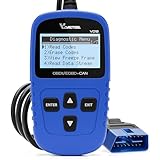
Overview: The VDIAGTOOL VD10 positions itself as a DIYer’s essential companion for basic vehicle diagnostics. This handheld scanner reads and clears check engine codes, displays live sensor data, retrieves freeze frame information, and checks I/M readiness status—all critical functions for maintaining your vehicle’s health and passing emissions tests. Designed for simplicity, it plugs directly into your OBD2 port and draws power from the vehicle.
What Makes It Stand Out: The built-in DTC library containing over 3,000 trouble code definitions eliminates the need for manual online searches, saving valuable time during diagnostics. The manufacturer explicitly compares it to the FIXD diagnostic tool, emphasizing its straightforward plug-and-play operation that requires zero mechanical expertise. Its I/M readiness monitoring is particularly robust, helping users verify their vehicle will pass smog inspections before visiting testing stations.
Value for Money: The VD10 competes aggressively in the entry-level category, offering comparable features to more established brands at a competitive price point. For DIY enthusiasts who primarily need code reading, clearing, and emissions preparation, it provides all necessary functionality without paying premium prices for features they’ll never use. The integrated code library alone represents significant value over scanners requiring external lookup resources.
Strengths and Weaknesses: Pros: User-friendly interface ideal for beginners, comprehensive code definitions database, effective live data streaming, freeze frame retrieval, and strong smog check preparation tools. Cons: Brand recognition lags behind industry leaders, limited to engine/emissions systems only, and the 3,000-code database, while useful, is smaller than some competitors’ libraries. Build quality feels adequate but not exceptional.
Bottom Line: The VDIAGTOOL VD10 is a capable, budget-conscious scanner perfect for novice users focused on check engine light diagnostics and emissions readiness. While it lacks the brand pedigree and extensive DTC database of top-tier competitors, its ease of use and focused feature set make it a practical choice for routine maintenance and pre-inspection verification.
3. ANCEL AD410 Enhanced OBD2 Scanner, Vehicle Code Reader for Check Engine Light, Automotive OBD II Scanner Fault Diagnosis, OBDII Scan Tool for All OBDII Cars 1996+, Black/Yellow
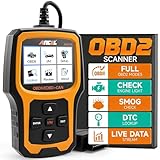
Overview: The ANCEL AD410 represents a significant upgrade from the entry-level AD310, offering enhanced diagnostic capabilities while maintaining user-friendly operation. This scanner supports all OBD2 protocols across 1996+ vehicles and features a vibrant 2.4-inch QVGA color display. It provides comprehensive engine diagnostics including O2 sensor testing, EVAP system leak detection, and access to over 42,000 built-in trouble code definitions—all powered directly from the vehicle’s OBD2 port.
What Makes It Stand Out: The massive 42,000-code DTC library dwarfs most competitors, providing instant definitions without internet connectivity. Advanced diagnostics like O2 sensor monitoring and EVAP system testing allow users to fine-tune air/fuel mixture and verify fuel system integrity, directly impacting fuel economy and emissions. The true-color display and redesigned intuitive UI make navigating complex data surprisingly simple for beginners while satisfying experienced mechanics.
Value for Money: Positioned in the mid-range price bracket, the AD410 delivers professional-level diagnostics at a fraction of dealer scanner costs. The EVAP and O2 sensor tests alone can save hundreds in diagnostic fees, while the extensive code library eliminates time-consuming manual research. For serious DIYers, this tool bridges the gap between basic code readers and expensive professional equipment.
Strengths and Weaknesses: Pros: Exceptional 42,000-code database, advanced O2 and EVAP testing, clear color display, multilingual support, robust compatibility, and enhanced UI. Cons: Still limited to engine/emissions systems (no ABS/SRS/Transmission), requires USB cable for firmware updates only, and the enhanced features may overwhelm absolute beginners. Yellow/black design may not appeal to all users.
Bottom Line: The ANCEL AD410 is the sweet spot for automotive enthusiasts who need more than basic code reading but aren’t ready for professional-grade investment. Its extensive DTC database and advanced diagnostic tests provide genuine utility for troubleshooting complex engine issues. While it won’t scan ABS or airbag systems, its engine diagnostics capabilities are impressively thorough for the price.
4. BlueDriver Bluetooth Pro OBDII Scan Tool for iPhone & Android - No Subscription Fee - OBD2 Car Scanner and Code Reader - Diagnose Check Engine, ABS, SRS, Airbag & 7000+ Issues on Vehicles 1996+
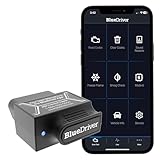
Overview: BlueDriver revolutionizes vehicle diagnostics by transforming your smartphone into a professional-grade scan tool. This Bluetooth-enabled device connects wirelessly to iOS and Android devices, providing comprehensive diagnostics beyond basic engine codes—including ABS, SRS, airbag, and TPMS systems across 1996+ vehicles. The free app delivers unlimited repair reports with verified fixes, live data streaming, and access to an extensive database of over 7,000 issues without any subscription fees.
What Makes It Stand Out: Wireless connectivity eliminates cumbersome cables, allowing diagnostics anywhere within Bluetooth range. The professional-level depth is remarkable—reading manufacturer-specific codes that typically require dealership tools. The app’s repair reports are generated from a database of over 30 million verified fixes, providing specific parts and procedures rather than generic suggestions. Integration of step-by-step repair videos creates an all-in-one diagnostic and learning platform unmatched by standalone devices.
Value for Money: Though priced at the premium end of consumer scanners, BlueDriver delivers dealership-level diagnostics without ongoing subscription costs that plague competitors. The ability to diagnose ABS, SRS, and airbag systems—combined with unlimited repair guidance—justifies the investment for serious DIYers. It essentially replaces multiple specialized tools while providing continuous app updates that expand capabilities.
Strengths and Weaknesses: Pros: Wireless convenience, comprehensive system coverage (ABS/SRS/Airbag), extensive repair database, live data monitoring while driving, continuous app updates, and no subscription fees. Cons: Requires compatible smartphone/tablet, higher initial cost, Bluetooth connection can occasionally drop, and functionality depends on app maintenance. Not ideal for users preferring standalone devices.
Bottom Line: BlueDriver is the ultimate tool for serious automotive DIYers who demand professional capabilities and convenience. Its smartphone integration and extensive repair guidance transform complex diagnostics into manageable tasks. While the price and smartphone dependency may deter casual users, those tackling multiple systems beyond the engine will find exceptional value and capability that grows with each app update.
5. MOTOPOWER MP69033 Car OBD2 Scanner Code Reader Engine Fault Scanner CAN Diagnostic Scan Tool for All OBD II Protocol Cars Since 1996, Yellow

Overview: The MOTOPOWER MP69033 offers essential OBD2 diagnostics in an affordable, brightly colored package. This compact scanner reads and clears engine codes, displays live data streams, retrieves freeze frame information, and checks I/M readiness for 1996+ vehicles. The 2.8-inch LCD screen with white backlighting provides clear visibility, while the 2.5-foot cable ensures reasonable access to OBD2 ports. Like most scanners, it draws power directly from the vehicle connector.
What Makes It Stand Out: The real-time curve display for data streaming is a notable feature rarely found in this price class, allowing users to visualize sensor fluctuations graphically rather than just numerically. The six-language support (English, German, Dutch, Spanish, French, Italian) exceeds many competitors’ offerings. Dedicated quick-query buttons for VIN and DTC codes streamline common tasks. The vibrant yellow housing makes it easy to locate in crowded toolboxes or dimly lit garage environments.
Value for Money: Among the most budget-friendly options available, the MP69033 delivers core OBD2 functionality at a price point that’s hard to beat. For users who simply need to read codes, clear lights, and perform basic emissions checks, it provides necessary capabilities without unnecessary frills. The graphical data display adds unexpected value, making it competitive with higher-priced entry-level scanners.
Strengths and Weaknesses: Pros: Very affordable, clear 2.8-inch display, real-time curve visualization, multilingual support, compact design, and dedicated function buttons. Cons: Supports only 9 protocols (fewer than premium models), explicitly cannot read ABS or airbag codes, basic feature set limits advanced diagnostics, and build quality feels lightweight. The brand lacks the recognition of industry leaders.
Bottom Line: The MOTOPOWER MP69033 is a competent ultra-budget scanner for car owners needing occasional check engine light diagnostics. While it won’t satisfy advanced users or those needing ABS/SRS access, its graphical data display and multi-language support punch above its weight class. Ideal as a backup scanner or for first-time users unwilling to invest heavily, but serious DIYers will quickly desire more capability.
6. VDIAGTOOL VD30 Pro Car Code Reader, OBD2 Scanner Diagnostic Tool for Cars and Trucks, Check Engine Code Reader, OBD2 Scanner with Reset, escaner automotriz I/M Readiness for All OBDII Vehicles

Overview: The VDIAGTOOL VD30 Pro positions itself as a robust alternative to popular scanners like FIXD, offering comprehensive OBDII diagnostics for both professionals and serious DIY enthusiasts. This tool performs all ten essential OBD2 tests, from reading and clearing fault codes to advanced functions like live data graphing and freeze frame analysis. With a rugged, drop-resistant housing and upgraded processing chip, it’s built to withstand demanding garage environments while delivering reliable performance for years.
What Makes It Stand Out: The VD30 Pro’s 4-in-1 live data graphing displays multiple parameters simultaneously, making pattern recognition easier than single-line readouts. Its built-in library of over 98,000 DTC definitions provides plain-English explanations without requiring internet lookups. The integrated voltage test prevents no-start surprises, while data playback and printing capabilities allow you to generate professional service reports. The dedicated I/M readiness hotkey streamlines emissions testing with one-click access, eliminating menu navigation.
Value for Money: Priced in the mid-range category, the VD30 Pro offers professional-grade features that typically cost significantly more. Lifetime free updates via USB ensure your investment stays current, while the comprehensive diagnostic capabilities can save hundreds in dealership diagnostic fees. For shade-tree mechanics and small shops, it delivers exceptional ROI by combining multiple tools into one durable package.
Strengths and Weaknesses: Pros include extensive DTC library, rugged construction, intuitive interface, 4-in-1 graphing, and lifetime updates. Cons are the lack of wireless connectivity and requiring a PC for printing functions. The device may be more complex than casual users need.
Bottom Line: The VD30 Pro is an excellent choice for serious DIYers and entry-level professionals seeking comprehensive diagnostics without premium pricing. Its combination of durability, extensive code definitions, and advanced graphing capabilities make it a standout value.
7. WEJOWE OBD2 Scanner Diagnostic Tool, Check Engine Code Reader OBD2 Scanner with Reset, Mode 6, Mode 8 & I/M Readiness, Auto Check Engine Light Car Diagnostic Scan Tool for All OBDII Car Since 1996
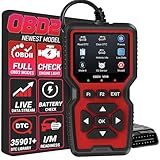
Overview: The WEJOWE OBD2 Scanner targets users seeking deep diagnostic capabilities with an emphasis on comprehensive fault code definitions. Supporting vehicles from 1996 onward, this compact tool packs professional features into a portable package. With built-in support for ten languages and a canvas storage bag included, it caters to an international audience of DIY mechanics who need reliable diagnostics without complexity.
What Makes It Stand Out: The scanner’s library of 35,901 DTC definitions dwarfs typical competitors offering only 3,000-10,000 codes, ensuring you rarely encounter an undefined fault. Its data printing capability via PC connection allows you to generate physical reports for mechanics or personal records. The lifetime free update promise keeps the device current, while multi-language support makes it accessible globally. The compact design with included storage bag enhances portability for mobile diagnostics.
Value for Money: This scanner sits in the budget-to-mid-range price point while offering a DTC library that rivals premium devices. The lifetime updates and printing capability add long-term value, particularly for users who want to document vehicle history or verify shop diagnoses. For cost-conscious buyers needing thorough code definitions, it punches above its weight class.
Strengths and Weaknesses: Strengths include massive DTC library, language versatility, compact portability, lifetime updates, and printing function. Weaknesses include a less-established brand reputation, limited advanced features compared to professional-grade tools, and no mention of graphing capabilities.
Bottom Line: The WEJOWE scanner excels for users prioritizing comprehensive code definitions and international compatibility. It’s an ideal upgrade from basic readers, offering professional DTC depth without the professional price tag.
8. ZMOON ZM201 Professional OBD2 Scanner Diagnostic Tool, Enhanced Check Engine Code Reader with Reset OBDII/EOBD Car Diagnostic Scan Tools for All Vehicles After 1996, 2026 Upgraded

Overview: The ZMOON ZM201 takes a focused approach to vehicle diagnostics, concentrating specifically on engine systems rather than spreading thin across multiple modules. Compatible with most post-1996 vehicles, this scanner delivers essential OBDII functions through a user-friendly 2.8-inch color display. Its plug-and-play design eliminates setup hassles, making it immediately accessible to beginners while providing enough depth for experienced DIYers.
What Makes It Stand Out: The ZM201’s crystal-clear color screen with adjustable brightness and light/dark modes ensures readability in any garage condition. Its 50,000-code DTC database provides extensive definitions without overwhelming complexity. The engine-specific focus means no false promises about ABS or SRS capabilities—what you see is exactly what you get. Shortcut keys and visual status indicators accelerate diagnostics, while the graphing live data view helps identify intermittent issues that text-only displays miss.
Value for Money: This scanner offers professional-quality engine diagnostics at a competitive price point. Lifetime free updates protect your investment, and the lack of subscription fees keeps long-term costs zero. By focusing on engine systems only, it avoids the premium pricing of full-system scanners while delivering superior performance in its specialty area.
Strengths and Weaknesses: Pros include excellent display quality, intuitive UI, engine-specific reliability, lifetime updates, and no battery requirement. Cons include no ABS/SRS support, Windows-only PC connectivity, and limited protocols compared to premium scanners. The engine-only focus may require a second tool for comprehensive vehicle diagnostics.
Bottom Line: The ZM201 is perfect for DIY enthusiasts who want reliable engine diagnostics without unnecessary complexity. Its combination of display quality, focused capability, and user-friendly design makes it an outstanding value for engine-specific troubleshooting.
9. 2025 New OBD2 Scanner Diagnostic Tool - Check Engine Light Code Reader with Reset, Battery Voltage Tester, Modes 6 & 8, Suitable for All OBD II Protocol Car & Truck Since 1996

Overview: The V519 represents the latest generation of entry-level OBD2 scanners, offering streamlined diagnostics for vehicles manufactured after 1996. This tool prioritizes simplicity and speed, delivering core functions like reading and clearing check engine lights, live data streaming, and freeze frame analysis through a large LCD display. Its compact, durable construction makes it suitable for both home garages and professional workshops where basic, reliable diagnostics are needed quickly.
What Makes It Stand Out: The scanner’s one-click I/M readiness feature simplifies emissions pre-checks, while its real-time diagnostics quickly identify common issues like engine misfires and sensor malfunctions. The 2025 upgraded model emphasizes user-friendliness with plug-and-play operation that requires no apps or complex setup. Its durable build quality withstands heavy usage, and the portable design allows for easy transport between vehicles or locations.
Value for Money: Positioned as a budget-friendly option, the V519 delivers essential diagnostic capabilities without premium features that drive up cost. For casual DIYers or as a backup tool for professionals, it provides excellent bang-for-buck. The ability to quickly identify issues before visiting a shop can save significant diagnostic fees, paying for itself after just one or two uses.
Strengths and Weaknesses: Strengths include simplicity, fast operation, good vehicle compatibility, durable design, and clear display. Weaknesses include limited DTC library size (not specified), no mention of advanced features like printing or graphing, and incompatibility with hybrid/new energy vehicles. It lacks the depth for complex diagnostics.
Bottom Line: The V519 is an ideal entry-level scanner for beginners or as a secondary tool for quick checks. While it won’t replace professional equipment, its simplicity, speed, and reliability make it a smart purchase for basic engine diagnostics and pre-inspection readiness checks.
10. Innova 5210 OBD2 Scanner & Engine Code Reader, Battery Tester, Live Data, Oil Reset, Car Diagnostic Tool for Most Vehicles, Bluetooth Compatible with America’s Top Car Repair App

Overview: The Innova 5210 combines traditional OBD2 scanning with modern app integration, creating a diagnostic ecosystem that extends beyond the tool itself. This scanner reads and clears engine and ABS codes while incorporating a built-in battery tester and oil reset functions. Its Bluetooth connectivity links to the RepairSolutions2 app, which leverages data from 4 million users and ASE-certified mechanics to provide verified repair recommendations without subscription fees.
What Makes It Stand Out: The integrated battery and alternator testing prevents unexpected breakdowns, while the oil reset feature saves post-service trips to shops. The RepairSolutions2 app transforms code reading into actionable intelligence, offering step-by-step guidance, parts suggestions, and cost estimates based on real-world repairs. Unlike competitors hiding features behind paywalls, Innova provides lifetime app access at no extra cost, creating a continuously improving diagnostic platform.
Value for Money: While priced higher than basic scanners, the 5210 justifies its cost through multi-functionality and app integration. The battery tester alone adds value equivalent to a separate tool, and the verified fix database can save hundreds in trial-and-error repairs. For DIYers who want guidance rather than just raw data, the premium delivers tangible returns.
Strengths and Weaknesses: Pros include trusted brand reputation, battery testing, oil reset, excellent app with verified fixes, and no subscriptions. Cons include variable ABS coverage, higher price point, and app dependency for full functionality. The tool’s capabilities vary by vehicle, requiring pre-purchase verification.
Bottom Line: The Innova 5210 is the top choice for DIYers wanting more than codes—it’s a diagnostic mentor. The combination of hardware reliability, battery testing, and intelligent app guidance makes it worth the premium for those who value expert direction alongside data.
Understanding OBD2 Technology and Multi-Vehicle Compatibility
Before diving into specific features, it’s crucial to grasp how OBD2 systems differ between manufacturers and why these differences matter for multi-vehicle diagnostics. The OBD2 standard, mandated for all vehicles sold in the US since 1996, created a universal connector and basic communication protocol, but manufacturers quickly developed proprietary extensions that basic scanners can’t access.
The Evolution of Diagnostic Protocols
Modern vehicles communicate through multiple protocols including CAN, ISO, and manufacturer-specific variations. A truly versatile 2026-ready scanner must speak all these languages fluently. The controller area network (CAN) bus system, now ubiquitous in vehicles from 2008 onward, operates at different speeds and configurations depending on the brand. Asian manufacturers often implement unique data structures for their hybrid systems, while European brands layer complex security gateways that can block unauthorized devices. Understanding these underlying communication differences helps you identify scanners with the hardware flexibility to negotiate these digital barriers without triggering dashboard warnings or, worse, causing module conflicts.
Global vs. Regional Vehicle Coverage
Multi-vehicle compatibility extends beyond just Ford versus Toyota. Consider your geographic location and the origins of vehicles you service. North American scanners optimized for domestic brands may struggle with the sophisticated electronic architectures found in Korean or European imports. Conversely, tools designed for the European market might lack complete transmission or ABS data for American trucks. The most capable 2026 scanners feature adaptive firmware that recognizes regional variants and automatically adjusts its diagnostic approach, ensuring you get complete system coverage whether you’re scanning a California-emissions vehicle or one configured for European standards.
Essential Features for Multi-Vehicle OBD2 Scanners in 2026
The feature set you need depends on your technical expertise and diagnostic ambitions, but certain capabilities have become non-negotiable for effective multi-vehicle support in the current market.
Live Data Streaming and Graphing Capabilities
Static trouble codes tell only a fraction of the story. Advanced scanners provide real-time parameter monitoring across multiple control modules simultaneously. Look for devices offering customizable data dashboards where you can monitor oxygen sensor voltages, fuel trim percentages, and transmission fluid temperatures while graphing these values over time. This capability proves invaluable when diagnosing intermittent issues that don’t trigger permanent codes. The best 2026 scanners allow you to save and compare data snapshots between different vehicles, helping you recognize patterns that indicate developing problems before they become catastrophic failures.
Bi-Directional Control and Active Testing
True diagnostic power comes from the ability to command vehicle components, not just read their status. Bi-directional controls let you activate fuel pumps, cycle ABS solenoids, or command throttle body cleaning modes directly through the scanner. For multi-vehicle applications, this feature must include manufacturer-specific routines—what works on a GM vehicle’s electronic parking brake won’t function on a Honda. The sophistication of these active tests varies dramatically, with premium scanners offering guided procedures that walk you through complex adaptations like steering angle sensor calibration or diesel particulate filter regeneration across multiple brands.
Advanced Code Definitions and Repair Guidance
Generic code definitions like “P0420 Catalyst Efficiency Below Threshold” barely scratch the surface. Modern scanners provide contextual information specific to each vehicle, including common causes, technical service bulletins, and step-by-step troubleshooting trees. The most advanced systems integrate community-sourced fixes and video tutorials directly into the interface. For multi-vehicle owners, this means getting BMW-specific guidance for a VANOS code and Ford-specific instructions for a camshaft position sensor issue from the same device, with each explanation tailored to that manufacturer’s common failure modes and diagnostic quirks.
Types of OBD2 Code Readers for Different User Needs
Diagnostic tools generally fall into three categories, each serving distinct user profiles and offering different levels of multi-vehicle versatility.
Handheld Scanners with Built-in Displays
These self-contained units offer durability and independence from mobile devices—perfect for greasy shop environments or roadside emergencies. The best 2026 handheld units feature ruggedized designs with glove-friendly touchscreens, internal batteries lasting 8+ hours, and expandable memory for storing hundreds of vehicle profiles. Their standalone nature means no worrying about phone compatibility or Bluetooth dropout, but they typically command higher prices for comparable features. When evaluating these units for multi-vehicle use, prioritize models with hot-swappable vehicle profiles that let you instantly switch between manufacturer-specific software packages without lengthy reboots.
Bluetooth/WiFi Adapters with App Integration
Compact dongles that pair with smartphone or tablet apps represent the most flexible approach to multi-vehicle diagnostics. The scanner hardware becomes a simple communication bridge, while the app handles processing and display. This architecture allows for frequent software updates and community-developed features that adapt faster than traditional scanner firmware. For households with multiple vehicles, the ability to maintain separate digital garage profiles for each car—complete with service history, pending codes, and maintenance reminders—adds tremendous value. The trade-off involves ongoing subscription costs and potential compatibility issues with older mobile operating systems.
Vehicle Compatibility Considerations
No scanner works perfectly with every vehicle, but understanding compatibility layers helps you maximize coverage while minimizing blind spots in your diagnostic capabilities.
Model Year and Protocol Support
While OBD2 became standard in 1996, meaningful diagnostic depth improved dramatically after 2008 when CAN bus became mandatory. Scanners marketed for “all OBD2 vehicles” might read basic codes from a 1997 model but lack the hardware to communicate with its ancient ISO protocol properly. For multi-vehicle families spanning decades, verify that your scanner explicitly lists support for pre-CAN protocols like ISO 9141 and J1850 VPW/PWM. Conversely, 2026 vehicles implement cybersecurity gateways that block unauthorized tools; ensure your scanner includes the latest authentication certificates or you’ll face limited access even on brand-new models.
Manufacturer-Specific System Access
Engine codes represent just the tip of the diagnostic iceberg. Comprehensive multi-vehicle scanning requires access to transmission, ABS, airbag, body control, and hybrid battery modules—each using manufacturer-specific communication methods. Some scanners achieve broad coverage through partnerships with aftermarket software developers, while others license genuine manufacturer diagnostic protocols. The difference shows up in the details: a basic scanner might read a Ford’s generic engine codes but miss the manufacturer-specific transmission slip data that predicts imminent failure. When evaluating tools, request a detailed system coverage list showing exactly which modules are accessible for each make you own.
Connectivity Options and Mobile Integration
How your scanner connects to displays and networks significantly impacts its versatility across different usage scenarios and vehicle locations.
Wireless Protocol Reliability
Bluetooth 5.3 and WiFi 6 have become standard in 2026 scanners, offering faster data rates and more stable connections than earlier versions. This matters tremendously when streaming live data from multiple modules simultaneously—a weak connection results in dropped frames that make intermittent diagnostics impossible. For multi-vehicle use, consider scanners that support dual connectivity, allowing you to maintain a stable connection to the vehicle while simultaneously uploading data to cloud storage or consulting online repair databases. Some advanced units even create their own local hotspots, ensuring connectivity in remote areas without cellular service.
Cross-Platform App Support
If you choose an adapter-based system, verify that the companion app works seamlessly across iOS, Android, and potentially desktop platforms. Families often mix device ecosystems—a scanner that only works with iPhones becomes useless when your teenager’s Android phone is the only available display. The most versatile 2026 solutions offer progressive web apps that run in browsers, native tablet apps with enhanced layouts, and even smartwatch notifications for critical alerts. Look for apps that sync diagnostic sessions across devices, letting you start troubleshooting on your phone in the driveway and continue on a tablet indoors with a larger screen.
Software Updates and Future-Proofing Your Investment
A scanner’s value depreciates rapidly if it can’t adapt to new vehicle models and evolving diagnostic requirements. Understanding update policies before purchase prevents premature obsolescence.
Update Frequency and Coverage Expansion
Manufacturers vary wildly in their commitment to ongoing support. Some provide lifetime free updates that add new vehicle coverage quarterly, while others charge annual subscriptions exceeding the scanner’s original cost. For multi-vehicle owners, the update policy directly impacts long-term value—purchasing a scanner that won’t support next year’s new model defeats the purpose. Investigate whether updates include not just new model years but also expanded system coverage for existing vehicles. A 2026 scanner that initially only reads engine codes on your Subaru might gain transmission and ABS access through a later update, effectively doubling its utility without additional hardware investment.
Diagnostic Depth: Code Reading vs. Advanced Functions
Understanding where your needs fall on the diagnostic spectrum prevents overspending on professional features you’ll never use while ensuring you don’t outgrow a basic tool too quickly.
Basic Code Reading and Emissions Testing
Entry-level functions include reading and clearing generic powertrain codes, checking emissions readiness monitors, and viewing freeze frame data. For multi-vehicle owners primarily concerned with passing state inspections and identifying simple issues like loose gas caps, this level suffices. However, even basic scanners now differentiate themselves through speed—some can complete a full system scan in under 30 seconds while others take several minutes. When evaluating units, test them on multiple vehicle types to verify consistent performance; a scanner that works quickly on your Chevy but crawls on your neighbor’s BMW will cause frustration.
Professional-Level Programming and Coding
At the high end, scanners perform module programming, key coding, and configuration changes that traditionally required dealer tools. This includes activating hidden features, updating module firmware, and replacing control units that require initialization. For multi-vehicle applications, this capability becomes essential when you need to add a new key to your Toyota and program a replacement body control module in your Volkswagen using the same device. These functions often require secure, manufacturer-approved access methods and may involve per-use fees, so understand the total cost structure before committing to a tool for these advanced capabilities.
User Interface and Display Considerations
A powerful scanner becomes useless if you can’t navigate its menus efficiently or interpret the data it presents. Interface design significantly impacts diagnostic speed and accuracy.
Touchscreen vs. Physical Controls
Modern handheld scanners increasingly feature capacitive touchscreens, but greasy fingers and gloves can make these frustrating in practice. The best designs hybridize both input methods—touchscreen for quick navigation plus physical arrow keys and scroll wheels for precision when your hands are dirty. For app-based systems, consider how the interface adapts to different screen sizes; a layout perfect for a phone becomes cramped on a tablet, while information density suitable for a tablet requires excessive scrolling on smaller displays. Look for customizable dashboards that let you arrange the most critical parameters where they’re immediately visible regardless of device.
Price vs. Performance: Finding Your Sweet Spot
OBD2 scanners range from $20 basic readers to $3,000 professional units, with capabilities scaling dramatically across this spectrum. Establishing your budget requires honest assessment of your technical skills and diagnostic ambitions.
Total Cost of Ownership Analysis
The sticker price rarely tells the full story. Budget scanners often require paid apps or subscriptions for advanced functions, while premium handheld units might include lifetime updates. Calculate the three-year cost: initial purchase + expected subscription fees + any per-use charges for special functions. For multi-vehicle households, a $500 scanner with free lifetime updates often proves cheaper over time than a $100 unit requiring $150 annual subscriptions to maintain coverage for all your vehicles. Factor in potential savings from avoided shop visits—a scanner that helps you fix three moderately complex issues essentially pays for itself while remaining valuable for future problems.
Professional vs. DIY: Choosing the Right Tool for Your Needs
Your technical background and willingness to learn complex systems should heavily influence your scanner choice. Overbuying professional features you can’t utilize wastes money, while underbuying limits your diagnostic potential.
Skill Level Matching and Learning Resources
Advanced scanners assume users understand diagnostic procedures like component activation tests and module coding sequences. If you’re a DIY enthusiast eager to learn, choose scanners that include built-in tutorials, video guides, and contextual help that explains not just what a code means but how to test the affected system. Some 2026 scanners feature AI-assisted diagnostics that analyze live data patterns and suggest likely causes based on symptoms—valuable for users still building their mechanical intuition. For professional mechanics, prioritize speed, durability, and the ability to create custom diagnostic routines that streamline repetitive tasks across similar vehicles.
Warranty and Support Considerations
Even the best scanner becomes a paperweight without reliable manufacturer support. Evaluate the company’s reputation for standing behind their products and assisting when compatibility issues arise.
Hardware Durability and Repair Policies
Handheld scanners face harsh environments—drops, fluid spills, and temperature extremes. Quality units feature MIL-SPEC rated housings and offer repair services or replacement programs. For app-based systems, understand what happens if the dongle fails after the warranty period; some manufacturers offer discounted replacements while others force full-price repurchase. Multi-vehicle owners should prioritize companies with responsive technical support that can quickly address compatibility gaps. A manufacturer that releases firmware fixes within weeks of new vehicle launches demonstrates commitment to long-term customer satisfaction, ensuring your investment remains viable as your vehicle fleet evolves.
Making Your Final Decision
Selecting the ideal OBD2 scanner for multiple vehicles requires balancing competing priorities: coverage breadth versus diagnostic depth, portability versus screen size, and upfront cost versus long-term value. Start by listing every vehicle you currently own, noting model years and the specific systems you anticipate needing access to—engine, transmission, ABS, airbags, and any hybrid components. Then project forward five years, considering potential vehicle additions and whether you’re likely to tackle more complex repairs as your skills grow.
Prioritize scanners that offer free trials or money-back guarantees, allowing you to test compatibility with your actual vehicles rather than relying on published coverage lists that may overpromise. Pay special attention to how the scanner handles your oldest and newest vehicles; bridging this gap successfully indicates robust engineering. Finally, join online communities for your specific vehicle makes and observe which scanner brands experienced owners recommend for comprehensive system access—the real-world experience of enthusiasts who’ve already navigated compatibility challenges proves invaluable.
Frequently Asked Questions
What makes an OBD2 scanner truly compatible with multiple vehicle brands?
True multi-vehicle compatibility requires hardware support for all OBD2 communication protocols (CAN, ISO, KWP) plus manufacturer-specific software licenses that unlock proprietary systems. The scanner must negotiate different security gateways and data structures across brands while maintaining complete system coverage for engine, transmission, ABS, airbags, and body modules.
Can one scanner work on both my 1998 truck and my 2026 electric vehicle?
Yes, but with significant caveats. The scanner needs legacy protocol support for the 1998 vehicle’s basic OBD2 system and modern cybersecurity authentication for the 2026 EV’s complex network. Expect limited diagnostic depth on the older vehicle—primarily engine codes—while gaining full access to the EV’s battery management and charging systems. Very few scanners excel at both extremes.
Do I need different scanners for Asian, European, and American vehicles?
Not necessarily. Premium multi-vehicle scanners include software packages for all three regions, though coverage depth varies. Some manufacturers offer regional bundles at different price points. For comprehensive coverage across all continents, expect to invest in a higher-tier device that licenses genuine protocols from each manufacturer group.
How important are software updates for multi-vehicle scanners?
Critical. Vehicle manufacturers continuously update control module software and add new models. Without regular scanner updates, you’ll lose access to newly released vehicles and potentially face compatibility issues with updated modules in existing cars. Lifetime free updates represent the gold standard, while annual subscriptions are common for mid-range tools.
What’s the difference between a $50 scanner and a $500 scanner for multi-vehicle use?
The $50 scanner likely reads only generic engine codes and may lack advanced protocols for newer vehicles. The $500 unit typically offers complete system coverage, bi-directional controls, advanced graphing, and regular updates. For multiple vehicles spanning different makes and years, the investment in a mid-range or premium scanner pays dividends in diagnostic capability and time savings.
Can smartphone apps replace dedicated handheld scanners?
For many DIY users, yes. Modern apps paired with quality adapters offer comparable diagnostic depth to handheld units, plus superior data visualization and cloud storage. However, professional environments favor handheld scanners for their durability, reliability, and independence from phone battery life or connectivity issues. The choice depends on your usage scenario and technical comfort level.
Will using an OBD2 scanner void my vehicle’s warranty?
No. Federal law (Magnuson-Moss Warranty Act) protects your right to use diagnostic tools. However, performing certain bi-directional functions like module programming incorrectly could cause issues. Stick to reading codes and viewing data for warranty repairs, leaving advanced functions to experienced users or professional mechanics.
How do I verify a scanner’s compatibility before purchasing?
Request a detailed coverage list from the manufacturer showing specific modules accessible for your vehicle makes and years. Check enthusiast forums for real-world feedback. Many reputable brands offer 30-day money-back guarantees—test the scanner on all your vehicles during this period, verifying it can communicate with every control module you need to access.
What emerging OBD2 features should I consider for 2026 and beyond?
Look for AI-powered diagnostic suggestions, cloud-based vehicle health monitoring, and integration with predictive maintenance algorithms. Cybersecurity authentication for newer vehicles is essential. Some scanners now offer EV battery health analysis and ADAS calibration capabilities—features that will become increasingly important as these technologies proliferate.
Is it worth buying a professional-grade scanner for personal use?
Only if you regularly work on multiple vehicles and perform complex repairs. Professional scanners offer speed and depth that save time for frequent users but represent overkill for occasional code reading. Calculate your potential shop visit savings—if you diagnose three or more significant issues annually, a professional tool may justify its cost within two years while providing ongoing value.
See Also
- 10 Best OBD2 Code Readers for Multiple Vehicles in 2026
- 10 Best Value OBD2 Code Readers for Multiple Vehicles in 2026
- The 10 Ultimate Best OBD2 Code Readers for Diesel Truck Owners in 2026
- The 10 Ultimate Best OBD2 Code Readers for Multi-Vehicle Households in 2026
- The 10 Ultimate Best OBD2 Code Readers with Live Data for Performance Tuning in 2026