Table of Contents
When you’re staring down a rusted, seized bolt that hasn’t budged in a decade, muscle memory alone won’t save you. That satisfying crack of breaking torque free requires the right leverage, the right geometry, and a tool engineered specifically for moments when standard ratchets simply surrender. In 2026’s demanding work environments—whether you’re tackling heavy equipment maintenance, automotive restoration, or critical infrastructure repairs—the breaker bar remains the undisputed champion of controlled force application.
Understanding what separates a mediocre breaker bar set from a truly professional-grade collection can transform frustrating, knuckle-busting jobs into smooth, efficient operations. This comprehensive guide walks you through everything that matters when selecting breaker bar sets built for high-torque applications, from material science breakthroughs to ergonomic innovations that protect your body while maximizing mechanical advantage. No brand bias, no sponsored placements—just pure, actionable intelligence for making an informed investment.
Top 10 Breaker Bar Sets


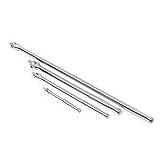


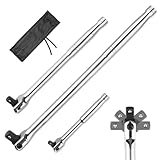

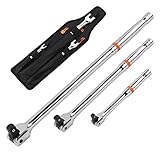
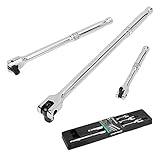
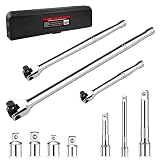
Detailed Product Reviews
Understanding Breaker Bar Sets for High-Torque Applications
What Exactly Is a Breaker Bar?
A breaker bar is fundamentally a long, non-ratcheting leverage bar designed to break loose stubborn fasteners. Unlike impact tools that deliver violent, repeated blows, breaker bars apply steady, massive torque through simple physics—length multiplied by force. The absence of a ratcheting mechanism eliminates weak points that could fail under extreme loads, making these tools essential for initial fastener loosening before switching to faster ratcheting tools for spin-off work.
How Breaker Bars Differ from Standard Ratchets
The critical distinction lies in the pawl and gear system—or lack thereof. Standard ratchets contain delicate internal mechanisms rated for specific torque ceilings, typically far below what breaker bars can handle. When you apply 500+ foot-pounds of force through a ratchet, you’re risking catastrophic internal failure that turns your tool into shrapnel. Breaker bars are solid-state tools; they’re essentially hardened steel levers with a drive square mounted at one end, making them virtually indestructible under normal use conditions.
The Physics Behind Breaker Bar Effectiveness
Torque equals force multiplied by distance. A 24-inch breaker bar requires only 25 pounds of hand pressure to generate 600 inch-pounds of torque, while a 6-inch ratchet would demand 100 pounds of force for the same result. This mechanical advantage isn’t just about convenience—it’s about safety and control. The gradual application of force lets you feel the fastener’s resistance, detect thread damage, and prevent sudden failures that could cause injury.
Key Features to Evaluate in 2026
Drive Size Compatibility and Versatility
Modern sets typically include multiple drive sizes, but the real value lies in how well they complement each other. A comprehensive collection should span from nimble 1/4-inch drives for precision work up to 1/2-inch or larger for industrial applications. Look for sets where the drive squares feature precise machining—tolerances tighter than 0.001 inches prevent slippage and socket rounding under load. The best configurations include adapters that maintain structural integrity when stepping up or down sizes.
Handle Length and Torque Multiplication
Length selection directly impacts your effective torque output. Professional-grade sets offer strategic size increments: 10-inch handles for tight engine bays, 18-inch for general automotive work, and 24-inch-plus for diesel equipment and heavy machinery. The sweet spot for most high-torque jobs falls between 18 and 30 inches, providing enough leverage without becoming unwieldy. Some innovative designs feature telescoping handles, though purists often prefer fixed lengths for maximum reliability.
Material Composition and Durability
Chrome vanadium steel remains the gold standard, but 2026 manufacturing advances have introduced proprietary alloys with superior tensile strength-to-weight ratios. Look for tools forged from single-piece construction rather than welded assemblies. The heat treatment process matters enormously—properly quenched and tempered steel achieves 50+ HRC hardness while maintaining ductility to prevent brittle fracture. Avoid anything that feels suspiciously light; quality breaker bars have substantial heft indicating dense, high-grade steel.
Flex Head vs. Fixed Head Designs
Flex heads pivot 180 degrees, allowing angle access in cramped spaces where straight-line force application is impossible. However, this convenience introduces a potential failure point. Premium flex heads feature reinforced pivot pins and locking mechanisms that prevent movement under load. Fixed heads offer ultimate reliability for pure torque tasks but sacrifice accessibility. The most versatile sets include both types, letting you choose the right tool for each specific constraint.
Grip Comfort and Anti-Slip Technology
Traditional knurled metal grips provide positive control even with oily hands, but extended use can cause hotspots and blisters. Modern over-molded rubber grips with textured patterns offer superior comfort while maintaining torque transfer efficiency. The latest innovation involves dual-density materials—firm inner cores for power transmission with softer outer layers for vibration dampening. Look for grips that extend partially onto the bar itself, allowing hand repositioning for optimal leverage without losing purchase.
Sizing Strategies for Professional Results
Choosing the Right Length for Your Application
Oversized breaker bars in confined spaces create dangerous side-loading that can snap bolts or strip threads. Conversely, undersized bars in heavy-duty applications lead to excessive exertion and potential injury. Map your typical work scenarios: suspension work demands 18-24 inches, crankshaft bolts often require 24-36 inches, while hydraulic fittings might need compact 10-15 inch models. The ideal set provides overlapping lengths that cover your entire workflow without redundancy.
Compact vs. Extended Reach Options
Compact breaker bars (8-12 inches) excel in engine compartments and around delicate components where precision trumps raw power. They fit where arms can’t, allowing fingertip control for breaking small fasteners loose. Extended reach models (30+ inches) become necessary for commercial vehicles, agricultural equipment, and structural steel work. The trade-off is maneuverability versus mechanical advantage—most professionals keep multiple lengths within arm’s reach.
Storage Considerations for Various Sizes
Long breaker bars create unique storage challenges. Quality sets include wall-mountable racks or foam inserts for toolbox organization that prevent rolling and protect precision-machined ends. Some designs feature hanging holes in the handle ends, while others nest together through clever drive-square stacking. Consider your shop layout: mobile technicians need compact storage solutions, while fixed workshops can accommodate vertical wall racks that keep tools visible and accessible.
Material Technology Advancements
Chrome Vanadium Steel Construction
This alloy combines chromium for corrosion resistance and vanadium for grain structure refinement, resulting in tools that resist both rust and fatigue failure. The best specimens undergo vacuum melting to eliminate impurities that create stress risers. Look for steel certified to specific standards—these specifications guarantee minimum yield strengths and impact resistance. In 2026, traceability is key; reputable manufacturers provide material certificates verifying composition and heat lot numbers.
Corrosion-Resistant Finishes
While the steel itself provides strength, the finish determines longevity in harsh environments. Traditional chrome plating offers excellent protection but can chip, exposing base metal to rust. Newer black oxide treatments penetrate the surface, providing lubricity and corrosion resistance without adding thickness that could interfere with socket fits. The most advanced coatings involve proprietary polymer-ceramic hybrids that withstand chemical exposure, salt spray, and UV degradation without peeling.
Heat Treatment Processes
Proper heat treatment transforms ordinary steel into extraordinary tools. The process involves heating to critical temperature, rapid quenching in oil or polymer solutions, then tempering to relieve internal stresses. Multi-stage tempering cycles produce uniform hardness throughout the tool, preventing soft spots that could deform under load. Some premium tools undergo cryogenic treatment, cooling to -300°F to convert retained austenite into harder martensite, increasing wear resistance and dimensional stability.
Drive Type Deep Dive
1/4-Inch Drive Applications
Don’t overlook small-drive breaker bars. These precision tools handle delicate tasks like breaking loose stainless steel fasteners in electronics housings or aluminum threads in motorcycle engines. They prevent the catastrophic over-torquing that destroys small-diameter bolts. High-quality 1/4-inch drive breaker bars feature reinforced necks where the square drive meets the handle—a common failure point when applying surprising force to small fasteners.
3/8-Inch Drive Versatility
The workhorse of the automotive world, 3/8-inch drive breaker bars handle everything from brake calipers to intake manifolds. They offer the perfect balance of strength and accessibility, working with the most common socket size in professional toolboxes. When evaluating sets, ensure the 3/8-inch bar includes a through-hole design that accepts locking pins, preventing socket separation during vertical work overhead or underneath vehicles.
1/2-Inch Drive for Heavy-Duty Work
This is where serious torque lives. A 1/2-inch drive breaker bar paired with a 24-inch handle generates enough force to loosen axle nuts, suspension bolts, and diesel engine components. The drive square must be precisely machined with crisp corners to prevent socket rounding. Look for broached rather than machined drive squares—broaching creates superior surface finishes and tighter tolerances that withstand repetitive high-load cycles without deformation.
3/4-Inch and Larger Industrial Options
For construction equipment, wind turbines, and manufacturing machinery, 3/4-inch and 1-inch drive breaker bars become necessary. These behemoths require two-handed operation and often benefit from cheater pipes for extreme applications. The pivot mechanisms in flex-head industrial bars use tapered roller bearings rather than simple pins, distributing massive loads across larger surface areas. Sets including these sizes typically come in reinforced cases with wheels due to their substantial weight.
Handle Design Innovations
Ergonomic Contouring
Modern biomechanics research has influenced handle shapes that align with natural hand positions during maximum exertion. Slight curves and flattened sections prevent the tool from rotating in your grip under load. Some designs feature index finger grooves that guide hand placement for optimal force transfer. The most advanced handles include adjustable counterweights that balance the tool, reducing wrist strain during extended use.
Knurled vs. Smooth Grips
Traditionalists prefer fine diamond knurling that provides positive grip without catching on gloves or pockets. This pattern creates thousands of micro-interference points that maintain control even with lubricant-covered hands. Smooth grips rely on friction-enhancing coatings or rubber over-molds, offering superior comfort but potentially less absolute grip security. Your choice depends on working conditions—knurled excels in dirty, oily environments while smooth grips shine in clean, repetitive tasks.
Extension Compatibility Features
Quality breaker bars include spring-loaded detent balls with sufficient travel to securely hold extensions and sockets without requiring excessive force to remove them. The relief behind the drive square should be smoothly radiused, allowing wobble extensions to articulate fully without binding. Some premium designs incorporate quick-release buttons that retract the detent ball, enabling one-handed socket changes—a significant time-saver during complex disassembly sequences.
Safety Protocols for High-Torque Operations
Personal Protective Equipment Requirements
Safety glasses are non-negotiable; breaker bars can suddenly release, sending hands flying into surrounding structures. Heavy-duty work gloves prevent blisters and improve grip, but avoid loose-fitting styles that could catch on rotating components. Steel-toed boots protect feet from dropped tools, while long sleeves guard against sharp metal edges in tight spaces. For extreme torque applications, face shields provide additional protection from potential fastener or tool fragmentation.
Proper Body Positioning Techniques
Never push a breaker bar with your face directly over the fastener. Position your body to the side, allowing the tool to swing past you if it suddenly breaks free. Keep your elbows slightly bent to absorb shock loads, and maintain a stable stance with feet shoulder-width apart. For horizontal applications, brace against a solid structure rather than relying on balance alone. The golden rule: expect the tool to release at any moment and position yourself accordingly.
Recognizing Fastener Failure Warning Signs
Experienced mechanics feel the difference between thread resistance and metal yielding. A fastener that suddenly becomes easier to turn after initial resistance may have stripped threads. Clicking or popping sensations indicate thread damage or corrosion breaking free. If the fastener begins to deform or the head shows rounding, stop immediately and assess alternative extraction methods. Pushing past these warnings transforms a simple removal into a machining project.
Maintenance and Longevity Practices
Cleaning and Lubrication Schedules
After each use, wipe down breaker bars with solvent to remove corrosive contaminants. Apply light machine oil to the drive square detent ball mechanism monthly to ensure smooth operation. Flex heads require periodic disassembly and greasing of pivot points—use high-pressure lithium grease that won’t sling out under centrifugal force. Avoid heavy oils that attract dirt; thin film corrosion inhibitors provide better long-term protection in storage.
Storage Best Practices
Never toss breaker bars loosely into toolboxes where they can bang against other tools, creating micro-fractures in the steel. Store them horizontally on pegboards or in dedicated slots that support the entire length, preventing sag-induced warping over time. Climate-controlled environments significantly extend tool life; if your shop experiences humidity fluctuations, consider adding desiccant packs to storage drawers. For mobile technicians, foam-lined cases with custom cutouts prevent vibration damage during transport.
Inspection Points for Wear
Check the drive square for rounding or deformation using precision squares or gauge blocks. Inspect flex head pivots for play—any perceptible wobble indicates bearing or pin wear that compromises safety. Examine handles for cracks, especially near the neck where stress concentrates. Magnetic particle inspection reveals subsurface cracks invisible to the naked eye; professional shops should annual inspect high-use breaker bars using this method. Replace any tool showing permanent deformation rather than risking failure.
Application-Specific Considerations
Automotive Suspension Work
Suspension components face constant vibration and environmental exposure, creating stubborn fasteners that resist initial movement. Here, flex-head breaker bars with 18-24 inch handles prove invaluable for reaching through wheel wells and around control arms. The ability to apply force at angles prevents stripping Allen heads and Torx fittings common in modern suspensions. Sets should include thin-wall sockets compatible with the breaker bar, as many suspension bolts have minimal clearance.
Industrial Machinery Maintenance
Production equipment often features metric fasteners torqued to extreme specifications with thread-locking compounds. Long-handle breaker bars (30+ inches) generate the necessary force while allowing technicians to stand clear of potential pinch points. Fixed-head designs provide reliability for repetitive tasks, while flex heads access bolts obscured by guards and plumbing. Industrial sets should include both varieties, plus socket adapters for transitioning between metric and SAE hardware.
Construction Equipment Servicing
Excavators, bulldozers, and cranes use massive fasteners requiring 3/4-inch and 1-inch drive breaker bars. These applications demand tools with handles thick enough to distribute pressure across both hands without creating pressure points. Look for breaker bars with through-holes in the handle for adding cheater pipes when specifications exceed human capability. The flex heads should lock positively at common angles (15°, 30°, 45°) to maintain position when working overhead or at ground level.
DIY Home Garage Projects
Home mechanics benefit from versatile sets spanning 1/4-inch to 1/2-inch drives with handle lengths from 10 to 24 inches. Quality matters more than quantity here; three well-chosen breaker bars outperform a dozen cheap versions. Focus on the 3/8-inch and 1/2-inch drives first, as these handle 90% of automotive and home tasks. Compact storage solutions like wall-mounted racks keep tools accessible without consuming valuable workspace.
Smart Shopping Strategies for 2026
Budget Allocation Guidelines
Expect to invest $40-80 for a quality individual breaker bar, with professional-grade sets ranging from $150-400. Avoid budget options under $25; they use inferior steel that can snap dangerously. Allocate funds based on your heaviest anticipated load—if you’ll regularly exceed 300 ft-lbs, spend extra on 1/2-inch and larger drives. The 3/8-inch drive gets the most use, so prioritize quality there even if it means buying fewer total pieces initially.
Warranty and Guarantee Evaluation
Lifetime warranties are standard for premium tools, but read the fine print. Some cover only manufacturing defects, while others include wear from normal use. The best warranties offer no-questions-asked replacement, recognizing that professional tools face extreme conditions. Look for companies with domestic service centers and straightforward claim processes. Pro-rated warranties indicate lower confidence in product longevity.
Identifying Value vs. Premium Options
Value-tier tools provide adequate performance for occasional use, using proven materials and designs without cosmetic frills. Premium options justify higher prices through advanced ergonomics, proprietary steel alloys, and precision manufacturing tolerances that improve safety and longevity. For daily professional use, premium tools deliver lower cost-per-use over time. For weekend warriors, mid-range options often provide the best balance of performance and investment protection.
Frequently Asked Questions
What length breaker bar provides the best versatility for automotive work?
An 18-inch breaker bar with 1/2-inch drive handles most automotive tasks effectively, generating sufficient torque for suspension bolts and crankshaft nuts while remaining manageable in engine compartments. Pair it with a 10-inch 3/8-inch drive model for tighter spaces, and you’ll cover 95% of automotive applications.
Can breaker bars be used for tightening fasteners, or only loosening?
While primarily designed for breaking torque, breaker bars can carefully tighten fasteners to rough specifications. However, they lack torque measurement capability, making them unsuitable for final torque settings. Use them for initial thread engagement and rough tightening, then switch to a calibrated torque wrench for final specification.
How do I prevent socket rounding when using high-torque breaker bars?
Always use six-point sockets on stubborn fasteners—they engage the flat surfaces rather than the corners. Ensure the socket sits fully on the fastener with no wobble. Apply steady, gradual force rather than jerky movements. If the fastener shows rounding signs, stop and consider extraction tools rather than continuing with a breaker bar.
Are flex-head breaker bars weaker than fixed-head models?
Properly engineered flex heads maintain strength through reinforced pivot designs and locking mechanisms. However, they do introduce a theoretical failure point. For absolute maximum torque applications, fixed heads provide marginally superior reliability. Modern flex heads from reputable manufacturers handle professional torque loads safely when used correctly.
What’s the difference between a breaker bar and a cheater bar?
A breaker bar is a purpose-built tool with reinforced construction for high torque. A cheater bar is any pipe slid over a handle for additional leverage—a dangerous practice that voids warranties and creates safety hazards. Quality breaker bars have handles designed to accept specifically engineered extensions rather than random pipes.
How often should I inspect my breaker bars for safety?
Perform visual inspections before each use, checking for obvious cracks, deformation, or wear. Conduct thorough inspections monthly, including flex head pivot play testing. Professional shops should implement annual magnetic particle or ultrasonic testing for high-use tools. Any tool that has experienced a sudden overload or impact requires immediate inspection.
Can I use impact sockets with breaker bars?
Yes, impact sockets work excellently with breaker bars and are often preferred for their thicker walls and softer steel that absorbs shock rather than shattering. However, never use standard chrome sockets with impact tools. The reverse combination—impact sockets on breaker bars—is safe and often recommended for maximum durability.
What maintenance is required for flex-head mechanisms?
Disassemble flex heads annually (or after 50 hours of heavy use), clean all components with solvent, inspect pivot pins for wear, and repack with high-quality lithium grease. Check locking mechanism springs for proper tension. Avoid over-greasing, which attracts abrasive contaminants. Replace worn pivot pins immediately—never attempt repairs with generic hardware.
Are breaker bar sets universal between metric and SAE fasteners?
Breaker bars themselves are drive-size specific, not measurement-system specific. A 1/2-inch drive breaker bar works with both metric and SAE sockets. The key is owning quality socket sets in both measurement systems. Adapter pieces allow stepping between drive sizes, but maintain awareness of torque limitations when adapting down to smaller drives.
What’s the maximum safe torque for a typical 1/2-inch drive breaker bar?
Most professional-grade 1/2-inch drive breaker bars safely handle 1,200-1,500 ft-lbs of torque. However, this depends on handle length, material quality, and fastener condition. Always stand to the side during maximum-effort applications. If a fastener requires more than 1,000 ft-lbs to move, consider heat application, penetrating oil, or professional extraction services rather than risking tool failure.
See Also
- The 10 Most Revolutionary Breaker Bar Sets for High-Torque Jobs in 2026
- 10 Expert-Recommended Ratchet and Socket Sets for High-Torque Jobs in 2026
- Why Your Tool Kit Sets Are Incomplete Without a Breaker Bar and Extension Bar Combo
- 10 Essential Breaker Bar Sets Every Professional Mechanic Needs in 2026
- 10 Essential Breaker Bar Sets for Off-Road Vehicle Maintenance in 2026