Table of Contents
Building an engine is a delicate dance between art and science, where every fastener tightened to the wrong specification can mean the difference between a powerhouse that purrs and a paperweight that sits. In 2026’s precision-driven automotive landscape, the micrometer torque wrench has evolved from a simple click-and-hope tool into a sophisticated instrument that engine builders trust with their reputation—and their clients’ investments. Whether you’re assembling a high-revving naturally aspirated screamer or a boosted torque monster, understanding what makes these tools indispensable is your first step toward repeatable, reliable results.
The modern engine bay has become an unforgiving environment where tolerances are measured in thousandths and torque specifications are more critical than ever. With variable valve timing, direct injection systems, and aluminum components becoming standard fare, the margin for error has virtually disappeared. Today’s micrometer torque wrenches offer features that would have seemed like science fiction a decade ago, yet many builders still choose based on brand recognition rather than understanding the technology in their hands. Let’s dive deep into what separates exceptional tools from expensive paperweights in the current market.
Top 10 Micrometer Torque Wrenches
Detailed Product Reviews
1. TEKTON 1/4 Inch Drive 90-Tooth Dual-Direction Micrometer Torque Wrench (20-200 in-lb) | TRQ50402

Overview: The TEKTON TRQ50402 is a precision 1/4-inch drive torque wrench engineered for delicate fastening tasks where over-tightening can cause catastrophic damage. With a range of 20-200 inch-pounds, it targets electronics, small engines, bicycle components, and light machinery applications. The micrometer-style adjustment and laser-etched scales provide professional-grade accuracy in a compact package.
What Makes It Stand Out: The 90-tooth ratchet mechanism delivers an exceptionally tight 4-degree swing arc, crucial for working in confined spaces. Unlike many competitors, it maintains ±3% accuracy in both tightening directions, certified to ISO standards with a serialized calibration certificate included. The half-moon pawl design keeps nine teeth engaged simultaneously, preventing slippage under load—a feature typically found in premium professional tools.
Value for Money: This wrench punches well above its weight class, offering dual-direction calibration and certified accuracy that rivals tools costing twice as much. While professional tool trucks charge premiums for similar specs, TEKTON delivers 90-tooth precision and ISO documentation at a mid-range price point, making it accessible to serious DIYers without compromising quality.
Strengths and Weaknesses: Strengths include the ultra-fine ratchet mechanism, dual-direction accuracy, serialized certification, and glare-reducing satin finish. The primary weakness is its specialized range—limited to inch-pounds, requiring a separate wrench for foot-pound applications. Additionally, the plastic storage case feels less robust than metal alternatives.
Bottom Line: For precision assembly work where accuracy is non-negotiable, the TRQ50402 is an exceptional value. It’s ideal for bicycle mechanics, electronics technicians, and automotive enthusiasts working on sensitive components. The certified dual-direction accuracy justifies every penny.
2. TEKTON 3/8 Inch Drive 90-Tooth Dual-Direction Micrometer Torque Wrench (10-100 ft-lb) | TRQ51402
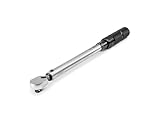
Overview: The TEKTON TRQ51402 brings professional-grade torque control to the popular 3/8-inch drive format, covering 10-100 foot-pounds—perfect for automotive maintenance, motorcycle work, and general mechanical tasks. This mid-range wrench bridges the gap between light-duty precision tools and heavy-duty industrial equipment, making it the most versatile size for home mechanics.
What Makes It Stand Out: Sharing the same 90-tooth ratchet head as its 1/4-inch sibling, it delivers a compact 4-degree swing arc that proves invaluable when accessing tight engine bays or suspension components. The dual-direction ±3% accuracy with ISO calibration and serialized certificate ensures consistent results whether tightening or loosening critical fasteners. High-contrast laser markings on the satin handle eliminate glare during outdoor use.
Value for Money: Competing tools with 90-tooth mechanisms and dual-direction certification often command premium prices from tool truck brands. TEKTON democratizes these professional features, offering comparable accuracy and build quality at a fraction of the cost. The full-range ISO calibration exceeds ASME standards, providing documentation that budget brands typically omit.
Strengths and Weaknesses: Strengths include the versatile torque range, superior ratchet mechanism, certified accuracy, and excellent readability. The main drawback is the lack of an included storage case, which feels like an oversight at this price point. Some users may find the transition from inch-pound to foot-pound scales slightly less intuitive than dedicated single-unit tools.
Bottom Line: This is the go-to torque wrench for serious DIY mechanics and professional technicians alike. The 90-tooth ratchet and certified dual-direction accuracy make it a standout performer for automotive work where space and precision matter equally.
3. Powerbuilt 3/8-Inch Micrometer Torque Wrench, 5-80 Foot/Pounds and 0.7-11.2 Meter/Kilograms, Reversible Ratchet Clicks, Lockable - 644998

Overview: The Powerbuilt 644998 offers a compelling blend of versatility and precision in a 3/8-inch drive package, spanning 5-80 foot-pounds. This extended low-end range makes it particularly suitable for both delicate torque sequences on aluminum components and standard automotive fasteners. The reversible ratchet and locking handle design cater to efficiency-focused mechanics.
What Makes It Stand Out: The 5 foot-pound minimum setting distinguishes it from typical 10-pound starters, allowing proper torque on small engine head bolts and sensitive motorcycle parts. The secure locking handle prevents accidental adjustments mid-task—a frustration common with friction-based locks. Built to ANSI standards and manufactured in Taiwan, it delivers reliable performance without the premium price of domestic production.
Value for Money: Positioned as a mid-tier professional tool, it undercuts premium brands while offering features like a reversible head and locking mechanism that budget options lack. The ±4% accuracy is respectable for general mechanical work, though slightly less precise than ±3% competitors. For home mechanics requiring versatility over laboratory-grade precision, it represents excellent ROI.
Strengths and Weaknesses: Strengths include the wide usable range, positive-locking handle, reversible ratchet for speed, and ANSI compliance. Weaknesses are the slightly lower accuracy rating and absence of a serialized calibration certificate, which may concern professional shops requiring traceability. The finish, while durable, lacks the premium feel of laser-etched models.
Bottom Line: A workhorse torque wrench that excels in versatility. It’s perfect for automotive enthusiasts and home mechanics who need one wrench to handle everything from valve covers to suspension components. The locking handle and extended range make it a practical, reliable choice.
4. CRAFTSMAN Torque Wrench, 3/8" Drive (CMMT99433)

Overview: The CRAFTSMAN CMMT99433 torque wrench leverages decades of brand trust in a 3/8-inch drive format designed for homeowners and occasional mechanics. While specifications are less detailed than competitors, it covers standard automotive ranges with the convenience features CRAFTSMAN is known for—durability, comfort, and user-friendly operation.
What Makes It Stand Out: The bi-material handle provides superior grip and comfort during extended use, reducing hand fatigue compared to all-metal designs. Stamped inch and metric scales offer permanent, wear-resistant markings that won’t fade over time. The included durable storage case enhances portability and protection—a practical addition often missing in this price bracket. The quick-adjust locking mechanism simplifies torque changes on the fly.
Value for Money: As a store-brand tool with national retail support, it offers peace of mind through easy warranty exchanges and brand recognition. While it may lack the certified accuracy documentation of premium brands, it meets ASME specifications at a price point accessible to casual users. For homeowners performing annual maintenance rather than daily repairs, it delivers adequate precision without over-investing.
Strengths and Weaknesses: Strengths include the comfortable grip, dual-unit scales, included case, and widespread availability. The primary weakness is the vague accuracy rating—“meets ASME” without specific percentages or calibration certificates. The ratchet mechanism details are unspecified, likely indicating a standard tooth count rather than fine-tooth precision.
Bottom Line: Ideal for DIYers and homeowners who need reliable torque control for occasional use. It won’t satisfy professional technicians requiring certified calibration, but for brake jobs, tire rotations, and general maintenance, it offers brand reliability and practical features at a compelling value.
5. VANPO 1/4-inch Drive Click Torque Wrench, 20-240 in. lb/2.3-27.1 Nm, Inch Pound Torque Wrench Set with 1/4" to 3/8" Adapter, 10cm Extension Bar, Small Bike Torque Wrench for MTB, Bicycle Maintenance
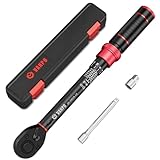
Overview: The VANPO 1/4-inch torque wrench kit specifically targets bicycle mechanics and precision assembly work, offering 20-240 inch-pounds with a comprehensive accessory package. This specialized tool addresses the unique needs of carbon fiber components and delicate fasteners where over-torquing causes expensive damage. The included adapter and extension bar make it a complete solution for modern bike maintenance.
What Makes It Stand Out: The aluminum shaft provides lightweight maneuverability while maintaining fatigue resistance for repetitive use. The click-type mechanism delivers clear audible and tactile feedback, crucial when working on expensive bicycle components. The inclusion of a 1/4" to 3/8" adapter and 10cm extension bar eliminates additional purchases. Backed by a 24-month warranty and bike-specific design, it speaks directly to cycling enthusiasts.
Value for Money: As a complete kit with accessories and warranty, it undercuts buying components separately. While unknown brands often raise reliability concerns, the 24-month warranty and bike-focused feature set demonstrate confidence. For bicycle-specific tasks, it offers better value than general-purpose wrenches requiring additional adapters.
Strengths and Weaknesses: Strengths include the accessory kit, bike-specific range, aluminum construction for weight savings, and generous warranty. Weaknesses involve the brand’s limited track record compared to established names, and the aluminum shaft may not withstand abuse like steel alternatives. The click mechanism, while effective, lacks the continuous adjustment of micrometer styles.
Bottom Line: Perfect for mountain bike and road bike enthusiasts who perform their own maintenance. The included accessories and appropriate torque range make it a turnkey solution for bicycle work. While not ideal for heavy automotive use, it excels at its intended purpose and represents excellent value for cyclists.
6. TEKTON 1/2 Inch Drive 90-Tooth Dual-Direction Micrometer Torque Wrench (40-200 ft-lb) | TRQ52402
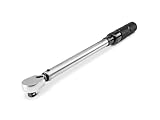
Overview: The TEKTON TRQ52402 delivers professional-grade torque control for automotive and heavy-duty applications. This 1/2-inch drive wrench covers a robust 40-200 ft-lb range, making it ideal for suspension components, lug nuts, and engine work. The micrometer-style adjustment and ISO-standard calibration ensure consistent, traceable performance for both DIY enthusiasts and professional mechanics.
What Makes It Stand Out: The 90-tooth ratchet mechanism is a game-changer, requiring only 4 degrees of swing arc to engage—perfect for tight engine bays. Unlike many competitors, it maintains accuracy within ±3% in both clockwise and counterclockwise directions, eliminating directional limitations. The serialized calibration certificate provides documented traceability, while the single-unit laser-etched scale on a satin finish reduces glare and misreading. The fixed ratchet head employs a half-moon pawl that keeps nine teeth engaged simultaneously, preventing slippage under high stress.
Value for Money: Priced in the mid-range category, this wrench offers features typically found in premium brands costing twice as much. The dual-direction accuracy and 90-tooth mechanism alone justify the investment. When compared to entry-level models, the ISO certification and comprehensive warranty provide long-term reliability that prevents costly over-tightening damage. It’s an affordable entry into professional-grade tooling.
Strengths and Weaknesses: Strengths include exceptional ratchet engagement, bidirectional precision, clear scale markings, and certified calibration. The 4-degree swing arc excels in confined spaces. Weaknesses are its 40 ft-lb minimum (too high for delicate work) and substantial weight that may fatigue users during extended sessions. The lack of a flex head limits accessibility in certain applications.
Bottom Line: For serious DIYers and professionals needing reliable, accurate torque measurement in both directions, the TEKTON TRQ52402 is an outstanding choice that balances premium features with reasonable cost.
7. Hairich Upgrade 3/8 Inch Drive Digital Torque Wrench 5-100FT-LB/0-135N.M, Torque Range Accurate to ±2%,Electric Torque Wrench car with Buzzer and LED Flash Notification for Bike/Motorcycle/Auto Repair

Overview: The Hairich digital torque wrench represents the modern evolution of torque measurement, combining electronic precision with user-friendly features. This 3/8-inch drive tool covers 5-100 ft-lbs, making it perfect for motorcycles, bicycles, and light automotive tasks. The digital interface eliminates guesswork while providing multiple feedback mechanisms for accurate fastening in any environment.
What Makes It Stand Out: Five measurement units (kg-cm, kg-m, Nm, in-lb, ft-lb) switch instantly via LED screen, eliminating conversion errors. The ±2% accuracy surpasses most mechanical wrenches, while the intelligent alert system flashes and beeps at 80% of target torque before solidifying at the final value—ideal for noisy shops. The memory function stores 500 peak torque readings, invaluable for quality control and documentation. Track mode displays real-time values, helping users develop consistent technique.
Value for Money: This digital wrench costs slightly more than basic mechanical models but delivers features unmatched at this price point. The multi-unit versatility essentially replaces several dedicated wrenches, while data storage adds professional documentation capability. For tech-savvy users, the precision and convenience far outweigh the modest premium over traditional click-type wrenches.
Strengths and Weaknesses: Strengths include superior accuracy, versatile units, audible/visual alerts, ergonomic grip, and data logging. The digital display excels in low-light conditions. Weaknesses involve battery dependency and potential electronic vulnerability in harsh workshop environments. As a newer brand, long-term durability remains unproven compared to legacy manufacturers. The plastic components may not withstand heavy industrial abuse.
Bottom Line: Perfect for mechanics who value precision and modern features, this digital wrench offers exceptional versatility and accuracy for light to medium-duty applications where documentation matters.
8. GEARWRENCH 1/2" Drive Micrometer Torque Wrench 30-250 ft/lbs. - 85066

Overview: The GEARWRENCH 85066 is a straightforward, professional-grade torque wrench built for heavy-duty applications. With an impressive 30-250 ft-lb range, this 1/2-inch drive tool handles everything from light truck maintenance to heavy equipment servicing. The micrometer adjustment and durable construction reflect GEARWRENCH’s reputation for reliable, no-nonsense tools that perform in demanding environments.
What Makes It Stand Out: The pull adjustment collar sets this wrench apart, enabling lightning-fast torque changes without the tedious rotation required by traditional micrometer styles. Simply pull the collar, twist to your desired setting, and release—saving valuable time during complex assemblies. The +/- 3% clockwise accuracy meets professional standards, while the extended range covers more applications than typical 30-250 ft-lb wrenches.
Value for Money: Positioned competitively in the professional tool segment, this wrench offers excellent value for mechanics who prioritize speed and reliability. The quick-adjust collar alone justifies the price premium over budget brands. While lacking some premium features of higher-priced competitors, it delivers core functionality that matches tools costing significantly more, backed by a solid warranty.
Strengths and Weaknesses: Strengths include rapid adjustment, wide torque range, robust construction, and trusted brand reputation. The pull collar dramatically improves workflow efficiency. Weaknesses include clockwise-only accuracy specification (no counterclockwise rating) and standard tooth count ratchet (larger swing arc than high-tooth models). The basic finish may show wear faster than treated surfaces, and there’s no included calibration certificate.
Bottom Line: A workhorse tool for professionals who value speed and simplicity, the GEARWRENCH 85066 excels in high-volume shops where quick torque adjustments translate to improved productivity.
9. Craftsman 9-31423 25-250 in.lbs 3/8" Drive Microtork Torque Wrench

Overview: The Craftsman Microtork delivers basic torque control for light-duty applications in a familiar, user-friendly package. This 3/8-inch drive wrench handles 25-250 inch-pounds, making it suitable for small engine work, brake calipers, and interior trim. The stamped scales and twist-lock ring provide simple, mechanical operation without digital complexity or premium pricing.
What Makes It Stand Out: Craftsman’s legacy brand recognition and lifetime warranty offer peace of mind that newer competitors can’t match. The dual-scale stamping (inch and metric) provides instant conversion without charts or calculations. The twist ring lock/unlock mechanism is intuitive and secure, preventing accidental setting changes during use or storage—an improvement over friction-only designs at this price point.
Value for Money: This is an entry-level torque wrench priced for homeowners and occasional mechanics. While accuracy is lower than premium models, it provides essential torque control at a fraction of the cost. For users who torque fasteners a few times monthly rather than daily, the Craftsman offers unbeatable value backed by a warranty that ensures replacement if issues arise.
Strengths and Weaknesses: Strengths include affordability, brand trust, simple operation, dual-unit scales, and lifetime warranty. The compact size stores easily in home toolboxes. Weaknesses feature lower ±4% accuracy, basic 3/8-inch drive limiting heavy-duty use, stamped scales that can be hard to read in dim conditions, and standard ratchet mechanism requiring more swing clearance. No calibration certificate is included.
Bottom Line: Ideal for DIYers and hobbyists performing occasional maintenance, this Craftsman wrench provides adequate precision and legendary warranty support at a price that won’t strain the budget.
10. LEXIVON Inch Pound Torque Wrench 1/4-Inch Drive | 20200 in-lb/2.2622.6 Nm (LX-181)
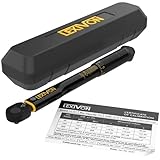
Overview: The LEXIVON LX-181 specializes in precision torque applications where finesse matters more than brute force. This 1/4-inch drive wrench delivers 20-200 inch-pounds of accurate torque for delicate assemblies like carburetors, scope mounts, and electronic housings. Manufactured in Taiwan with attention to detail, it bridges the gap between cheap imports and premium brands for precision-focused users.
What Makes It Stand Out: The proprietary Electro-Black finish provides superior rust and corrosion resistance compared to standard chrome plating, ensuring longevity in humid environments. The patent-pending dual-range scale features high-contrast yellow markings on a gloss black background that remain legible even in poor lighting. The heat-treated Chrome Vanadium ratchet head delivers durability uncommon in 1/4-inch drives, while the reversible mechanism adds versatility.
Value for Money: Priced moderately for a precision tool, the LEXIVON offers features that justify the cost over bargain-bin alternatives. The included calibration certificate with traceable serial number provides professional credibility, while the specialized finish extends service life. For gunsmiths, instrument technicians, and small engine specialists, this represents solid mid-tier value.
Strengths and Weaknesses: Strengths include excellent corrosion protection, clear dual-scale markings, reversible ratchet, comfortable knurled grip, and included calibration certificate. The 1/4-inch drive excels in tight spaces. Weaknesses include only ±4% accuracy (lower than digital alternatives), limited torque range unsuitable for larger fasteners, and lesser-known brand recognition. The gloss background can reflect direct light, occasionally obscuring readings.
Bottom Line: Perfect for precision work on firearms, bicycles, and small machinery, the LEXIVON LX-181 offers reliable performance and protective features that make it a smart investment for detail-oriented mechanics.
Understanding Micrometer Torque Wrenches for Engine Building
What Makes a Torque Wrench “Micrometer-Style”?
Micrometer-style torque wrenches derive their name from the precision adjustment mechanism that mirrors a micrometer’s graduated thimble and sleeve system. Unlike fixed-setting beam types, these tools allow you to dial in exact torque values down to single-digit increments, typically ranging from 5 to 250 foot-pounds depending on the model. The internal mechanism uses a spring-loaded cam or pawl system that releases at the set torque, providing that distinctive “click” or breakaway feel that tells you to stop applying force immediately.
Why Precision Matters in Engine Assembly
Engine components operate under extreme stress, and fastener tension directly impacts everything from head gasket sealing to bearing clearances. A rod bolt stretched 5% beyond specification can lead to catastrophic failure at high RPM, while an under-torqued main cap might allow crankshaft movement that destroys bearings within minutes. Modern engines often require torque specs within ±3% accuracy, a tolerance that only quality micrometer-style wrenches can reliably deliver consistently across hundreds of fasteners during a single build.
The Evolution of Torque Wrenches in Automotive Work
The journey from beam-type wrenches to today’s advanced tools reflects the automotive industry’s increasing demands. Early click-type wrenches offered convenience but lacked the finesse needed for delicate aluminum threads. The integration of micrometer-style adjustments in the 1980s revolutionized engine building, and 2026’s models now incorporate digital angle measurement, Bluetooth connectivity for documentation, and materials that maintain calibration longer under shop conditions. This evolution means builders can now achieve factory-level precision in their own garages.
Key Features That Matter Most in 2026
Digital vs. Click-Type Mechanisms
The debate between traditional click-type and modern digital torque wrenches continues to evolve. Click-types remain popular for their simplicity and lack of batteries, but 2026’s digital models offer real-time torque display, peak hold functions, and programmable target ranges with visual and audible alerts. For engine work, many professionals now use digital wrenches for initial assembly and documentation, while keeping a reliable click-type for final torque passes where tactile feedback prevents over-torquing.
Torque Range and Increment Adjustments
Engine building requires multiple torque ranges—from inch-pounds for small fasteners on sensors and valve covers, to foot-pounds for head bolts and mains. The most versatile 2026 micrometer torque wrenches feature dual-scale readings and fine adjustment increments as small as 0.1 foot-pound in lower ranges. Look for models with clearly marked scales that won’t fade after exposure to shop chemicals, and consider whether you’ll need separate wrenches for different engine families or if an adjustable mid-range model covers most of your work.
Materials and Construction Quality
Premium torque wrenches in 2026 utilize chrome-molybdenum or chrome-vanadium steel alloys that resist flexing and maintain calibration better than older chrome-plated models. The internal mechanisms now often feature titanium or ceramic components in high-wear areas, extending service life significantly. For engine builders working in tight engine bays, consider wrenches with slim profiles and reinforced flex heads that won’t deflect under load, ensuring accurate torque delivery even at awkward angles.
Memory and Data Logging Capabilities
Modern digital torque wrenches can store torque values for specific fasteners, creating a digital build sheet that documents every critical specification. This feature proves invaluable for warranty work, racing compliance, and quality control in professional shops. Some 2026 models automatically timestamp each torque event and can export data via USB or Bluetooth, allowing you to maintain permanent records of engine builds for liability protection and customer confidence.
Types of Micrometer Torque Wrenches Explained
Beam Type vs. Click-Type vs. Digital
While beam-type wrenches offer simplicity and never need calibration, they lack the precision adjustment that defines micrometer-style tools. Click-types provide the classic mechanical release mechanism that’s reliable and intuitive. Digital models display real-time values and often include angle measurement for torque-plus-angle specifications common on modern head bolts. Many engine builders maintain all three types, using each where its strengths shine brightest during different assembly phases.
Flex-Head and Swivel Head Designs
Flex-head torque wrenches feature pivoting drive heads that lock at various angles, essential for reaching fasteners blocked by engine components. The best 2026 designs maintain accuracy regardless of head angle and include positive locking mechanisms that prevent movement under load. Swivel head models offer continuous rotation but may sacrifice some precision. For V-configuration engines with deeply buried fasteners, a quality flex-head can save hours of frustration while maintaining the accuracy your build demands.
Split-Beam Mechanisms
Split-beam torque wrenches represent a hybrid design that eliminates the spring mechanism found in traditional click-types, instead using a deflecting beam that provides consistent release force across the entire torque range. This design maintains accuracy longer between calibrations and typically offers better feel at lower torque values. For engine builders who frequently work at the bottom end of their wrench’s range, split-beam technology provides superior repeatability and reduced hand fatigue during long assembly sessions.
Essential Specifications for Engine Work
Torque Range Requirements for Different Engine Components
Head bolts on modern aluminum blocks often require 65-85 foot-pounds, while main caps might need 70-100 foot-pounds. Rod bolts typically fall in the 40-60 foot-pound range, but some high-performance applications require inch-pound measurements for precise stretch. Bearing caps and accessory brackets usually need 15-30 foot-pounds. Rather than one wrench covering everything, most professional engine builders invest in three: a 1/4-inch drive for 20-200 inch-pounds, a 3/8-inch drive for 5-80 foot-pounds, and a 1/2-inch drive for higher torque values.
Accuracy Ratings and What They Mean
Torque wrench accuracy is expressed as a percentage of the indicated value, typically ±3-4% for quality tools. However, this rating applies only to the middle 80% of the tool’s range—accuracy often degrades at the extremes. For engine building, look for wrenches with consistent accuracy across at least 90% of their range. Some 2026 models now specify accuracy in both clockwise and counterclockwise directions, important for left-hand threads found on certain crankshaft pulleys and custom applications.
Drive Size Considerations
Drive size affects not just the fasteners you can access but the wrench’s overall accuracy and feel. 1/4-inch drive wrenches excel at valve cover bolts and sensor mounting but lack the robustness for main caps. 3/8-inch drive offers the best versatility for general engine work, handling everything from rod bolts to intake manifolds. 1/2-inch drive models provide the leverage needed for head bolts and main caps but may be too bulky for tight spaces. Many builders start with a quality 3/8-inch drive and expand their collection as specialty needs arise.
Calibration and Accuracy Standards
Understanding ISO and ASME Standards
Quality torque wrenches meet either ISO 6789 or ASME B107.300 standards, which specify testing methods and accuracy requirements. ISO standards are more common globally and require testing at 20%, 60%, and 100% of maximum torque. ASME standards include additional requirements for durability testing. In 2026, look for wrenches certified to the latest revisions of these standards, which now include requirements for digital tool performance and environmental resistance. A certificate of calibration from an accredited lab should accompany any new professional-grade wrench.
How Often Should You Calibrate?
For professional engine builders using tools daily, annual calibration is the absolute minimum. Wrenches used weekly should be calibrated every 5,000 cycles or annually, whichever comes first. If a wrench is dropped, exposed to extreme temperatures, or used near its maximum capacity frequently, recalibrate immediately. Many 2026 digital models include self-diagnostic features that alert you when calibration drift is detected, but these don’t replace professional testing against known standards.
Signs Your Wrench Needs Recalibration
Click-type wrenches that no longer click distinctly, or that click at inconsistent points during application, require immediate attention. Digital displays that show erratic readings or fail to hold calibration between uses indicate internal issues. If you can continue tightening significantly after the release point, the mechanism is worn. Any wrench that has been stored at its set torque (a major no-no) or exposed to moisture needs professional evaluation before trusting it with critical engine fasteners.
Ergonomics and User Experience
Handle Design and Grip Comfort
Engine building involves repetitive motions that can cause hand fatigue and reduced precision. Modern torque wrenches feature ergonomically shaped handles with cushioned grips that maintain comfort during extended use. Look for handles with non-slip materials that resist shop chemicals and provide secure grip even with oily hands. Some 2026 models include adjustable handle lengths that let you optimize leverage versus access, particularly useful when switching between different engine families with varying fastener locations.
Audible and Tactile Feedback
The quality of the click or release mechanism directly impacts your ability to stop at the exact moment you reach specification. Premium wrenches produce a crisp, unmistakable click that you can both hear and feel through the handle. Digital models supplement this with LED indicators, vibration alerts, and customizable alarm tones. For noisy shop environments, tactile feedback becomes critical—some wrenches now include haptic feedback that pulses the handle at 90% and 100% of target torque, giving you warning before the final release.
Storage and Portability Solutions
Proper storage extends calibration life and protects your investment. Quality torque wrenches ship with protective cases that hold the tool at its lowest setting and protect the head from impact. Some 2026 models include wall-mountable charging stations for digital units that automatically download torque data and run diagnostic checks. For mobile engine builders who travel to races or client shops, compact storage solutions that prevent damage during transport while keeping the wrench immediately ready for use are essential features.
Maintenance and Longevity
Proper Cleaning and Storage
Always return your torque wrench to its lowest setting after use to relieve spring tension. Wipe down the tool with a clean, dry cloth after each session—never use solvents that could penetrate the mechanism and dissolve internal lubricants. Store wrenches in their original cases away from extreme temperatures and humidity. For digital models, remove batteries during long-term storage to prevent corrosion. Never use a torque wrench as a breaker bar or for loosening fasteners, as this damages the precision mechanism.
Lubrication Points and Procedures
While torque wrenches are sealed units, some professional models include serviceable lubrication points for the ratchet mechanism and pivot joints. Use only manufacturer-specified lubricants, typically light machine oils or specialized synthetic greases. Over-lubrication attracts contaminants that can work into the torque mechanism, so apply sparingly. Digital models require no internal lubrication by the user—attempting to open these units voids warranty and risks contamination of sensitive electronic components.
Common Mistakes That Damage Torque Wrenches
The most destructive practice is using a torque wrench beyond its capacity, which permanently springs the internal mechanism. Storing at a set torque value causes spring creep and inaccurate readings. Dropping the wrench, even in its case, can knock the mechanism out of calibration. Using cheater bars or extensions that multiply leverage destroys the calibrated relationship between applied force and torque reading. Exposure to welding spatter, grinding dust, or chemical spills can seize mechanisms or corrode precision components beyond repair.
Price vs. Value Considerations
Budget-Friendly Options vs. Professional Grade
Entry-level micrometer torque wrenches priced under $100 can achieve acceptable accuracy for occasional hobbyist use, but typically lack the durability and consistency professionals require. Mid-range tools ($150-300) offer the best value for serious enthusiasts, providing accuracy and features that rival premium brands of a decade ago. Professional-grade wrenches ($400+) justify their cost through extended calibration intervals, better ergonomics, and robust construction that withstands daily shop abuse while maintaining precision across thousands of uses.
Warranty and Support Services
A quality torque wrench should include at least a one-year warranty on accuracy and mechanism function, with many 2026 professional models offering three to five years of coverage. Look for manufacturers that provide free or discounted recalibration services during the warranty period. Some premium brands offer loaner programs that ship you a calibrated replacement while yours is being serviced, minimizing downtime. Digital models should include software updates and battery replacement programs that keep the tool current throughout its service life.
Total Cost of Ownership
The purchase price represents only a fraction of what you’ll spend over a wrench’s lifetime. Factor in annual calibration costs ($50-100 per tool), replacement cases, and potential repairs. Digital models require battery replacements and occasional software updates. A $200 wrench that needs calibration twice yearly may cost more over five years than a $400 wrench that holds calibration for 18 months. Consider how the tool’s accuracy affects your work quality—one ruined engine component from an inaccurate wrench can exceed the cost of a professional-grade tool.
Safety and Proper Usage Guidelines
Correct Torquing Techniques
Always apply force smoothly and steadily, avoiding jerky motions that can cause over-torquing. Position yourself to pull directly on the handle without side loading, which introduces measurement errors. For critical fasteners like head bolts, use a sequence pattern and multiple passes at increasing torque values. When using extensions or adapters, apply the appropriate correction factor to your target torque. Never guess—keep a calculator handy or use a digital wrench that automatically compensates for adapter length.
When Not to Use a Torque Wrench
Torque wrenches measure rotational force, not clamping force on damaged or dirty threads. Always chase threads with a tap or die and clean bolt holes with compressed air before torquing. Don’t use torque wrenches on fasteners that require angle tightening beyond the initial torque spec—use an angle gauge instead. For fasteners requiring thread sealant or oil, consult the manufacturer’s specifications, as lubrication significantly affects final clamping force at a given torque value.
Personal Protective Equipment
While torque wrenches seem benign, snapped bolts and slipping wrenches cause frequent shop injuries. Always wear safety glasses when torquing fasteners, especially overhead or in tight spaces where a slipping wrench could strike your face. Cut-resistant gloves improve grip and protect against sharp edges, but ensure they don’t interfere with feel. Steel-toed boots protect against dropped tools and heavy engine components. In professional environments, consider torque limiting sleeves that prevent over-torquing if a mechanism fails unexpectedly.
Frequently Asked Questions
What torque range do I need for most engine building tasks? For comprehensive engine work, you’ll need multiple wrenches: a 1/4-inch drive covering 20-200 inch-pounds for small fasteners, a 3/8-inch drive handling 5-80 foot-pounds for most internal components, and a 1/2-inch drive for 30-250 foot-pounds for head bolts and mains. Most builders start with a quality 3/8-inch drive model and expand their collection as specific projects demand.
How do I know if my torque wrench is still accurate? Test it against a known standard or have it professionally calibrated annually. Between calibrations, check for consistent click points, smooth operation, and whether it returns to zero when released. Digital models with self-diagnostics will alert you to calibration drift. If you drop the wrench or suspect damage, recalibrate before using it on critical fasteners.
Can I use a torque wrench to loosen bolts? Never use a torque wrench for loosening. The mechanism is designed only for measuring tightening torque, and reverse loading damages the precision components. Using it as a breaker bar voids warranty and destroys calibration. Keep a separate ratchet or breaker bar for removal tasks.
What’s the difference between click-type and digital accuracy? Both can achieve similar accuracy ratings (typically ±3-4%), but digital models eliminate human error in reading the scale and can provide more consistent results across multiple users. Digital tools also excel at torque-plus-angle specifications and data logging. Click-types offer simplicity and reliability without batteries, making them ideal for critical final passes.
How should I store my torque wrench between engine builds? Always return it to the lowest torque setting to relieve spring tension. Store it in its protective case in a climate-controlled environment away from moisture and extreme temperatures. Never stack heavy objects on top of the case. For digital models, remove batteries during long-term storage to prevent corrosion.
Do I need different torque wrenches for different drive sizes? Yes, each drive size serves specific purposes. Adapter bushings change the drive size but add length that affects torque readings. For maximum accuracy and access, invest in dedicated wrenches for each drive size you regularly use. The investment pays for itself in prevented errors and damaged components.
How often should I calibrate a torque wrench used for engine building? Professional shops should calibrate annually at minimum, or every 5,000 cycles. Hobbyists using tools monthly can extend to 18-24 months if the wrench shows no signs of damage. Any drop, exposure to extreme conditions, or inconsistent performance warrants immediate recalibration regardless of schedule.
What’s the best way to clean a torque wrench? Wipe with a clean, dry cloth after each use. For stubborn grime, use a cloth lightly dampened with mild soap and water, then dry immediately. Never submerge the wrench or use harsh solvents. Keep the ratchet mechanism free of debris, and avoid pressure washing or compressed air directly into the mechanism, which can force contaminants inside.
Can torque wrenches measure torque in both directions? Most quality wrenches measure torque in both clockwise and counterclockwise directions, though accuracy may be specified for clockwise only. For engine building, ensure your wrench specifies bi-directional accuracy, as some applications use left-hand threads. Digital models typically handle both directions equally well.
Why do some torque wrenches cost $500 while others cost $50? Price reflects materials, manufacturing precision, calibration consistency, and durability. Premium wrenches use superior alloys, maintain accuracy longer, offer better ergonomics, and include comprehensive warranties. For professional engine building where accuracy prevents catastrophic failures, the investment in a quality tool pays dividends. Budget options work for occasional hobbyist use but may lack consistency and longevity.
See Also
- The 10 Ultimate Best Micrometer Torque Wrenches for Race Car Setup in 2026
- The 10 Best Digital Torque Wrenches for Engine Builders in 2026
- 10 Best Click Torque Wrenches for Precision Engine Work This Year
- 10 Game-Changing Micrometer Torque Wrenches for Performance Tuning in 2026
- 10 Best Compact Torque Wrenches for Tight Engine Spaces in 2026